
Wool Impact and Campaign for Wool NZ Merge to Form Collective
Will a stronger, more coordinated voice help rebuild confidence and improve returns in the wool sector?




 increase font size
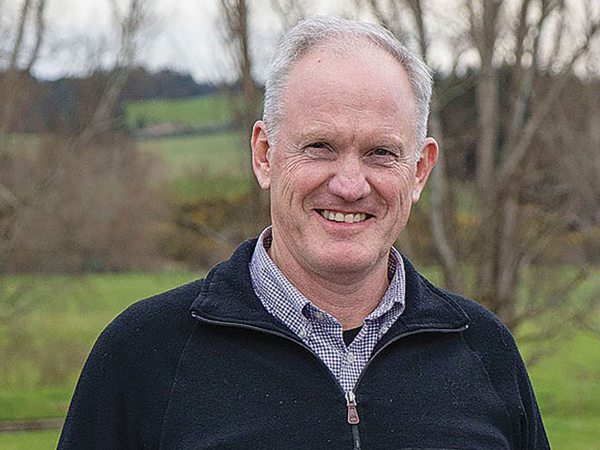 Andy Caughey, chief executive of Wool Impact.
The world is waking up to the disadvantages of carpets derived from petrochemicals, creating opportunities for New Zealand strong wool.
Strong wool prices are up 130% since 2022 and Andy Caughey, chief executive of Wool Impact, says that this price increase is only partially caused by a reduction in supply.
“One shouldn’t diminish the significant initiatives that are underway both on shore and internationally to increase the price and the demand for New Zealand wool,” Caughey told Rural News.
He says that Wool Impact has been active overseas, where 85% of New Zealand’s strong wool is sold.
The organisation has been actively collaborating with Gensler, one of the world’s largest architecture firms.
“They are acknowledging that we can’t continue using petrochemical-based materials in the way that we have whether it’s the negative impact on human health and wellbeing in the office environment or the disposal at the end of life,” Caughey says.
According to Wool Impact’s latest Impact Report, released in January, wool is now being utilised in numerous different ways, including carpeting and some surprising new uses.
Caughey points to one example of these new uses, here in New Zealand: Two companies, Floc and Ortex, have both launched acoustic panels made from wool.
“This is an amazing application for wool because the fibre has really good sound absorption properties but it’s also an air purifier, so wool acoustic panels could be the next new wave in popularity for wool products,” he says.
“So, there’s a whole lot of really interesting things happening domestically and we’re anticipating the demand for New Zealand strong wool will increase from around 15,000 tonnes to around 40,000 tonnes within the next five years just from the domestic market.”
Caughey says that the good news for wool growers is that the world appears to have “woken up to what’s happening with petrochemicals”.
He says that consumers are seeking new opportunities to use natural fibres and, for New Zealand, that means there is no shortage of demand internationally for applying wool.
“What we’re missing out on is the capability to go and engage with people outside of wool sector and to make it easy for them to start using wool.
“When you start talking and engaging with people and they discover wool for the first time, there’s a sense of wonder as to why this fibre isn’t more popular and so what we’re seeing is a return to nature and natural fibres and we’re seeing new entrants.”
India FTA A Net Positive?
Andy Caughey says that there are some positive impacts to the free trade agreement recently announced between New Zealand and India for the wool sector.
He says that prior to the FTA, the tariff on New Zealand wool entering India was 2.5%, “so in s ome ways the FTA, it’s more than symbolic”.
“What it does do is it removes perceived barriers,” Caughey says. “There’s a real desire to get closer to New Zealand and understand how we work and operate and our farming systems and how we grow wool so that they can build up their own knowledge and skill set as well.”
He says that India sees wool as “a fibre for the future”.
Caughey says that at this stage, the opportunity for New Zealand’s wool sector is to grow its business as India grows as a “global nation”.
Will a stronger, more coordinated voice help rebuild confidence and improve returns in the wool sector?
Rising strong wool prices are finally returning the sector to profitability.
The recently signed free trade agreement with India is an invitation to strengthen relationships between the New Zealand and Indian strong wool industries, says Wool Impact chief executive Andy Caughey.
Wool Impact and ASB have signed a new partnership with the bank set to provide financial backing to support the revitalisation of New Zealand's strong wool industry.
A new levying body, currently with the working title of NZWool, has been proposed to secure the future of New Zealand's strong wool sector.


Food and fibre exports have returned a billion- dollar bonus to the country.

Zespri has welcomed the entry into force of the India-New Zealand Free Trade Agreement today, calling it a significant milestone that will support long-term growth in one of the world’s largest and fastest-growing consumer markets.
Southland's wet winter and spring will potentially cost Wyndham sheep and beef farmer Ben Dooley between $100,000 and $120,000 in lamb losses.
Beef + Lamb New Zealand says the National Party’s agriculture plan provides a strong basis for lifting productivity, supporting rural communities and recognising the sheep and beef sector’s environmental track record.
Wools of New Zealand chief executive John McWhirter says its new direct-to-consumer wool carpet service, Laneve, is the next step in the development of the business.
The New Zealand-India Free Trade Agreement entered into force today, improving market access for New Zealand businesses across a wide range of sectors.





OPINION: The same mainstream media muppets that brought you Jacindamania in 2017 have been flat out pimping for the Opportunities…
OPINION: Your old mate reckons the atrocious way farmers in the UK are treated by their lords and masters in…




