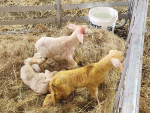
Beef + Lamb NZ's Lambing Kit Checklist for a Tough Season
With lambing underway in many regions, Beef + Lamb New Zealand is encouraging farmers to put together a wellequipped lambing kit to help minimise lamb losses, particularly in bad weather.




 increase font size
BEEF + LAMB New Zealand (B+LNZ) is working together with its sheep farming counterparts from the US and Australia to get Americans eating more lamb.
B+LNZ's Central South Island director Anne Munro has just been at the annual Tri-Lamb Group conference in Nevada with B+LNZ's North America manager Terry Meikle and Federated Farmers' Meat & Fibre Industry Group Chairperson Rick Powdrell. Representatives from the Sheepmeat Council of Australia (SCA) and the American Sheep Industry Association (ASI) also took part.
The Tri-Lamb Group was established in 2004 to grow demand for sheepmeat in the US, mainly by increasing consumers' awareness of lamb's nutritional value.
"This collaborative marketing campaign has had real impact in the US market, but there is definitely room for us to be doing more. Americans still eat a relatively small amount of lamb per capita, so we're working together to do what we can to increase that," Munro says.
The conference agreed that the joint marketing campaign would put more of an emphasis on social media in 2015, targeting nutritionists and dieticians as well as lamb suppliers and retailers.
The Tri-Lamb Group also agreed to work more closely on other areas of common interest, including better engagement with young sheep farmers, raising the profile of sheep farming, and collaboration on research around sheep predators.
B+LNZ engages regularly with overseas farmer organisations in key export markets.
"Building better relationships with the likes of SCA and ASI helps us understand the viewpoints of sheep farmers from other countries, and to learn from them. For example, this year we talked a lot about how sheep farmers in each of our countries deal with droughts – something that is obviously relevant for Kiwi sheep farmers right now," Munro says.
With lambing underway in many regions, Beef + Lamb New Zealand is encouraging farmers to put together a wellequipped lambing kit to help minimise lamb losses, particularly in bad weather.
Will a stronger, more coordinated voice help rebuild confidence and improve returns in the wool sector?
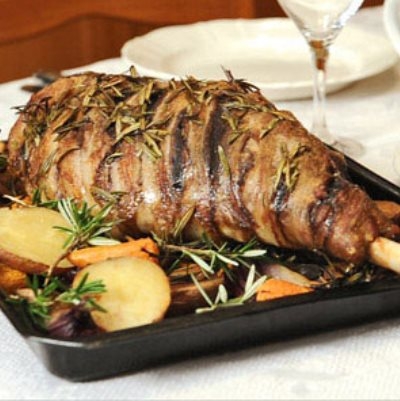
It’s official, lamb will take centre stage on Kiwi Christmas tables this year.
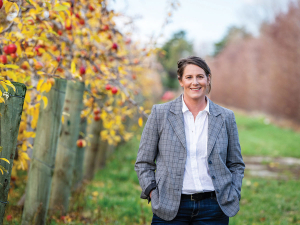
The vineyards at Pyramid Farm in Marlborough’s Avon Valley have never been run of the mill, with plantings that follow the natural contours of the land, 250 metres above sea level.
Alliance Group has secured greater access for chilled beef exports to China, following approval for two of its processing plants to supply the market.


National’s pledge to introduce 19 new national standards shows the party is serious about getting Wellington out of farming, Federated Farmers says.
The National Party’s policies to make it easier to grow fresh vegetables, secure reliable water and energy and simplify farm planning are practical changes that will give growers the confidence to invest, according to Horticulture New Zealand (HortNZ).
Fonterra Co-operative Group chief financial officer Andrew Murray has resigned to take up a role outside the dairy giant.
A major move is about to get underway to improve the quality and viability of dairy beef and cattle in NZ.
Veterinarians say changes to the code of welfare for dairy cattle provides a positive foundation for improved cattle welfare across the country.
Today, 15 October, is the International Day of Rural Women, which recognises rural women’s contribution to farming, communities and the environment.

OPINION: The same mainstream media muppets that brought you Jacindamania in 2017 have been flat out pimping for the Opportunities…
OPINION: Your old mate reckons the atrocious way farmers in the UK are treated by their lords and masters in…




