
Massey VC Says University Best Placed to Support Dairy
Massey University is best placed to solve the “problems” facing the dairy industry, says vice chancellor, Pierre Venter.




 increase font size

NEW ZEALAND leads the way in encouraging and recognising women's leadership in agriculture, says Dairy Women's Network chairwoman Michelle Wilson.
She reached that conclusion after attending the invitation-only APEC 'Women in Leadership' Forum in China with the 2012 Dairy Woman of the Year, Barbara Kuriger.
"I came away feeling extremely proud, as it is clear New Zealand leads the way in regard to women in leadership," she told the Dairy Womens Network conference in Hamilton yesterday.
"I am not sure that as leaders in the agriculture industry we realise how advanced New Zealand is in recognising women's contribution to rural communities and 'New Zealand Inc'. Women in New Zealand are leading the way by educating and mentoring within agriculture."
That was partly attributable to the dream of four women in 1998 which lead to setting up Women in Dairying, renamed Dairy Womens Network in 2008. Its support of dairy women leads to profit on farms by developing their skills and knowledge to drive businesses forward and meet the many challenges on dairy farms today, Wilson said.
"Of equal importance, this dream has inspired many dairy women to stand up, believe in themselves and say with pride 'I am a dairy farmer'."
Wilson said the APEC conference she and Kuriger attended involved 200 influential women in business and politics from the Asia Pacific region, who discussed improving women's access to finance and markets, capacity and skill building and women's leadership.
Wilson says Dairy Womens Network has gone from strength to strength. With prime funder DairyNZ, the network supports 30 regional groups nationwide, runs interactive dairy days on a number of industry topics and supports women in upskilling in financial literacy.
Dairy Womens Network is now project managing the Primary Growth Partnership-funded 'Farmer Wellbeing' project.
In 2013 it also received a Sustainable Farming Fund grant through MPI to develop and deliver 'Project Pathfinder' – a three-year project to support women initiating change in their businesses, on farms and in communities.
In 2002 the network had 300 members on its database; in late February 2014 it hit 5000. It has Facebook followers as far afield as UK, Chile and Spain and would not be a success if it did not "keep its finger on the pulse" – the theme of the conference.
"To keep this in mind and ensure the sustainability of Dairy Womens Network we are currently... looking at a paid membership structure," Wilson said. They are in the research stage and will be consulting with members.
"Dairy Womens Network is recognised around the world as being exciting and dynamic, reflected in highlights of the past year," Wilson said. In June 2013 the network partnered with Ballance Agrinutrients as its inaugural prime partner and in July 2013 as its inaugural gold partner.
The network also contributed to the Dairy Industry Strategy launched at Parliament in July 2014.
Massey University is best placed to solve the “problems” facing the dairy industry, says vice chancellor, Pierre Venter.

OPINION: Succession and long-term planning are perennial topics because it is perpetually sidelined on busy farms.
OPINION: The stats speak for themselves.
Farms across the upper North Island are trialling different pasture mixes as part of a research programme that aims to build greater resilience into farming systems.
Election years are always a concerning time for farmers, according to DairyNZ chair Tracy Brown.


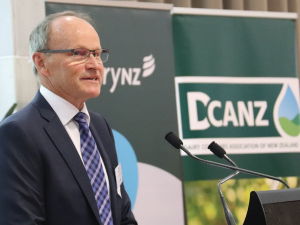
Dairy processors are ready to further boost New Zealand’s export earnings but want the incoming government to match their ambition with good policy.
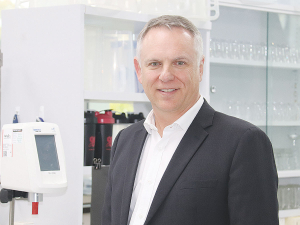
Massey University is best placed to solve the “problems” facing the dairy industry, says vice chancellor, Pierre Venter.
Synlait's longest serving employee – a man who joined the Canterbury-based milk processor even before it began processing milk – is now its newest executive.
A dairy industry leader believes eradicating the common and costly disease, Bovine Viral Diarrhoea (BVD) is within reach.
A farmgate milk price of $10/kgMS this season is firming up as milk powder prices soar and the New Zealand dollar weakens.
Federated Farmers has welcomed new rural policies released by ACT, saying they align closely with its own election priorities.



OPINION: The same mainstream media muppets that brought you Jacindamania in 2017 have been flat out pimping for the Opportunities…
OPINION: Your old mate reckons the atrocious way farmers in the UK are treated by their lords and masters in…




