Fonterra Elections 2026: Voting Opens Tuesday 20 October
Fonterra shareholders can begin voting on Tuesday 20 October in the 2026 Board of Directors’ election, a Co-operative Council election in one Ward, and seven Annual Meeting resolutions.




 increase font size
 Theo Spierings
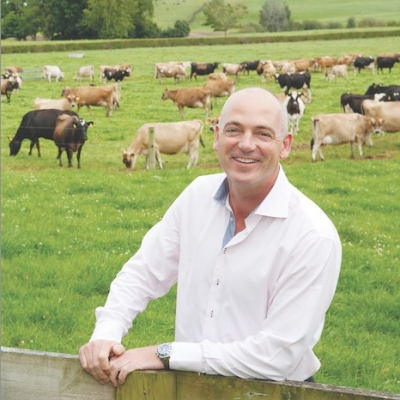
FONTERRA’S INGREDIENTS business is an “aircraft carrier” that allows the co-op to visit global markets efficiently, says chief executive Theo Spierings.
He told the recent Fonterra Shareholders Fund annual meeting that ingredients make up half of earnings before income tax (EBIT) but the importance of the ingredients business is sometimes downplayed.
“I strongly disagree; it is the aircraft carrier for us to go to the world in an efficient way. If we don’t have our ingredients – our highly efficient operations around the country doing commodities – we don’t have the scale to go from New Zealand to those faraway markets where we can make money.
“Should we put beautiful planes on the aircraft carrier, with food service products Anmum and Anlene? I think we should. But if we leave the aircraft carrier behind, our planes have nowhere to land and that won’t be a beautiful picture in the market.”
In the 2013-14 financial year Fonterra’s total revenues reached $23.3 billion; ingredients brought in $16b. Of the total normalised EBIT of $503m, ingredients made up $269m.
Outside investors barred from holding shares in Fonterra are able to invest in units in the Fonterra Shareholders Fund that gives them access to the economic rights they would have received if they were allowed to own a share; dividend to unit holders is based on the co-op’s net profit.
Last year the co-op’s earnings per share was 10c, compared to 44c the year before.
Spierings says this was disappointing but explained that high milk prices impacted earnings. While Fonterra raised prices and cut costs, these measures failed to fully offset the high milk costs.
Fonterra is continuing to streamline brands and focus on key markets to lift returns, he adds. “We cannot go everywhere; we are in 93 countries with 60 brands. We have to focus to win; we have decided to focus on eight markets and five brands.”
Fonterra remains a company with corporate social responsibility and sustainability. The five major brands are NZMP, Anchor, Anlene, Anmum and Farm Source.
Fonterra’s main markets are New Zealand, Chile, Sri Lanka and Malaysia, totalling 100 million.
Spierings says these four markets won’t help the co-op reach its target of 2 billion customers. The co-op has added four markets: China, Indonesia, Brazil and Australia.
Fonterra shareholders can begin voting on Tuesday 20 October in the 2026 Board of Directors’ election, a Co-operative Council election in one Ward, and seven Annual Meeting resolutions.

Fonterra Co-operative Group chief financial officer Andrew Murray has resigned to take up a role outside the dairy giant.
Four candidates have been confirmed for two director positions on Fonterra’s board.
A record farmgate milk price and strong global demand is laying the foundation for continued growth of organic dairy farming in New Zealand.
Waikato milk processor Tatua has again declared a record milk payout to farmer shareholders, leaving other processors in the dust.


Fonterra shareholders can begin voting on Tuesday 20 October in the 2026 Board of Directors’ election, a Co-operative Council election in one Ward, and seven Annual Meeting resolutions.
National’s pledge to introduce 19 new national standards shows the party is serious about getting Wellington out of farming, Federated Farmers says.
The National Party’s policies to make it easier to grow fresh vegetables, secure reliable water and energy and simplify farm planning are practical changes that will give growers the confidence to invest, according to Horticulture New Zealand (HortNZ).
Fonterra Co-operative Group chief financial officer Andrew Murray has resigned to take up a role outside the dairy giant.
A major move is about to get underway to improve the quality and viability of dairy beef and cattle in NZ.
Veterinarians say changes to the code of welfare for dairy cattle provides a positive foundation for improved cattle welfare across the country.




OPINION: The same mainstream media muppets that brought you Jacindamania in 2017 have been flat out pimping for the Opportunities…
OPINION: Your old mate reckons the atrocious way farmers in the UK are treated by their lords and masters in…




