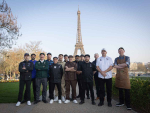
World Butchers' Challenge captains go head-to-head before competition
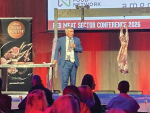
Ahead of the World Butchers' Challenge, the captains of 14 nations’ teams squared off in Paris over the weekend.




 increase font size

Ross Hyland, an influential figure in both agribusiness and the commercial sector, has become Meat Industry Excellence's (MIE) first key appointment.
"Ross's commitment and success in New Zealand agriculture is well documented," says Richard Young, chairman of Meat Industry Excellence.
"While Ross sold his remaining shareholding in SealesWinslow to Ballance Agri-nutrients at the beginning of this year, his milling and manufacturing expertise saw Ballance retain his services to complete the rebuild of its Wanganui feedmill.
"Ross has impressive agricultural governance experience, being a director of Lincoln Agritech, chairman of the Lincoln University Farms committee and a member of Lincoln's research and commercialisation committee.
"This commercial background is vital in order to help put Lincoln University back on a strong financial footing. It is also an impressive skillset that Ross brings to MIE.
"Ross is totally aligned with MIE principles and is committed to reforming the red meat sector so we can again compete with alternate land uses. His energy, corporate knowledge and business contacts, make him an ideal addition to help MIE drive positive industry change," Young says.
Hyland looked forward to working with MIE to re-energise the red meat sector.
"I have seen MIE take on this important industry role and we just cannot lose this opportunity," Hyland says. "MIE will continue to make sound strategic decisions and I see my role as providing leadership, expertise and guidance, as we move towards the second phase of reform.
"The appointment of key personnel to the 'Establishment Team' is the next important step. We must recruit the very best who will greatly enhance our odds of success.
"The potential payback for 'NZ Inc' is huge if we can get the red meat strategy right. This starts with addressing the present model, a model which we see as flawed and capital constrained. The current model is also failing at both the procurement and marketing ends.
"Solutions must capture more value from the supply chain, which, in turn, delivers more of the margin from the end product back to all stakeholders. This ultimately results in enduring and sustainable profitability.
"For this to be achieved, we must also address the present structure of our processing sector. We all agree it is not working so let's get on and fix it. We simply cannot accept the status quo," Hyland says.
MIE chairman, Richard Young, says there is a limited window of opportunity to achieve industry change, which is why the right people are needed now.
"It may take a little but longer to assemble people the calibre of Ross Hyland, but when we do, real reform becomes much more achievable.
"With industry talks between the four major meat companies still in progress, MIE will forge ahead with its plans given there is no guarantee that industry will find a solution.
"As a sector we must put aside company interests to find industry solutions. Failure to do so will only see the continuation in the downward spiral of sheep and beef numbers," Mr Young concluded.
Ahead of the World Butchers' Challenge, the captains of 14 nations’ teams squared off in Paris over the weekend.
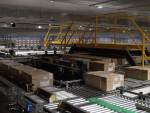
Alliance Group has launched a new $16 million warehouse technology system at its Lorneville plant near Invercargill.
The main beneficiaries of the EU FTA will be kiwifruit, onions, honey, wine and seafood.
A new independent global report commissioned by Meat Business Women shows a rise in women’s representation in senior leadership roles in the meat industry over the past three years.
OPINION: Your old mate was told about some research that proves that what consumers claim and what they actually do are very different.


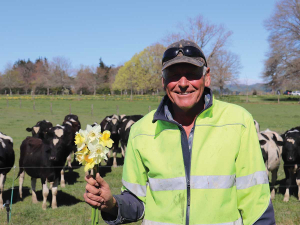
South of the central Hawke’s Bay town of Waipukurau is Taniwha Station – a highly successful 550ha bull beef farming operation.
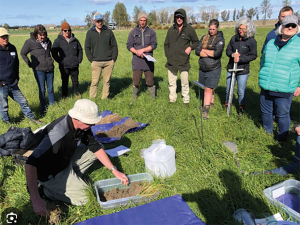
Beef + Lamb NZ funded research has shown that some simple changes to pasture management could help farmers make better use of rainfall and build resilience before dry conditions hit.
OPINION: There could hardly be a more appropriate theme for a conference than the one chosen by the red meat sector - Navigating Volatility.
When Northland leather worker Vernon Suckling started making horse saddles 50 years ago, quad bikes and side-by-side vehicles were unheard of.
Alliance Group has confirmed that eligible farmer-shareholders who supply and continue to back the business will receive up to $20 million later this year, following the strategic investment partnership with Dawn Meats.
With a general election under five weeks away, Rural News is asking major political parties about their policies and positions on key issues facing the primary sector. We will run their responses to each question over the next four weeks. The ACT Party and the Greens didn't respond in time.


OPINION: The same mainstream media muppets that brought you Jacindamania in 2017 have been flat out pimping for the Opportunities…
OPINION: Your old mate reckons the atrocious way farmers in the UK are treated by their lords and masters in…




