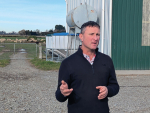
Farm Safety Improves Through 'Incremental Gain', Says Birkett
Improving health and safety is about incremental gain rather than a sudden decision, says Leeston farmer and Federated Farmers health and safety spokesman David Birkett.




 increase font size
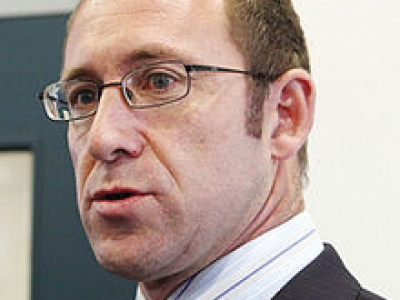 Andrew Little.
Labour leader Andrew Little says the Government should have sorted out the problems in the new Health and Safety bill during the select committee process and not dropped the changes on Parliament as it did.
He told Rural News the Government started out with good intentions but in its bid to please “some people” (read farmers) got itself tied in knots and the bill descended to the level of the ridiculous.
“Somehow it became derailed in the last couple of months and that has led to distortions, which undermined public confidence in the legislation. It is important to restore public confidence,” Little claims.
“My suggestions on how to do that have not met with a great deal of favour; the Government has carried on pushing the legislation through Parliament.”
Little says the Government claims it will consult the public after the legislation is passed, but that will be too late. He says if people don’t have confidence when the legislation is passed by Parliament -- especially given that it’s come together in a ‘Mickey Mouse’ way -- then it’s going to be hard to get people to seriously engage with the detail later.
“The legislation is by-and-large enabling legislation, meaning once it’s passed a whole set of specific regulations will sit beneath the law. This is quite common, but it’s a well documented fact that regulations can take a long time to finalise, given that stakeholders have to be consulted.”
Little believes the law should contain statutory guidance for WorkSafe NZ – especially on enforcement – to ensure “they don’t treat small business the same way as they treat a large corporate. [They must] accept that what might work in a smaller business may not work in a big business.”
He says he’s had mixed messages from farmers about the bill: some are willing to embrace a safety culture, others say leave us alone we know what we’re doing -- even more reason why the bill passed by Parliament should be right and that people understand its purpose.
Improving health and safety is about incremental gain rather than a sudden decision, says Leeston farmer and Federated Farmers health and safety spokesman David Birkett.
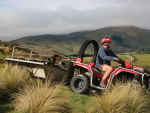
A safety push across New Zealand has revealed significant gaps in hazardous substances management, farm vehicles, tractors, quad bikes and side-by-sides.
Keeping healthy and safe during vintage 2026
Following a side-by-side rolling into a gully, Safer Farms has issued a new Safety Alert.
Southland farmers are being urged to put safety first, following a spike in tip offs about risky handling of wind-damaged trees


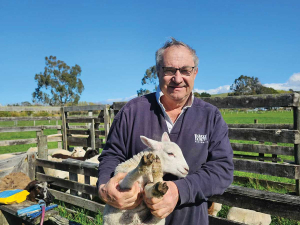
Decades piloting planes has ensured vet and farmer David Hayes is focused on safety. So, after a serious accident while welding on farm, he is sharing his experience so others can learn from it.
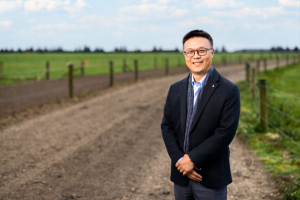
Canterbury milk processor, Synlait Milk has confirmed Leon Fung as its chief executive officer.
OPINION: Making it easier to collect rainwater and use it to grow crops and livestock is a no brainer.
As part of its Election 2026 coverage, Rural News asked political parties how they would help pull the arable sector out of the doldrums. Here's what they said:
Farmers are being encouraged to rethink how they manage waste on farm with the launch of ruralwastesorted.co.nz, a new website bringing together practical tips, real farmer experiences and resources.
New Zealand Winegrowers (NZW) is celebrating the India-New Zealand Free Trade Agreement (FTA) coming into force today, bringing New Zealand wine improved access to one of the world’s fastest-growing economies.


OPINION: The same mainstream media muppets that brought you Jacindamania in 2017 have been flat out pimping for the Opportunities…
OPINION: Your old mate reckons the atrocious way farmers in the UK are treated by their lords and masters in…




