Farm Safety Improves Through 'Incremental Gain', Says Birkett
Improving health and safety is about incremental gain rather than a sudden decision, says Leeston farmer and Federated Farmers health and safety spokesman David Birkett.




 increase font size
 WorkSafe New Zealand is calling on farmers to consider how vehicles move inside their barns and sheds.
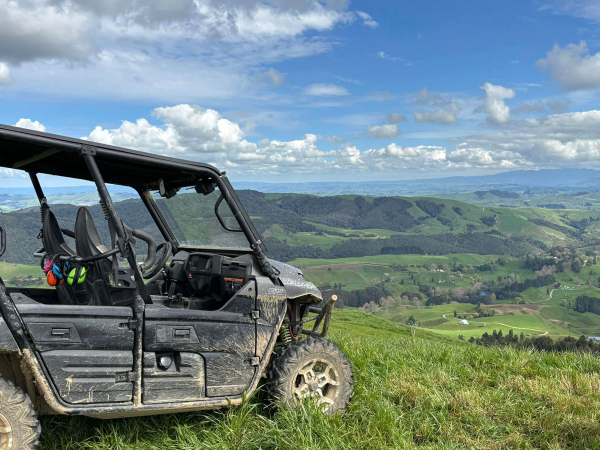
Following a sentencing for a death at a South Canterbury agribusiness, WorkSafe New Zealand is calling on farmers to consider how vehicles move inside their barns and sheds.
In March 2022, Louis van Heerden was crushed to death by a hydraulic tailgate on a trailer at Turley Farms Limited near Temuka.
The 45-year-old had been standing at the back of a dark, narrow shed as a spotter while grass seed was tipped off the trailer.
WorkSafe investigators subsequently found Turley Farms had no specific plan in place for managing farm traffic indoors.
Additionally, they found workers should not have been permitted in such a restricted area.
Turley Farms was sentenced this week for its health and safety failings.
The company was fined $247,500 and ordered to pay $201,477 in reparations.
WorkSafe area investigation manager, Steve Kelly says farmers tempt fate when they only manage traffic outdoors.
“Without a clear plan for how vehicles and people move around indoor barns and sheds, it’s only a matter of time before something goes terribly wrong,” Kelly says.
“This is a good reminder to take a critical look at how tractors and other vehicles move around inside farm buildings,” he says.
Kelly says clear separation of vehicles and pedestrians is key.
“Signage and designated safe areas are also simple and inexpensive ways to boost safety – especially when compared to a conviction and a fine.”
Following the fatality, Turley Farms has introduced reversing cameras, closing alarms, and isolation valves to the back of its trailers.
Vehicles are a leading cause of death and injury on New Zealand farms and agriculture accounts for approximately 25% of serious acute harm in New Zealand despite having making up 6% of employment.
Improving health and safety is about incremental gain rather than a sudden decision, says Leeston farmer and Federated Farmers health and safety spokesman David Birkett.
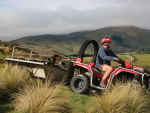
A safety push across New Zealand has revealed significant gaps in hazardous substances management, farm vehicles, tractors, quad bikes and side-by-sides.
South Waikato farmer David Christensen was convicted and fined $56,000 for two unlawful discharges of dairy effluent following a prosecution taken by Waikato Regional Council. The fine was imposed by Judge Melinda Dickey from the Huntly District Court after Christensen plead guilty to two charges under the Resource Management Act.
A contract milker and a dairy farm owner have been convicted and fined a combined $66,500 for the unlawful discharge of dairy shed effluent and stockfeed leachate into the environment.
Two forestry companies have been sentenced for road failures that led to the death of Coromandel truck driver Greg Stevens.

Farmer-owned fertiliser company, Ballance Agri Nutrients is welcoming National’s plan to negotiate security agreements with key supplier countries to protect New Zealand-bound products from export restrictions and greater supply chain certainty.
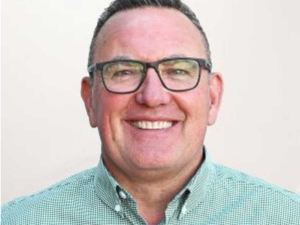
Carrfields has announced the appointment of Stu Hall to the newly created role of chief operating officer, Carrfields Ltd, reflecting the continued growth of their agribusinesses and the need to ensure the company has the leadership capacity and support in place as it pursues the emerging opportunities ahead.
New Zealand's role is not to compete with Indian growers, according to NZ Apples and Pears.
The potato industry is celebrating the success of two rising stars - James Blair, the 2026 Young Grower of the Year and runner-up and innovation award winner, Amber Davy.
Twenty-eight emerging leaders from across the horticulture sector spent two days last month learning valuable skills and connecting with industry experts.
There are five entrants in this year’s Young Horticulturist of the Year, competing in a series of technical, practical, business and leadership challenges.





OPINION: The same mainstream media muppets that brought you Jacindamania in 2017 have been flat out pimping for the Opportunities…
OPINION: Your old mate reckons the atrocious way farmers in the UK are treated by their lords and masters in…