
Farmers send clear message
A cacophany of sounds - barking dogs, the roar of tractors and tooting ute horns - descended on towns and cities around the country on Friday, July 16.




 increase font size
 The formal warnings, from the Waikato Regional Council, will be taken into account should there be any other breaches in future.
A Waikato company and a landowner have both received a formal warning after a breach of rules designed to protect Lake Taupo from nitrogen leaching.
The formal warnings, from the Waikato Regional Council, will be taken into account should there be any other breaches in future.
The complicated case involved the company grazing stock, for at least a month, on land that was only supposed to be used for forestry. That means the amount of nitrogen leaching from the land to the lake over time, due to the cattle being grazed there, could exceed the permitted amount.
"There has been a very significant public investment in the protection of Lake Taupo and it is important we hold people to account when they breach the rules," says the council's farming services manager Nicole Botherway.
"A warning is judged appropriate in this case, given the admission of fault and the amount of excess nitrogen likely to have been involved. But any further breaches by the parties could warrant a more significant response."
The case follows a similar one last year where a farmer who failed to meet his farming consent conditions near Taupo was also formally warned over the breach.
"Local people, the council and the trust are determined to protect the integrity of the rules protecting Lake Taupo. We will continue to respond to reports of breaches of consent conditions and take action where appropriate," says Botherway.
"We need the public to be our eyes and ears and, if they see cattle grazing in forestry areas, they should alert the council's Taupo office on 0800 800 401."
A cacophany of sounds - barking dogs, the roar of tractors and tooting ute horns - descended on towns and cities around the country on Friday, July 16.

Incorporating certain varieties of plantain into a cow’s diet has been shown to reduce the nitrogen concentration in their urine, which can leach through soil into groundwater.
A special ceremony was held in Taupo recently for the official signing of an agreement to transfer specific water quality monitoring functions to the Tūwharetoa Māori Trust Board.
It was “incredibly confronting” for Taupo farmers to be told in about 2000 that their farms were polluting the lake and they would probably have to go, says Mike Barton, of Glen Emmreth Farm at Lake Taupo.
The Bay of Plenty Regional Council is asking for help to come up with solutions to reduce the amount of nitrogen entering Lake Rotorua from land use activities.


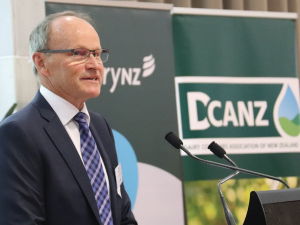
Dairy processors are ready to further boost New Zealand’s export earnings but want the incoming government to match their ambition with good policy.

Massey University is best placed to solve the “problems” facing the dairy industry, says vice chancellor, Pierre Venter.
Synlait's longest serving employee – a man who joined the Canterbury-based milk processor even before it began processing milk – is now its newest executive.
A dairy industry leader believes eradicating the common and costly disease, Bovine Viral Diarrhoea (BVD) is within reach.
A farmgate milk price of $10/kgMS this season is firming up as milk powder prices soar and the New Zealand dollar weakens.
Federated Farmers has welcomed new rural policies released by ACT, saying they align closely with its own election priorities.





OPINION: The same mainstream media muppets that brought you Jacindamania in 2017 have been flat out pimping for the Opportunities…
OPINION: Your old mate reckons the atrocious way farmers in the UK are treated by their lords and masters in…




