Lower sales, competition ends honey exporter’s sweet run
After three years of record performance, mānuka honey exporter and retailer Comvita has reported an annual net loss of $77 million.




 increase font size
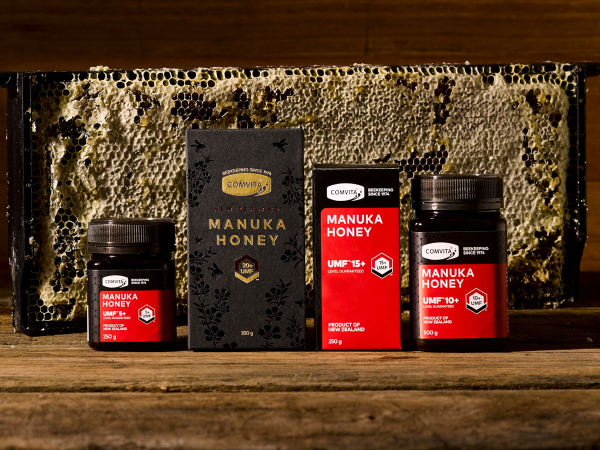 Limited financial headroom and capital constraints restricted the company to respond to market challenges and has forced the sale of Comvita to Florenz Ltd.
Manuka honey trader Comvita slumped to a $104 million net loss last financial year, reflecting prolonged market disruption, oversupply and pricing volatility.
Limited financial headroom and capital constraints restricted the company to respond to market challenges and has forced the sale of Comvita to Florenz Ltd, a subsidiary of billionaire Mark Stewart’s Masthead Limited, for $56 million.
This month, Comvita announced a Scheme Implementation Agreement (SIA) with Florenz, under which Florenz will acquire 100% of Comvita shares at $80c/share - a 56% premium to the 90-day volume-weighted average price (VWAP) at the date of announcement.
Comvita chair, Bridget Coates says the company continues to navigate sustained structural pressure in the Mānuka honey sector, with prolonged oversupply, pricing volatility, and softer consumer demand weighing heavily on margins.
Coates says these external pressures have been compounded by internal complexity, underperforming investments, and the cost of delivering a significant turnaround.
“We weren’t fast enough to adjust - and those same market dynamics have only intensified.
“Limited financial headroom and capital constraints have further restricted the Company’s ability to respond at pace. As a result, FY25 performance was materially impacted, including significant impairments.
“We recognise the impact this has had on our shareholders and the importance of delivering a clear path forward.
“The company has taken urgent and decisive action to strengthen its balance sheet and operational footing, and important progress has been made. Free cash flow is now positive, net debt has been reduced, and greater discipline has been applied to inventory and cost management. These are early but important signs that the reset is beginning to take hold.
“However, the scale of the challenges means the reset alone will not be enough to restore balance sheet strength. That is why, following a comprehensive review of all strategic options, the board signed a Scheme Implementation Agreement with Florenz in August.
“In our view, the scheme provides greater certainty in a difficult environment, a choice for our diverse shareholder base and the strongest foundation for Comvita’s long-term brand, people, and market leadership.”
Comvita’s revenue for year ending June 2025 reached $192m, 4% lower than the previous year. Gross profit was 24% to $82m and net loss 30% worse than the previous year.
Performance across Comvita’s global markets was mixed in FY25, with strong growth in North America and wider Asia offset by decline in China and Australia and NZ.
China remained the most challenging market, with sales down 10.9% and profit down 24.8% versus FY24. Economic slowdown and oversupply pressured margins, and recovery is expected to be slow despite early gains from distribution resets and structural simplification, the company says.
After three years of record performance, mānuka honey exporter and retailer Comvita has reported an annual net loss of $77 million.
Comvita bee and nature advocacy lead Noelani Waters describes her role, educating people on bees and honey, as a privilege.



During the nesting season, from September to December, industrious starlings can quickly build nests in the darker areas behind tractor and vehicle, usually close to hot engines, typically resulting in localised damage or in some cases complete write-offs.
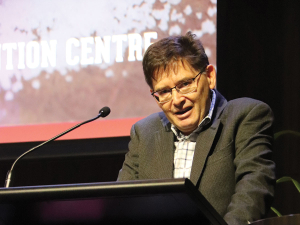
The meat processing industry is much more collegial than it was in the past and is now more focused on common goals.
With the last couple of months having seen some potential tractor purchases put on hold with the impending election and continued input cost rises, year-to-date figures, ending September, has seen deliveries up around 5% over the same period in 2025, with a total of 2026 units.
Beef+Lamb New Zealand is calling for nominations for director roles in the Northern South Island and Northern North Island electoral districts.
Fonterra chief executive, Richard Allen says being resilient has helped the dairy industry overcome extreme volatility in recent years.
The head of the Ministry for Primary Industries (MPI) trade and international relations group says New Zealand is well-positioned to secure trade access and compete internationally as the world becomes more complicated, demanding and uncertain.




OPINION: The same mainstream media muppets that brought you Jacindamania in 2017 have been flat out pimping for the Opportunities…
OPINION: Your old mate reckons the atrocious way farmers in the UK are treated by their lords and masters in…