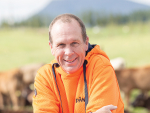
Pāmu FY26 Report: Profit More Than Doubles to $113m
Pāmu has released its FY26 Integrated Annual Report, reporting a Net Operating Profit of $113 million, more than double the $49 million recorded in FY25.




 increase font size

WITH LANDCORP eyeing the potential of dairy sheep, the United States could be to our sheep industry what China is to dairy cattle, opening a bold new chapter for New Zealand's most numerous farmed animal.
"New Zealand has a small but thriving dairy sheep industry," says Rick Powdrell, Federated Farmers meat & fibre vice-chairperson.
"News that Landcorp is now eyeing dairy sheep is exciting when you put it together with the sheep genome being mapped and a Trans Pacific Partnership edging ever closer.
"We need to be clear that nothing less than the full elimination of agricultural tariffs in the TPP is acceptable to our members. I say that not only with my meat and fibre hat on but because the United States imported about half of the world's sheep cheese last year.
"This is not just about the United States because the International Dairy Federation (IDF) states dairy sheep play an important role in the Mediterranean and Middle Eastern countries.
"The United Nation's Food and Agriculture Organisation puts the global share of sheep milk at 1.4% but in terms of who we are actively trading with, or seeking to develop trade relationships with, the potential is huge."
In South East Asia, sheep milk accounts for 3.9% of milk production, in China it is 4.2% while in North Africa and the Middle East, it is 7.5%, he says.
"Sheep play a significantly bigger role than dairy goats in these markets and I suspect that will surprise some people.
"Sheep milk contains higher milksolids in comparison to cows milk, hence its popularity for cheese, but it also commands a premium with consumers as it is more easily digested.
"Earlier this year greater commercial interest in sheep milk saw the International Standards Organisation with the IDF extend ISO to the measurement of protein in sheep milk as well as goats. Clearly, there is growing interest in an animal that thrives in New Zealand.
"Locally, Southland's vertically integrated Blue River processes sheep milk into cheese, ice cream and milk powder with that last product overwhelmingly exported. There's also Waituhi Kuratau in the North Island with its Matatoki Farm brand.
"Given environmental factors dairy sheep could play an important role in the industry's future and Federated Farmers is very keen to explore this in depth with our members.
"With Landcorp now actively considering dairy sheep, this evolution could make sheep a tri-use animal for dairy, meat and fibre. This would greatly aid the rejuvenation of our industry and potentially put New Zealand back on the sheep's back," Powdrell says.
Pāmu has released its FY26 Integrated Annual Report, reporting a Net Operating Profit of $113 million, more than double the $49 million recorded in FY25.

A partnership between state-owned enterprise Pāmu (Landcorp Farming Limited) and charity Meet the Need is putting more than quality New Zealand beef into food bank parcels this year.
State farmer Pamu has delivered its strongest operating result on record.
State farmer Pāmu (Landcorp) has announced it will pay a $10 million special dividend to the Crown off the back of a strong outlook for the business and a capital repayment of $9.5 million following Fonterra's consumer business sale.
The Government has appointed three new members to the board of state farmer Landcorp Farming Ltd, trading as Pāmu.



Canterbury milk processor, Synlait Milk has confirmed Leon Fung as its chief executive officer.
OPINION: Making it easier to collect rainwater and use it to grow crops and livestock is a no brainer.
As part of its Election 2026 coverage, Rural News asked political parties how they would help pull the arable sector out of the doldrums. Here's what they said:
Farmers are being encouraged to rethink how they manage waste on farm with the launch of ruralwastesorted.co.nz, a new website bringing together practical tips, real farmer experiences and resources.
New Zealand Winegrowers (NZW) is celebrating the India-New Zealand Free Trade Agreement (FTA) coming into force today, bringing New Zealand wine improved access to one of the world’s fastest-growing economies.
New Zealand’s red meat sector has welcomed the India-New Zealand Free Trade Agreement taking effect, which removes India’s 33% tariff on New Zealand sheepmeat.




OPINION: The same mainstream media muppets that brought you Jacindamania in 2017 have been flat out pimping for the Opportunities…
OPINION: Your old mate reckons the atrocious way farmers in the UK are treated by their lords and masters in…




