McRae Wins Southern South Island B+LNZ Director Vote
Matt McRae, a farmer from Mokoreta in Southland who runs a sheep, beef and dairy support business alongside a sheep stud, has been elected to the Beef +Lamb NZ Board as a farmer director.




 increase font size
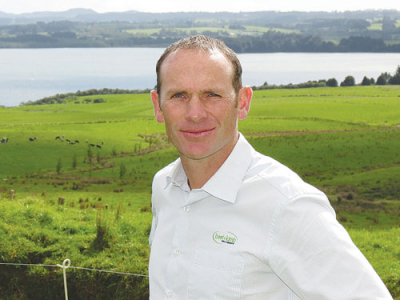 Beef + Lamb NZ chairman James Parsons.
Confidence precedes investment, so if farmers are confident in the future and the information they are getting, they will invest, says Beef + Lamb NZ chairman James Parsons.
“If we as farmers go to buy rams or bulls, if we are confident those numbers are real and we will get a return, we will be happy to pay more for those genetics,” he says.
The big question is how to increase that confidence?
“How do we have the right tools and get the information out to farmers so they are more confident to make those sorts of decisions?”
Parsons was asked at the recent Northland Genetics Showcase Day, at Landcorp Kapiro Station, to look at where the industry would be in 10 years.
Parsons said he had sat on the BLNZ Genetics board since it started. It is fully owned by farmers through BLNZ.
“What exercises their minds a lot is what the future looks like and who are the guardians of the vision of where we are going in terms of genetics in the country. We take that seriously.”
He said Romney breeder Gordon Levet had given a great presentation, talking about the balance between the numbers and structural soundness.
“There is no question we have flocks or individual rams that might have the numbers…. But they don’t have conformation.
“That can erode the confidence of farmers when they see something with great indexes but they wouldn’t want to breed from it because of the conformation aspects.”
Parsons says his vision would be to have indexes that not only cater for productivity traits, but also for things like structural soundness -- looking at conformation of feet, mouths and other faults.
He says in stud breeding, currently, you might use a two tooth ram that looks great, but in a year or two you regret using that animal across the flock.
“Longevity is another one... My view is that in 10 years we will have made big gains in that. There is always a tension in trying to get genetic gain; you go with your youngest animal because it has high genetic merit. But how do you know they will actually last? You don’t until they have been around for a few years and had a few daughters.
“At the moment we have quite crude tools to understand that, depending on whether the ram or daughters are still around further down the track; but you made those important decisions much earlier.
“We have genomic predictors…. It would be great to have some tools for longevity.”
When you buy animals now as commercial farmers you generally base it on condition and what they look like, Parsons said. If you have done your homework you might look at the genetic background on the stud breeder but there is still variation within a stud flock.
How do you know the genetic merit of those animals?
“A lot of stock are sold through saleyards and even in paddock sales, and there is little knowledge about their genetic make-up.”
His vision is to have a breeding worth for commercial animals; so for instance you may pay for a line of two tooth ewes which may look a bit harsh because of the environment they came out of, but will give a greater return.
The farmer will be rewarded for having made those genetics decisions.
“That spans not only sheep but also cattle and I think there is a real opportunity. It comes back to confidence: if we have confidence in the data and we get more information on some of those structure things, we can make big strides as an industry.
“All this takes infrastructure and that is what BLNZ Genetics is about. BLNZ Genetics doesn’t own genetics or sell genetics; all it does is create an infrastructure by which people can make genetics decisions.
“BLNZ Genetics looks at how to take loads of data and turn it into information so farmers can make wise decisions. That’s for the breeding community as well as their commercial clients.”
Matt McRae, a farmer from Mokoreta in Southland who runs a sheep, beef and dairy support business alongside a sheep stud, has been elected to the Beef +Lamb NZ Board as a farmer director.
Recent widespread autumn rain will have triggered the germination of subterranean clover seeds, and the resulting seedlings should be allowed to reach the 3–4 trifoliate leaf stage before grazing, says Beef+Lamb NZ.
A hub farm in each of Beef + Lamb NZ’s seven regions and more focus groups are being rolled out for the red meat sector this year.
The red meat sector is poised for a strong rebound this season, with export receipts forecast to top $10 billion and farm profitability to almost double.
Progeny testing at Pāmu’s Kepler farm in Southland as part of Beef + Lamb New Zealand’s Informing New Zealand Beef programme is showing that the benefits of hybrid vigour could have a massive impact on the future of beef breeding.


South of the central Hawke’s Bay town of Waipukurau is Taniwha Station – a highly successful 550ha bull beef farming operation.
Beef + Lamb NZ funded research has shown that some simple changes to pasture management could help farmers make better use of rainfall and build resilience before dry conditions hit.
OPINION: There could hardly be a more appropriate theme for a conference than the one chosen by the red meat sector - Navigating Volatility.
When Northland leather worker Vernon Suckling started making horse saddles 50 years ago, quad bikes and side-by-side vehicles were unheard of.
Alliance Group has confirmed that eligible farmer-shareholders who supply and continue to back the business will receive up to $20 million later this year, following the strategic investment partnership with Dawn Meats.
With a general election under five weeks away, Rural News is asking major political parties about their policies and positions on key issues facing the primary sector. We will run their responses to each question over the next four weeks. The ACT Party and the Greens didn't respond in time.




OPINION: The same mainstream media muppets that brought you Jacindamania in 2017 have been flat out pimping for the Opportunities…
OPINION: Your old mate reckons the atrocious way farmers in the UK are treated by their lords and masters in…