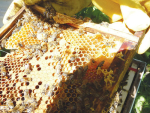
Egmont Honey Buys Tweeddale's, Now NZ's Biggest Apiary
New Plymouth-based Manuka honey exporter Egmont Honey has completed its acquisition of Taihape beekeeping business Tweeddale's Honey, with settlement finalised on Friday, 18 September.




 increase font size
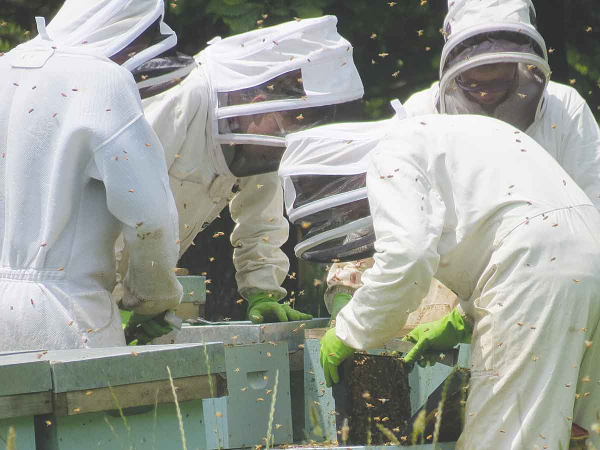 International manuka honey markets are forecast to be worth $1.27b by 2027.
New Zealand honey producers are "disappointed but undeterred", while Australian beekeepers have welcomed a "common sense" ruling.
This comes after the New Zealand's Intellectual Property Office (IPO) recently decided that NZ honey producers have no exclusive claim to the term 'manuka honey'.
The trademark win follows earlier Australian successes in other jurisdictions including the UK and Europe.
Recently elected Australian Manuka Honey Association (AMHA) chairman Ben McKee says his organisation is delighted with the judgment handed down by the IPO. He praised the decision as a "sensible outcome" that ensures Australian beekeepers can market their produce, while following other precedents around the world that manuka honey is a descriptive term.
"What we have been saying since New Zealand producers began this legal process nearly eight years ago is, our product has a long history of being recognised as manuka honey," he told Rural News.
"It is produced like the NZ product is and it also offers the sought-after antimicrobial properties that consumers around the world value so highly.
"The fact that even authorities in New Zealand cannot find a way to support the trademark claims of NZ producers should, we hope, bring this legal dispute to an end once and for all."
International manuka honey markets are forecast to be worth $1.27b by 2027.
However, chair of the Manuka Charitable Trust Pita Tipene claims its role as caretakers of taonga species on New Zealand's behalf was "not contestable" and that the findings reflected "technicalities and limitations of conventional IP law to protect indigenous rights".
"If anything, it has made us more determined to protect what is ours on behalf of all New Zealand and consumers who value authenticity. We will take some time to absorb the details of the ruling and consider our next steps."
McKee has expressed disappointment with these statements, calling them and the ongoing legal fees the Australian industry are paying in these appeals "frustrating".
He adds that although they will "continue our opposition", what Australian honey producers really wanted was to grow the manuka industry.
"We can do that better together. At some stage though, we may have to accept that without a change in industry management, working with Australia may not be a priority from some in NZ."
McKee says growing research highlighting the unique health benefits of manuka honey has led to strong demand for Australian honey from countries around the world. He also points to a study in PLOS One (an open access peer reviewed journal) from 2016 that found 22 of 80 Australian honey samples matched or even exceeded New Zealand honey in critical MGO levels - albeit with only two NZ samples as control.
"The opportunities for Australian Manuka honey are huge. Hopefully we can now focus on promoting this wonderful medicinal honey to the world, rather than fighting over naming rights."
McKee claims that the AMHA and Australian Minister for Agriculture have attempted to reah out to their NZ counterparts for communications but had not gotten a response.
Rural News asked NZ honey representatives for comment but they had not responded.
New Plymouth-based Manuka honey exporter Egmont Honey has completed its acquisition of Taihape beekeeping business Tweeddale's Honey, with settlement finalised on Friday, 18 September.

Naki Honey, a New Zealand manuka apiary company, has crafted what is believed to be the world's most expensive honey.
Thousands of honey retailers and professionals worldwide are getting a taste of the remarkable properties of New Zealand mānuka honey.
After three years of record performance, mānuka honey exporter and retailer Comvita has reported an annual net loss of $77 million.
Bee awareness month - September - ended on a high for the struggling apiculture sector.



Farmers are being encouraged to rethink how they manage waste on farm with the launch of ruralwastesorted.co.nz, a new website bringing together practical tips, real farmer experiences and resources.

New Zealand Winegrowers (NZW) is celebrating the India-New Zealand Free Trade Agreement (FTA) coming into force today, bringing New Zealand wine improved access to one of the world’s fastest-growing economies.
New Zealand’s red meat sector has welcomed the India-New Zealand Free Trade Agreement taking effect, which removes India’s 33% tariff on New Zealand sheepmeat.
More than 95 per cent of New Zealand’s forestry and wood exports to India can now enter tariff free as the New Zealand-India Free Trade Agreement comes into force today.
Federated Farmers is backing Feilding High School’s call to keep Agriculture and Horticultural Science as a standalone subject in Year 11.
Food and fibre exports have returned a billion- dollar bonus to the country.




OPINION: The same mainstream media muppets that brought you Jacindamania in 2017 have been flat out pimping for the Opportunities…
OPINION: Your old mate reckons the atrocious way farmers in the UK are treated by their lords and masters in…




