INTENSIVE ARABLE agriculture in South America still has some way to go to catch up to New Zealand, says a leading Canterbury farming couple.
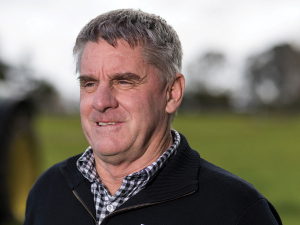
Craige and Roz Mackenzie, National Winners of the 2013 Ballance Farm Environment Awards, recently returned from a trip to Argentina, Chile and Uruguay, where they studied arable farming, dairying and beef production.
A key aim of the trip was to exchange views on topics of crucial interest to New Zealand farmers and to showcase New Zealand's stance on agricultural sustainability.
Craige says he and Roz were also keen to see how South American farming systems compared with their own intensive Canterbury operation.
"What we saw made us realise we are definitely heading in the right direction," he says.
"They're using technologies such as GPS and Auto-steer, but variable rate seeding and fertiliser technology is very new to them, so they are probably several years behind us in that regard."
Craige and Roz were hosted by PGG Wrightson for part of their trip and this gave them a good insight into seed production needs for South American farming "and how our production here in NZ complements what is grown in South America".
The Mackenzies were also eager to examine the pros and cons of GM (genetically modified) cropping in Argentina and Uruguay, where Soy and corn crops are virtually 100% GM.
They talked to growers who are starting to see herbicide resistance due to their reliance on one product, coupled with a lack of crop rotations.
Craige says this has the potential to be a major issue for farmers and they will rely heavily on chemical companies to come up with a management solution.
"However, it's possible that in the future GM technology could offer New Zealand farmers some benefits in terms of nutrient and water-use efficiency. So it's probably time we all sat down and had a mature discussion about GM in this country."
Soil erosion is a significant issue for arable farmers in Argentina and Uruguay and this has encouraged a major shift towards no-till sowing. The use of no-till technology has led to a big increase in the area under arable production in both countries.
There are some huge arable farms in South America. One of the family farms Craige and Roz visited was 9000ha, but there are other corporate-owned operations as big as 40,000ha in both Uruguay and Argentina.
Surprisingly, they found that many farm owners don't actually live on their farms.
"They live in towns or cities that can be 100 to 200km away. They do it because they want to be closer to schools and supplies, but it must be hard for farmers to fully engage with their land when they don't actually live on it. We can see it creating a growing disconnect. The lack of rural infrastructure is also having a big impact on rural areas, creating population drift to urban areas and leading to a shortage of workers.
Craige and Roz returned to New Zealand with a whole new appreciation for the standard of rural roading. In rural Uruguay and Argentina, many of the rural roads were not tarsealed and almost all were poorly maintained.
"There's a steady stream of soybeans trickling out of trucks as they bounce along rough roads. Arable farmers can lose 1-3% of their crop between the farm and the delivery point. It seems incredible because in Uruguay about 30-35% of the country's income comes from arable production, yet the government spends very little on the roads."
A highlight of the trip was a two-day visit to Soprole, a Fonterra-owned company in Chile.
The Mackenzies, who also own a dairy farm, were impressed with the company's focus on developing value-added products. Soprole produces yoghurt, cheese, milk and butter. It's the largest dairy company in Chile and was recently voted the country's best value brand.
"They are pretty sharp operators and a very good example of New Zealand innovation integrated with local know-how."
The Mackenzies will present more detail on their findings at the New Zealand Farm Environment Trust's National Showcase in Christchurch on June 26.