MPI Opens $3m Greenhouse Gas Research Funding Round
The Ministry for Primary Industries (MPI) has announced has opened applications for the 2026/27 funding round of the Greenhouse Gas Inventory Research (GHGIR) fund.
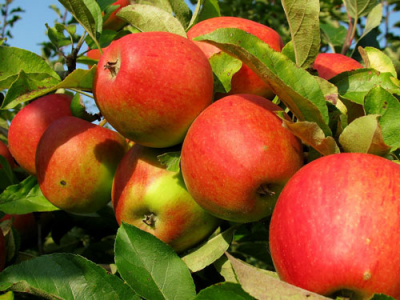
Orchardists and nursery owners are starting to raise questions about the future of the apple and stonefruit industry.
The questions follow a messy battle with MPI over the fate of 48,000 apple and stonefruit trees.
The High Court deemed MPI’s initial directive to contain and/or destroy the plants under Section 116 of the Biosecurity Act unlawful. Today at 5pm new directives will be proposed from MPI, despite affected apple and stonefruit industry members claiming MPI has had little communication with them.
Whilst all member’s actions are focussing on the directives for the 48,000 plants in question, the orchardists and nursery owners are starting to raise questions about the future of the apple and stonefruit industry.
“MPI has not moved forward with any pace to re-accredit the CPCNW facility in the US, which leaves us at a loss as to how we will access innovative plant varieties to future-proof our industry and maintain a globally competitive industry position,” says Kerry Sixtus of Pattullo’s Nurseries.
“MPI talked about accessing material through other channels such as Canada or France, but MPI has yet to publish their audit reports or indicate whether they will issue import permits for plant materials from these facilities.
“Not all facilities have the same stock. It is not like shopping for groceries, where you have a choice of retailers. We are dealing with unique and limited plant varieties. For that we need to go to specialist stores and build long-term relationships to ensure we have access to the right products,” says Sixtus.
New Zealand dairy farmers are set to be the first in the world to receive access to a new digital physical milk pricing tool that enables them to fix the price for their physical milk.
State farmer Pāmu is opening its farm gates this summer in an effort to give the rural sector the opportunity to see how large-scale, multi-system farming is delivering productivity and profitability across New Zealand.
A five-year study has found that the cost of reducing emissions without technology may be significant and unsustainable for Northland dairy farmers.
DairyNZ says Waikato farmers need certainty on Plan Change 1, but they say that certainty must be matched with practical, workable rules and a clear transition that doesn't get ahead of the new resource management system currently under review.
While the Government has moved quickly to make commercial hauliers' lot easier during the current fuel crisis, they appear to be stuck in the creep box when it comes to the agricultural industry.
Waikato farmers have been told that the Government’s new planning system legislation and the region’s Plan Change 1 (PC1) “won’t mesh together very well”.

OPINION: Central Hawke's Bay farmer Mark Warren recently told the Hawke's Bay Times it's time for a conversation about allowing…
OPINION: A nation that relies as heavily as NZ does on functional global shipping lanes will have to do its…