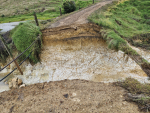
Award-winning Māori farm severely damaged by isolated Northland thunderstorm
One of the country's top Māori farms has been badly damaged by a severe isolated thunderstorm which hit parts of the east coast of Northland last week.




 increase font size
 Ahuwhenua Trophy Management Committee chairman Kingi Smiler.
More than 150 people turned up to Pukepoto Farm Trust on May 4 for the last of three field days in the Ahuwhenua Trophy BNZ Māori Excellence in Farming Award for sheep and beef.
Pukepoto Farm Trust, with just over a thousand owners, is situated near the tiny settlement of Ongarue about 20 minutes north of the central North Island town of Taumarunui. Most people understand Pukepoto to mean little hill but in this case it means blue clay. The farm is a typical hill country farm with high steep hills and gullies that drop down to feed the Ongarue and Ohura Rivers, and ultimately the Whanganui River.
The property consists of 1400 hectares of land of which just over 1000ha are farmed. About 100ha are covenanted under the Ngā Whenua Rāhui scheme. There is 62ha in plantation pine and the remainder of the unfarmed land is scrub; much of which is being retired to prevent erosion. The Trust has worked closely with Horizons Regional Council in this regard. Currently the property winters a flock of 6000 Romney ewes and a herd of 300 mainly Angus cattle.
The judges who selected Pukepoto Farm Trust as a finalist say they were impressed with the collaborative approach to governance by the Trust and the way they use their mix of skills to full advantage. The judges also praised the Trust for its financial management, the setting of clear and simple key performance indicators and its commitment to improving animal performance. The judges also commented positively on the steps the Trust had taken to achieve sustainability and environmental outcomes.
The Ahuwhenua Trophy Management Committee chairman Kingi Smiler says Pukepoto Farm Trust’s financial performance over the last three years has been outstanding and as a farm rated in the top 20% in their land class.
The whānau of the Trust have a strong connection with their land and this bonding and respect for their farm has, and will continue to serve them well into the future.
Smiler says all three field days have been very professionally run by the three finalists and the Ahuwhenua Trophy Management Committee recognises this effort. This is what you would expect from three of the top performing Māori sheep and beef farmers in the country.
Smiler commented that the judges now have a lot to ponder and he, like others, awaits with great interest their decision when the winner is announced at the awards dinner in Whangarei on May 26.
One of the country's top Māori farms has been badly damaged by a severe isolated thunderstorm which hit parts of the east coast of Northland last week.

Coby Warmington, 29, a farm manager at Waima Topu Beef near Hokianga was named at the winner of the 2025 Ahuwhenua Young Maori Farmer Award for sheep and beef.
Recently two of New Zealand's top Maori sheep and beef farms held field days as part of the prestigious Ahuwhenua Trophy competition. The two are: Whangaroa Ngaiotonga Trust, northeast of Whangarei, and the proprietors of Tawapata Onenui farm on Mahia Peninsula in southern Hawke's Bay. Reporter Peter Burke attended both field days.
Farms from Northland and northern Hawke's Bay are the finalists in this year's Ahuwhenua Trophy competition for the top Māori sheep and beef farms.
The search is on to find the top Māori sheep and beef farm with entries now open for the 2025 Ahuwhenua Trophy competition.


Federated Farmers has welcomed new rural policies released by ACT, saying they align closely with its own election priorities.

Rural Contractors NZ says proposed changes to land transport rules for agricultural vehicles are a welcome response by the Government to out of date regulations which have seen members hit with huge fines.
Alliance is calling for final applications for its 2027 Graduate Programme, with applications closing on Sunday 25 October.
Decades piloting planes has ensured vet and farmer David Hayes is focused on safety. So, after a serious accident while welding on farm, he is sharing his experience so others can learn from it.
Canterbury milk processor, Synlait Milk has confirmed Leon Fung as its chief executive officer.
OPINION: Making it easier to collect rainwater and use it to grow crops and livestock is a no brainer.

OPINION: The same mainstream media muppets that brought you Jacindamania in 2017 have been flat out pimping for the Opportunities…
OPINION: Your old mate reckons the atrocious way farmers in the UK are treated by their lords and masters in…




