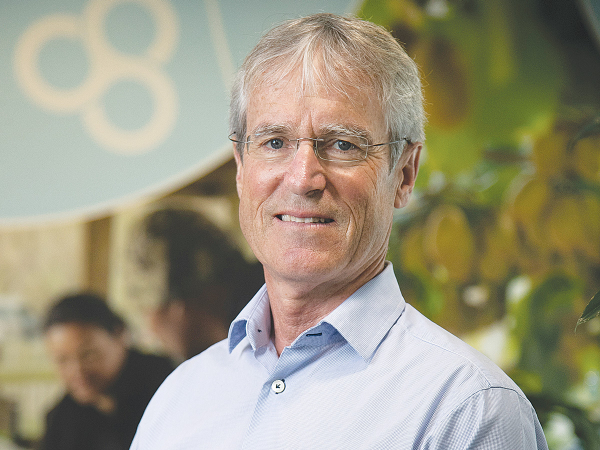
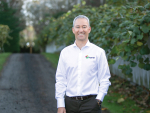
Outgoing Ballance chief executive Mark Wynne will eye more governance roles after he steps down in September.
Wynne, who has led the fertiliser co-operative for nine years, has been a board member of Alliance Group for the past 12 months. He told Rural News that his board role has whet his appetite for governance roles.
"I think as a chief executive going out of management into governance, you can bring a whole different set of skills and experiences to a board and that's what I'd like to do," Wynne told Rural News. "I see the next decade as a career in governance."
Wynne says his nine years at Ballance have been great fun.
"Huge challenges impact the rural sector across dairy, sheep and beef, arable and horticulture sectors and these are all huge opportunities," he says.
"A co-op like Ballance is set up really well to help farmers navigate through those changes."
He says the fertiliser co-op is helping farmer shareholders in developing and addressing freshwater plans, digital reporting, soil health and precision application as they continue to improve sustainable practices.
"These are tools designed to help farmers thrive in the rapidly changing environment they find themselves in," Wynne says.
"I'm very fortunate to have that role - just loved it. I hope I'm leaving a great legacy with awesome people and awesome tools that are designed for our farmers to thrive."
Wynne believes primary production is in a fantastic place. He points out that over 82% of NZ's exports are related to the primary industry.
"If we want to continue to be a wealthy country, we must grow the value, not necessarily the volume. Because without that value, we can't pay for the more nurses, medicine, and electric cars, all the things we want to do to make our society better."
For this, the country needs a thriving primary industry. Wynne says farmers need to change too, and this will come through innovation. He thinks the future for the primary industry is very exciting but points out that all parts of the sector must be linked up.
"What we've got to do is to make sure all parts are linked up. But we are still not totally connected," says Wynne. "We got legislation that's well-meaning, but its implementation has some silly consequences. We've got to do better than that."
He also wants farmers to be leading change.
"We should go back to the process of leading change. We start by farmers understanding their number, that's the first point. And, then looking at what should the number be over a period, by sector, because it will vary between dairy and sheep and beef and arable and horticulture.
"And, then we develop a plan that allows farmers to lead the change themselves to that desired outcome."
Wynne steps down at Ballance's annual general meeting at the end of September.