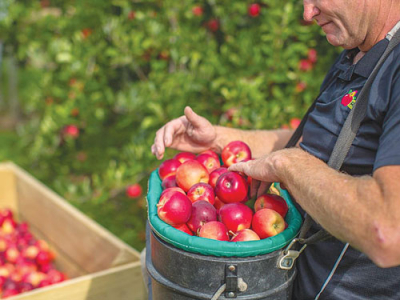

The Rockit apple has been bred through the Prevar programme and it has been taken up by the group Rockit Global, says chief executive Andrew Watters.
Their model is similar to a small Zespri, Watters explained to Rural News.
“They will manage and develop the orchard, provide the trees, pack the product, sell it and market it. But they are not the grower,” he says.
MyFarm has formed Rakete Orchards as an investment vehicle to grow rocket apples under licence to Rockit.
Rakete has four orchards under lease in two clusters – one near Taradale and the other just south of Havelock North.
“We are taking over four leases for 28 years,” says Watters. “The blocks are bare land at the moment and we will invest in their development.
“We will grow the apples under licence to Rockit. We will plant those in Rockit apples. We are paying a small licence to Rockit, buying and planting the trees, putting all the structures in; apples grow on a trellis structure a bit like grapes do.
“We are developing the blocks into productive orchards then from about the fourth year we will sell apples and deliver investors’ returns.”
Rockit operates a growers’ trust – a pool payment system somewhat similar to Zespri.
“They take all the payments, deduct their costs and royalties and then the growers get the mean margin from the market,” explains Watters.
Prevar, which developed Rockit, was set up to globally commercialise the new apple and pear cultivars bred in New Zealand by Plant & Food Research.
Promotional material on Rockit says “it’s the world’s first miniature apple sold in a distinctive plastic tube, and now grown under license in nine countries and sold in airports, sports stadiums and cafés in 29 countries”.
Watters says Rockit has established markets – strong in Asia, strong and growing in North America and in Europe.
For Kiwis the Rockit is a very expensive apple.
“But if you put them in your fridge and the kids have a few to choose from they will always go for the Rockit apple first,” says Watters. “They are twice the price of any other apple. It is a snack food sold in outlets where people are looking for a healthy snack.”
MyFarm is promoting now to investors under Rakete Orchards as the investment vehicle. One translation of Rakete in te reo Maori is ‘rocket’, says Watters.
“We are looking for $13m from investors with $100,000 or more. The big difference about this investment is a very high level of cash returns forecast. It will take us seven years to pay back what the investors have put into the orchards. But thereafter we are forecasting returns of over 50-55% per annum.”
The company has a total of 55ha with 40ha of trees for the next planting season in spring and the remaining 15ha will be the following spring.
Watters says interest has been good. After seminars in Auckland and Tauranga he will tour NZ to talk to potential investors.
“The commentators, columnists and all sorts tell us that in agriculture we shouldn’t produce commodities. We need to produce branded products so we get maximum returns for NZ.
“This is a good example of an innovative company with a premium product customers want and they are marketing it very smartly to overseas customers,” Watters says.
“It is investment in the Rockit company; even though we are growing apples it is an investment in the Rockit apple and the Rockit brand, but the returns are extremely good.
“It is an excellent example of adding value to commodity products produced in NZ.”