Why Now Is the Time to Plan Farm Succession, Findex Says
OPINION: Succession and long-term planning are perennial topics because it is perpetually sidelined on busy farms.




 increase font size
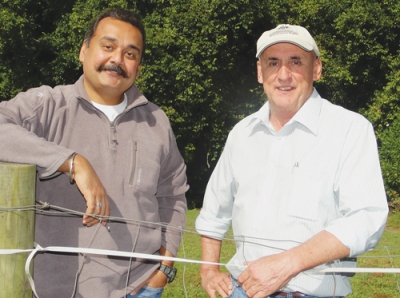 Austrade business development manager Anirban Deb with project leader Philip Chamberlain.
Australian dairy expertise and services are set to play a key role in developing a modern, high quality milk production sector in India.
The northern Victorian consultancy Profitable Dairy Systems has completed a feasibility study for a 250 head pilot farm on a greenfield site just south of New Delhi.
The new dairy is expected to be a forerunner to multiple 2500 cow units built by a major processor keen to source high quality milk for middle and upper class Indian consumers.
Project leader Philip Chamberlain, a Queensland veterinary dairy specialist, is working closely with Austrade in the emerging market which he said held enormous potential for Australian businesses.
"There is great commercial opportunity for a range of Australian expertise from the provision of tropically-adapted genetics to nutrition, animal husbandry and farm management. Training and other ancillary services will also be required – they need a complete package," Chamberlain says.
"Until now India has not known a lot about the dairy expertise Australia has to offer."
A diverse group of 12 potential Australian suppliers has come together following the success of a mission led by Trade Minister Andrew Robb and Parliamentary Secretary for Agriculture, Senator Richard Colbek, which attended Australian Business Week in India in January.
"It makes sense to pool Australian resources as one person or company couldn't do it alone," says Chamberlain.
Anirban Deb is an experienced Austrade business development manager in India who has a key focus on opportunities in the growing dairy sector.
"India is actually the largest fresh milk producing country in the world with production of 130 million tonnes per annum. The national milking herd comprises about 122 million cows and 90 million buffalos."
Speaking during a visit to Australia in May, Deb said the Indian industry was struggling to keep pace with a 7% annual growth in milk demand.
"The animal-to-land ratio had reached saturation point which has caused the focus to shift from low input-low output to high input-high output production systems to increase milk yield," says Deb.
"This change in market dynamics is encouraging the development of large new intensive dairies which will lift efficiency and productivity."
There was significant interest in large scale projects by corporations, entrepreneurs and progressive farmer associations.
Deb said a new national 15-year dairy plan still has a major focus on small scale farmers with production aggregated in a cooperative system.
A key outcome of the plan is improving milk yield per animal with a scientific approach to animal breeding and nutrition.
"Milk quality is also becoming an issue with demand rising for value added products including cheese and yoghurts," Deb says.
New feedlot dairies were coming up with innovative sales and marketing models, including direct supply of pure milk direct to consumers. With an assured cool chain, this premium milk was bringing almost double the price of regular retail product.
"Milk has traditionally been a cheap source of protein for the masses in a country in which the slaughter of cattle is against the law," Deb said.
Chamberlain says Indian producers have looked to source Holstein dairy genetics from North America in their quest for improved production.
"But significant difficulties have been experienced with herd fertility in the hot and humid Indian environment.
"In our feasibility study, we have recommended the sourcing of tropically adapted Australian dairy genetics."
OPINION: Succession and long-term planning are perennial topics because it is perpetually sidelined on busy farms.
Farms across the upper North Island are trialling different pasture mixes as part of a research programme that aims to build greater resilience into farming systems.
Election years are always a concerning time for farmers, according to DairyNZ chair Tracy Brown.
Matt Collier, Probiotic Revolution, says calves will drink a lot of milk once-a-day with their probiotic Calf Xtreme.


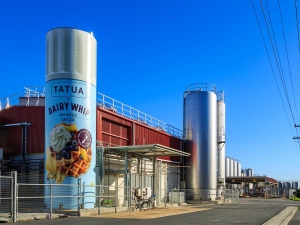
Waikato milk processor Tatua has again declared a record milk payout to farmer shareholders, leaving other processors in the dust.

A Labour-led Government won’t be bringing back the controversial freshwater rules of 2020.
National’s much-touted free trade deal with India featured in the Rural Issues Debate at Mystery Creek, Hamilton on Wednesday night.
New Zealand's 2026-27 freshwater fishing season has opened, with anglers encouraged to head to rivers and lakes over the coming days as conditions look favourable across much of the country.
Central Otago District Council (CODC) has voted against a plan to spread treated sewage sludge from Cromwell and Alexandra on farmland near Lauder, a decision Federated Farmers says reflects strong opposition from rural residents.
Pāmu has released its FY26 Integrated Annual Report, reporting a Net Operating Profit of $113 million, more than double the $49 million recorded in FY25.

OPINION: It seems Canterbury processor Synlait is still in the doldrums.
OPINION: Get offside with New Zealand First leader Winston Peters at your own peril.