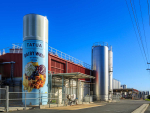
Ah Tatua, You've Done It Again!
Waikato milk processor Tatua has again declared a record milk payout to farmer shareholders, leaving other processors in the dust.




 increase font size
 Dairy Australia managing director Ian Halliday.
Despite milk price volatility most Australian dairy farmers enjoyed a good 2014-15 season.
Dairy Australia says in its June 2015 Situation and Outlook Report that the year was one of consolidation and growth for many farmers.
Reflecting a solid season, Dairy Australia forecasts national milk production to be 9.45 to 9.50 billion L for 2014-15 – about 2.5% more than the previous season, which had only grown 0.4% from the previous year.
While international prices remain depressed due to abundant supply and lacklustre demand, Australian dairy farmer confidence remains high.
Results from Dairy Australia’s 2015 National Dairy Farmer Survey (NDFS) indicate 74% of dairy farmers are feeling positive about the industry’s future, in line with 2014 sentiment. The surveyof 1000 dairy farmers also revealed 79% of farmers anticipate a profit for 2014-15.
Dairy Australia managing director Ian Halliday says farmer confidence has weathered the global market storm.
“Farmers in many dairying regions have taken advantage of the stable production margins and favourable weather over the past year.
“Milk processors are publicly forecasting similar farmgate prices for the 2015-16 season, and continued domestic and global demand have also been encouraging.
“More stable returns generated by the Australian domestic market, which consumes 60% of milk production, have helped cushion the industry through an internationally volatile 2014-15.
“And having a diverse range of markets and products has paid dividends for Australian exporters this season. It spreads our exposure to the volatility the global market can present, hence we haven’t felt the pinch of China’s decreased bulk powder imports.”
In Australia, dairy demand remained robust for 2014-15, Dairy Australia industry analyst John Droppert says.
“Recent figures show strong growth in spending by the food service and supermarket industries, though the pace of growth has slowed in recent months.
“Australian supermarket sales of major dairy categories continue to tell an essentially positive story. Dairy spreads remain the top performer, outpacing all other major dairy categories for volume and value growth. Milk sales are increasing slowly and steadily and despite shrinking sales volumes, higher average/kilo prices for cheese and yoghurt/dairy snacks are growing in value.”
While nationally farmers are confident, the NDFS pointed to marked regional differences in sentiment. Tasmanian farmers are most positive (84%), then those in the Murray region (northern Victoria and the Riverina) and central and southern NSW at 81%. Confidence in the subtropical region of Queensland and northern NSW has improved a lot from 33% in 2014 to 55% now, but is well below the national average.
Droppert says survey results suggested the improvement could be based on an improved farmgate pricing and procurement environment, and greater external investment interest in the region.
More broadly, 64% of those surveyed across Australia identified benefits to the industry as a whole from the recently concluded free trade agreements with Korea, Japan and China.
Waikato milk processor Tatua has again declared a record milk payout to farmer shareholders, leaving other processors in the dust.

Synlait has swung to second-half profit as operations stabilise, but the dairy processor still posted a $75.4m annual loss.
A 'tsunami' of milk from key exporting countries is winding down and this may be good news for New Zealand dairy farmers.
Most dairy regions around the country have had a pretty good season so far says Tracy Brown.
Fonterra says its interim results show continued momentum in its performance, with revenue of $13.9 billion in the first half of the 2026 financial year.


Farmer-owned fertiliser company, Ballance Agri Nutrients is welcoming National’s plan to negotiate security agreements with key supplier countries to protect New Zealand-bound products from export restrictions and greater supply chain certainty.

Carrfields has announced the appointment of Stu Hall to the newly created role of chief operating officer, Carrfields Ltd, reflecting the continued growth of their agribusinesses and the need to ensure the company has the leadership capacity and support in place as it pursues the emerging opportunities ahead.
New Zealand's role is not to compete with Indian growers, according to NZ Apples and Pears.
The potato industry is celebrating the success of two rising stars - James Blair, the 2026 Young Grower of the Year and runner-up and innovation award winner, Amber Davy.
Twenty-eight emerging leaders from across the horticulture sector spent two days last month learning valuable skills and connecting with industry experts.
There are five entrants in this year’s Young Horticulturist of the Year, competing in a series of technical, practical, business and leadership challenges.

OPINION: It seems Canterbury processor Synlait is still in the doldrums.
OPINION: Get offside with New Zealand First leader Winston Peters at your own peril.




