Farmer politics
OPINION: Dutch farmers are taking their fight against the Government’s campaign against dairying into parliament.




 increase font size
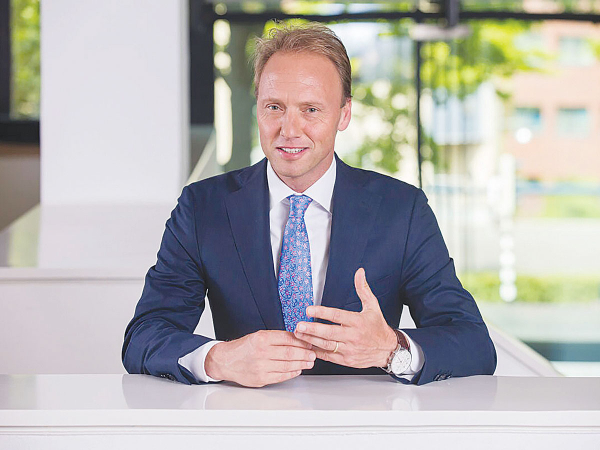 FrieslandCampina chief executive Hein Schumacher.
European dairy co-operative FrieslandCampina has put on hold a cash payment to farmer members due to uncertainty over the Dutch Government's nitrogen proposals.
Chief exectuive Hein Shumacher says the Dutch Government's target for reducing nitrogen pollution in some areas by up to 70% by 2030 is "a major uncertainty".
"For this reason, we are exercising extra caution in terms of our outlook for the rest of the year, and we have decided to forego the interim pro forma supplementary cash payment to our member dairy farmers."
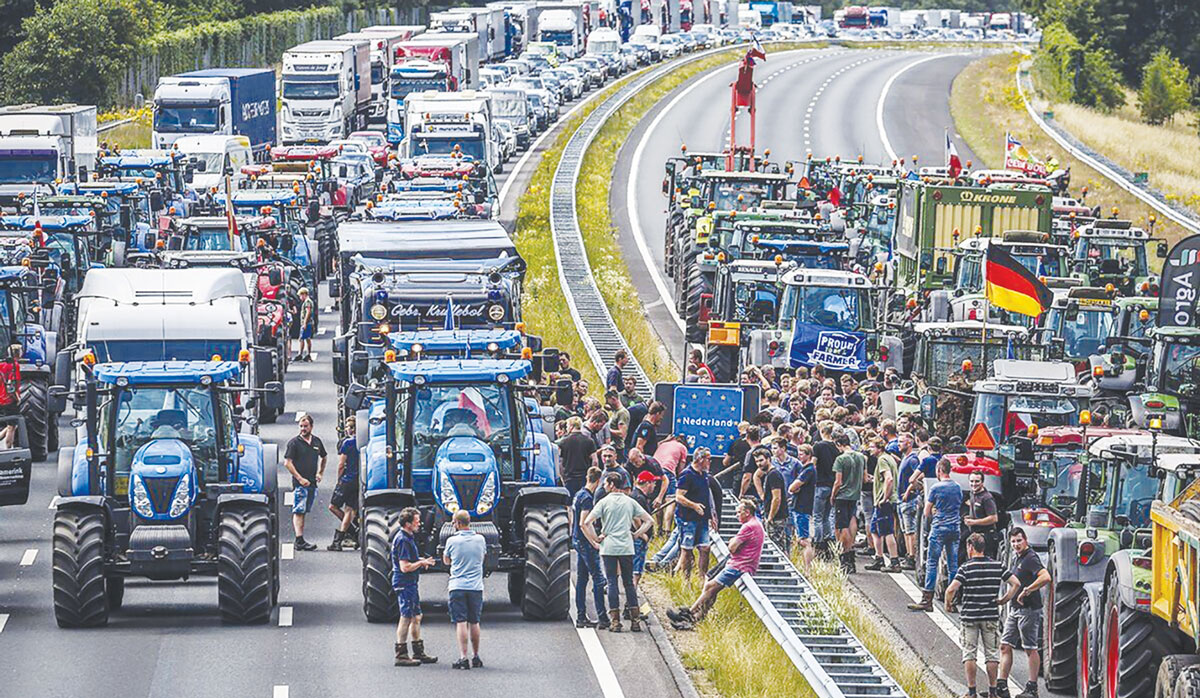
Dutch farmers have been taking to the streets in the Netherlands to protest, calling the targets unrealistic.
They claim livestock nationwide would have to be reduced by 30% to reduce nitrogen pollution.
FrieslandCampina is owned by almost 16,000 farmers based in Netherlands, Belgium and Germany.
Last month, the co-operative announced its half-year results for 2022.
Revenue rose to $10.7 billion, compared to $9b the previous year. Operating profit jumped from $210m to over $500m.
The co-op attributed this increase primarily due to price increases, higher commodity dairy prices and the recovery of European out-of-home markets.
Volume in the retail channel was under pressure. Volumes of the Professional business and the Ingredients business group increased.
But it warned that market developments in the second half of 2022 will be uncertain due to the war in Ukraine, the corona pandemic, rising costs and possible impact of the Dutch Cabinet's nitrogen proposals on members and the company.
Schumacher says the end of all uncertainties is not yet in sight.
 |
|---|
|
Dutch farmers protesting against the Government's nitrogen proposals. |
"We are still faced with inflation-related challenges and the associated price increases, mounting raw material shortages, declining consumer confience and the corona pandemic, which has yet to completely pass.
"We are also still confronted with major uncertainty concerning the impact of the Dutch Cabinet's announced nitrogen proposals on our members and our company."
He thanked farmers and employees for all their hard work over the past months.
"The resilience they display in this respect every day gives me every confidence that FrieslandCampina will also be able to successfully cope with present and future challenges."
The milk supplied by member dairy farmers in the first half of 2022 decreased by 4.6 percent to 4.8 billion kilos in comparison to the first half of 2021 (5.0 billion kilos) due to a decline in the number of members, lower quality of grass silage and higher feed costs.
Milk price over the first half of 2022 increased by 37.8% to 51.33 Euros for every 100kg of milk.
This increase was in part due to an increase in commodity dairy prices resulting from increased market demand. The organic milk price was 57.31 Euros per 100kg of milk.
OPINION: Dutch farmers are taking their fight against the Government’s campaign against dairying into parliament.


National’s pledge to introduce 19 new national standards shows the party is serious about getting Wellington out of farming, Federated Farmers says.
The National Party’s policies to make it easier to grow fresh vegetables, secure reliable water and energy and simplify farm planning are practical changes that will give growers the confidence to invest, according to Horticulture New Zealand (HortNZ).
Fonterra Co-operative Group chief financial officer Andrew Murray has resigned to take up a role outside the dairy giant.
A major move is about to get underway to improve the quality and viability of dairy beef and cattle in NZ.
Veterinarians say changes to the code of welfare for dairy cattle provides a positive foundation for improved cattle welfare across the country.
Today, 15 October, is the International Day of Rural Women, which recognises rural women’s contribution to farming, communities and the environment.

OPINION: It seems Canterbury processor Synlait is still in the doldrums.
OPINION: Get offside with New Zealand First leader Winston Peters at your own peril.




