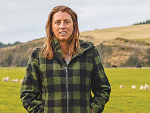
Red Meat Farmers Welcome Labour's Emissions Pricing Pledge
Red meat farmers are welcoming Labour’s plan to review the Emissions Trading Scheme and not to campaign on pricing agricultural emissions.




 increase font size
 Act agriculture spokesman Mark Cameron.
ACT agriculture spokesman Mark Cameron last week wrote to new Prime Minister Chris Hipkins calling for a rethink on agricultural emissions pricing. Here’s his letter:
"I write asking you to consider the financial and regulatory burden that agricultural emissions pricing will place upon growers and producers in New Zealand.
As I am sure you are aware, growers and producers are facing an increasingly challenging economic environment.
In the last financial year alone on-farm inflation in New Zealand has increased by 10.2%.
Prices for fuel, fertiliser, and vehicular repairs and maintenance increased by 54.3%, 23%, and 10.4% respectively last financial year.
On top of increasing production costs, farmers face the added challenge of responding to a range of regulatory pressures such as intensive winter grazing, significant natural areas, and freshwater regulations.
This is no small undertaking considering the current global economic climate.
The seemingly unrelenting pressure of unworkable regulations and high operating costs has already taken its toll on farmers, with farmer confidence in New Zealand sinking to an all-time recorded low.
For Government to place additional regulatory and financial burden upon growers and producers now is nonsensical. If agricultural emissions pricing is implemented many may be forced out of the industry, rural communities will suffer, and mental health may be further impacted.
You have just seen the impact of regulations on the poultry industry: a nationwide shortage of eggs and rising prices for families trying to buy one of the most affordable and healthy sources of protein.
How would you like to see an impact like that imposed upon the entire agricultural sector? In these challenging times the Government needs to stop imposing additional costs upon farmers which will only force production offshore to less-efficient competitors.
Subsequently, I implore you to adopt ACT’s policy of tying agricultural emissions pricing to that of New Zealand’s five major trading partners, ensuring a level playing field for growers and producers in New Zealand.”
Red meat farmers are welcoming Labour’s plan to review the Emissions Trading Scheme and not to campaign on pricing agricultural emissions.

When Northland farmer Mark Cameron entered parliament six years ago, the Beehive was a lonely place.
OPINION: As the general election approaches, political parties are churning out policies in the hope of attracting more votes.
OPINION: Farmers are being put on notice by the Green Party.
Associate Agriculture Minister Mark Patterson says his party – NZ First - isn’t opposed to the “trade element” of a free trade deal with India.


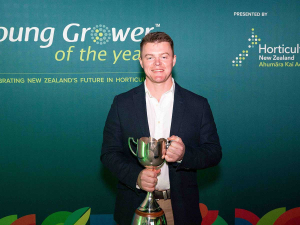
The potato industry is celebrating the success of two rising stars - James Blair, the 2026 Young Grower of the Year and runner-up and innovation award winner, Amber Davy.
Twenty-eight emerging leaders from across the horticulture sector spent two days last month learning valuable skills and connecting with industry experts.
There are five entrants in this year’s Young Horticulturist of the Year, competing in a series of technical, practical, business and leadership challenges.
A seasoned horticulturist has been appointed to deliver the Apple Action Plan, a key initiative of the India-New Zealand Free Trade Agreement.
New Zealand's citrus growers have been told to compete on the value built into their fruit rather than the volume they grow.
Hawke's Bay fruit growers are being reminded of the need to prepare for whatever the El Niño weather system may bring in the coming months.
OPINION: It seems Canterbury processor Synlait is still in the doldrums.
OPINION: Get offside with New Zealand First leader Winston Peters at your own peril.




