Labour Vows to Change Tact on How to Handle Freshwater Rules
A Labour-led Government won’t be bringing back the controversial freshwater rules of 2020.




 increase font size

THE LABOUR Party and the Green Party recently announced plans to establish a new agency, New Zealand Power, to act as a single buyer of wholesale electricity.
The plan according to Labour and Green Party analysis would cut the nation’s power bills by up to $700 million a year, lowering household power bills by up to $330 a year, and giving the economy a $450 million annual boost. This analysis is naïve and does not take into account the full direct and indirect costs.
New Zealand currently has $253bn of external debt and each 0.01% movement in the cost of debt adds $25m in interest payments.
The uncertainty caused by the Labour/Greens ‘nationalisation by stealth’ policy is likely to add up to 1% to the cost of debt to New Zealand, due to lenders requiring an increased return for lending to a nation with political and economic instability. The cost of capital for all New Zealand companies will rise due to the same factors.
A 1% increase in debt servicing costs for New Zealand’s overseas borrowing would in time add up to NZ $2.5bn a year.
In addition to higher financing costs for the economy as a whole, the Government would take about $450m a year less in dividends from the state owned power companies. These would need to write down asset bases by about 30% on an asset base of $15bn. This equates to $4.5bn of capital destroyed.
The flow-on effects to New Zealand’s listed power companies is just as detrimental. Analysis suggests share prices for Contact Energy, TrustPower and Infratil could on average fall by 20%. This is about $1bn loss of wealth for New Zealanders when adjusted for overseas ownership of these companies.
On top of this there will be a cut in dividends payable by listed companies of, say, 20%, further reducing returns to New Zealand shareholders. This will adversely affect many KiwiSaver schemes that have direct exposure to these companies. It seems inevitable, should the Labour/Greens proposal be enacted, that the listed power companies would take legal action, based on property rights. This is likely to be lengthy and costly, the Government footing much of the bill.
In conclusion, to save $700m per annum on our total electricity bill the direct and indirect costs of such a scheme would be about as follows: $2.5bn in additional debt servicing costs, $450m reduction in dividends, $4.5bn asset write-downs by state owned enterprises, $1bn of capital destruction among the listed power companies and a reduction of $100m of dividends per annum to New Zealand shareholders.
In addition, there will be highly skilled jobs lost as power companies reduce capital expenditure and development. In the short term this would not be an issue while demand catches up with supply, but by the time supply and demand are in balance it will be too late to add additional capacity in a timely manner.
Rolling blackouts anyone?
• Mark Warminger is portfolio manager at Milford Asset Management Ltd, a company managing $1.6bn on behalf of individuals, families and institutions. The views expressed are not necessarily those of Milford Asset Management Ltd. Milford Funds Ltd on behalf of clients owns shares in Contact Energy, TrustPower and Infratil.
A Labour-led Government won’t be bringing back the controversial freshwater rules of 2020.

National’s much-touted free trade deal with India featured in the Rural Issues Debate at Mystery Creek, Hamilton on Wednesday night.
Federated Farmers says it welcomes Labour's commitment to reviewing the Sharemilking Agreements Act, calling on other major parties to do the same.
Red meat farmers are welcoming Labour’s plan to review the Emissions Trading Scheme and not to campaign on pricing agricultural emissions.
OPINION: Since when did one and one make three? Who didn't smell an elephant-sized rat when our leaders decided to give $60 million to save the cement factory in Northland?


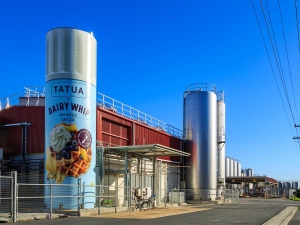
Waikato milk processor Tatua has again declared a record milk payout to farmer shareholders, leaving other processors in the dust.

A Labour-led Government won’t be bringing back the controversial freshwater rules of 2020.
National’s much-touted free trade deal with India featured in the Rural Issues Debate at Mystery Creek, Hamilton on Wednesday night.
New Zealand's 2026-27 freshwater fishing season has opened, with anglers encouraged to head to rivers and lakes over the coming days as conditions look favourable across much of the country.
Central Otago District Council (CODC) has voted against a plan to spread treated sewage sludge from Cromwell and Alexandra on farmland near Lauder, a decision Federated Farmers says reflects strong opposition from rural residents.
Pāmu has released its FY26 Integrated Annual Report, reporting a Net Operating Profit of $113 million, more than double the $49 million recorded in FY25.




OPINION: It seems Canterbury processor Synlait is still in the doldrums.
OPINION: Get offside with New Zealand First leader Winston Peters at your own peril.