Federated Farmers Welcomes ACT’s New Farming Policies
Federated Farmers has welcomed new rural policies released by ACT, saying they align closely with its own election priorities.




 increase font size
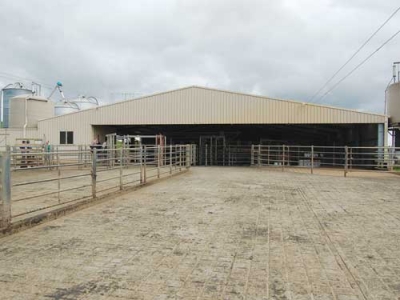 Statistics show that farms over summer hold an extra degree of risk for children.
Regardless of whether the accident is work related or not, when a child dies in an accident on farm, it's often an avoidable tragedy.
Statistics have shown that farms over the summer period hold an extra degree of risk for children which has led Federated Farmers and WorkSafe New Zealand to call for special vigilance over this period.
Because of their very nature farms pose risks to children that are not present in other, more controlled, environments but these risks are manageable and many accidents on farms are preventable given the right preparation.
Although the hazards are varied statistics show that vehicles are of particular risk.
WorkSafe agricultural programmes manager, Al McCone says kids love playing around vehicles.
Like the Safekids' driveway safety campaign says: 'Check for me before you turn the key'. Walk around the vehicle first and check children are a safe distance away before starting the engine. A few seconds of extra care will prevent what could be a tragedy.
Of workplace fatalities since 2000, eight of the 14 deaths involving children aged between five and 15, occurred when the child was operating the vehicle. So it's absolutely vital that if children are operating any vehicles they are suitably capable of operating the specific vehicle.
For younger children, under five, the majority of fatalities occur when they are accompanying their parents on the farm and even for younger children there is a spike over the summer period.
McCone says it's about farmers changing their thinking from that of working alone, to having the kids around while they do their tasks.
"Of the 10 deaths of children under the age of five, seven involved the child being near the parents working. If you are used to working alone, and get engrossed in a task or problem, then it is easy to forget about the kids. Farmers need to be aware of this and take steps to ensure the kids stay top of mind," he says.
Taking practical steps like fencing ponds, covering pits, locking chemicals away and being aware when using hot water in dairy sheds will reduce the risk of accidents.
Awareness and vigilance is the key to preventing serious harm accidents on farms.
For more information check out websites www.saferfarms.org.nz which has specialist advice for keeping kids safe on farms or to look at the safe driveway campaign go to www.safekids.org.nz.
• Nick Hanson is a Federated Farmers policy advisor.
Federated Farmers has welcomed new rural policies released by ACT, saying they align closely with its own election priorities.
Federated Farmers is backing Feilding High School’s call to keep Agriculture and Horticultural Science as a standalone subject in Year 11.
National’s pledge to introduce 19 new national standards shows the party is serious about getting Wellington out of farming, Federated Farmers says.
Mobile phone coverage and reliability are deteriorating in rural areas, and farming families are bearing the cost, according to a Federated Farmers survey.
Central Otago District Council (CODC) has voted against a plan to spread treated sewage sludge from Cromwell and Alexandra on farmland near Lauder, a decision Federated Farmers says reflects strong opposition from rural residents.



Federated Farmers has welcomed new rural policies released by ACT, saying they align closely with its own election priorities.

Rural Contractors NZ says proposed changes to land transport rules for agricultural vehicles are a welcome response by the Government to out of date regulations which have seen members hit with huge fines.
Alliance is calling for final applications for its 2027 Graduate Programme, with applications closing on Sunday 25 October.
Decades piloting planes has ensured vet and farmer David Hayes is focused on safety. So, after a serious accident while welding on farm, he is sharing his experience so others can learn from it.
Canterbury milk processor, Synlait Milk has confirmed Leon Fung as its chief executive officer.
OPINION: Making it easier to collect rainwater and use it to grow crops and livestock is a no brainer.




OPINION: It seems Canterbury processor Synlait is still in the doldrums.
OPINION: Get offside with New Zealand First leader Winston Peters at your own peril.




