
Leadership course ‘lit a fire’ for dairy woman
A leadership programme for dairy women is being championed by a North Otago woman as a huge help.




 increase font size
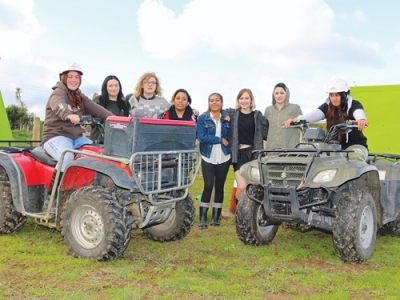 Young Waikato women training for farm work.
The dairy downturn is not deterring young Waikato women from training for farm work, says the Hamilton training provider TrainMe.
For example, Angel Ryan (17), Chance Taingahue (19) and Brenda Pairama (17) are among nine girls aged 16-19 who this month will complete TrainMe's National Certificate in Agriculture Level 2 course.
This is a record female enrolment since the free 18 week course began three years ago. It was launched for teenagers "disengaged" from the schooling system, says TrainMe trades school manager Lance Langley.
"In our current class at least 50% are female: we have nine females and eight males. In the past, during the four other semesters the course runs, only about 35% of enrolled students have been female."
Langley says the "increase in enrolled females is heartening. These women are hard-workers and have as much to contribute to farming as men."
Chance says she is keen on starting a career in farming when she finishes the course.
"Many of us came into this course after completing TrainMe's #Ultimate, which gave us a taste of lots of short courses. Until then I wasn't interested in farming; I didn't know what it was like. Many of us just wanted to complete NCEA.
"But since choosing the farming course we've learned to drive a tractor and quad and to use a chainsaw. Occupational safety and health practices and first aid are also a part of our training.
"We've volunteered on five different farms. I'd assumed farming was boring but now I'd love to work on a farm."
Angel says the rising female enrolments show "farming isn't just for guys". "We're putting up fences and pulling out ponga trees; we put in as much effort as the guys. We learn from them and they learn from us."
Langley says he enjoys seeing once-disengaged students -- male and female – "find their place" on a farm.
"The farming environment is hard work but it has given these teenagers a purpose and boosted their confidence. They arrive without NCEA Level 1 and typically dislike school. For some the prospect of further education was once bleak," Langley says.
"They complete our #Ultimate course then the agriculture programme and in one year they can get three tertiary qualifications and NCEA Levels 1 and 2.
"The learning environment is fun, educational and career-focussed. Those who complete the course can go on to further study, or we help arrange employment for them on a farm."
TrainMe, NZQA-registered, has run foundation training programmes in Hamilton and Auckland since 1984. It offers funded courses to adults (18+ years) and youth (16-19 years).
A leadership programme for dairy women is being championed by a North Otago woman as a huge help.

Entrepreneur Diane Foreman says one success she is really proud of is in the dairy industry.
Three finalists for the prestigious Dairy Woman of the Year award have been named by the Dairy Women's Network.


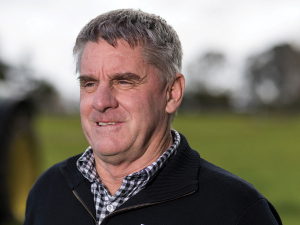
Federated Farmers has welcomed new rural policies released by ACT, saying they align closely with its own election priorities.

Rural Contractors NZ says proposed changes to land transport rules for agricultural vehicles are a welcome response by the Government to out of date regulations which have seen members hit with huge fines.
Alliance is calling for final applications for its 2027 Graduate Programme, with applications closing on Sunday 25 October.
Decades piloting planes has ensured vet and farmer David Hayes is focused on safety. So, after a serious accident while welding on farm, he is sharing his experience so others can learn from it.
Canterbury milk processor, Synlait Milk has confirmed Leon Fung as its chief executive officer.
OPINION: Making it easier to collect rainwater and use it to grow crops and livestock is a no brainer.


OPINION: It seems Canterbury processor Synlait is still in the doldrums.
OPINION: Get offside with New Zealand First leader Winston Peters at your own peril.




