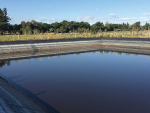
Dairy Effluent Management: Right Amount at the Right Time
Good effluent management on a dairy farm combines a well-designed system with proper processes to ensure the right amount of effluent gets applied to pasture at the right time.




 increase font size
 Portable skid unit for powering pumps.
Effluent handling specialist Hi Tech Enviro Solutions showed several new products at Fieldays, among them a shore-based stirrer and a portable skid unit for powering high output effluent pumps.
The stirrer, made from high-grade galvanised steel, has a triangular pedestal designed to be bolted to a concrete pad at the edge of the pond.
A deep, square-section support tube 8m long can be tailored to individual situations; it carries a large propeller surrounded by a heavy-duty shroud not unlike an empty oil drum.
The interaction between the propeller and the shroud is designed to increase the velocity of the liquid and simultaneously create a vortex that keeps solids in suspension, helping reduce the build-up of silted areas in the pond.
Designed for a pond of 3.5 million litres, it has depth control achieved by a heavy-duty chain arrangement at the pedestal end, with an integral foot at the business end designed to protect the liner from damage.
Also at this end of the unit a mechanical linkage can be adjusted to alter the angle of the propeller/shroud to ensure thorough mixing.
Power comes from a shore-mounted electrical supply from 4 - 7.5kW, and gearbox reductions at the propeller end can be tweaked to give a range of speeds and power requirements.
The company’s skid-mounted powerplant, seen at Fieldays, can replace a tractor for pumping duties, useful at busy times of the year.
Housed in a sound-insulated box, a 4-cylinder Cummins powerplant delivers 115hp and via an external coupling powers a PD27 or PD35 effluent pump with, respectively, outputs of 180,000 or 225,000L/hour.
Standard equipment includes an LED lighting panel to illuminate the work area, and an integral engine protection system that looks for excess temperatures or low fluid levels and will shut down the powerplant if thresholds are exceeded.
Good effluent management on a dairy farm combines a well-designed system with proper processes to ensure the right amount of effluent gets applied to pasture at the right time.
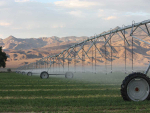
For years, IrrigationNZ has called for a coordinated national approach to water security, backed by enabling regulation, strategic infrastructure investment and sound technical practice. As the 2026 general election approaches, many of these priorities are now reflected in political commitments and legislative reforms. That represents significant progress, but the real measure of success will be turning policy into practical outcomes, says IrrigationNZ principal technical officer Stephen McNally.
Walking around the Fieldays this year, expected most of the conversations to be about machinery purchases and farm infrastructure upgrades. Instead, one topic seemed to keep cropping up more frequently with farmers – the price of PKE.
A new digital assistant is now helping Ballance Agri-Nutrients farmers speed up nutrient information and ordering.
OPINION: At Fieldays this year, one theme kept surfacing across the sector: global shocks are no longer something that happens “over there”. They are now translating quickly into local, farm-level impacts through increasingly complex and connected channels.


During the nesting season, from September to December, industrious starlings can quickly build nests in the darker areas behind tractor and vehicle, usually close to hot engines, typically resulting in localised damage or in some cases complete write-offs.
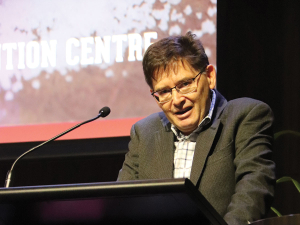
The meat processing industry is much more collegial than it was in the past and is now more focused on common goals.
With the last couple of months having seen some potential tractor purchases put on hold with the impending election and continued input cost rises, year-to-date figures, ending September, has seen deliveries up around 5% over the same period in 2025, with a total of 2026 units.
Beef+Lamb New Zealand is calling for nominations for director roles in the Northern South Island and Northern North Island electoral districts.
Fonterra chief executive, Richard Allen says being resilient has helped the dairy industry overcome extreme volatility in recent years.
The head of the Ministry for Primary Industries (MPI) trade and international relations group says New Zealand is well-positioned to secure trade access and compete internationally as the world becomes more complicated, demanding and uncertain.
OPINION: It seems Canterbury processor Synlait is still in the doldrums.
OPINION: Get offside with New Zealand First leader Winston Peters at your own peril.