It's the Wrangler Limited’s 30th birthday and to celebrate the milestone a prototype of the E Series Wrangler - a new electricpowered product range - is being unveiled at the Fieldays.
The E Series Wrangler is an electric-powered lame cow crush range that uses electric winches to make lifting the cow and hooves effortless. The E Series is said to deliver enhanced efficiency with The Wrangler’s durability and user-friendly features. It will be available in all models of Wranglers- (Race, Premier, Colossal, and Pro).
Led by founders Wilco and Waverley Klein Ovink, along with their son Joshua and daughter- in-law Maggie, the Whakatane-based, family-owned business heads up a team of fabricators, has distributors in the US and Australia, and exports all over the world. The team will be at Fieldays, engaging with farmers to showcase this innovative addition to their lineup.
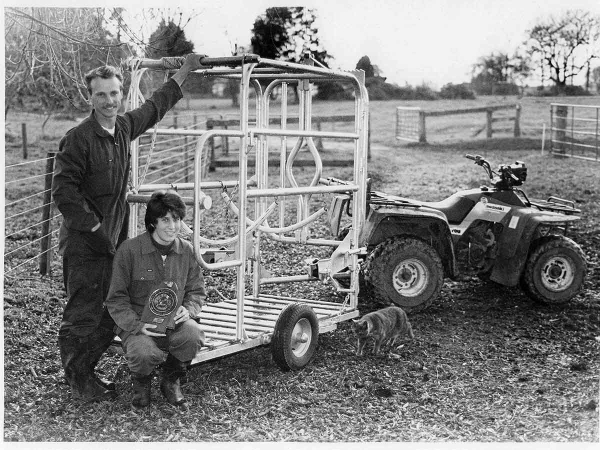
The Wrangler’s legacy began with the lame cow crush, a revolutionary solution to dairy cow lameness. Wilco, a former sharemilker, designed the crush to securely hold a cow and enable her hoof to be raised and held for safe and easy treatment.
He says that at that stage there was nothing available in New Zealand and farmers would “just tie the hoof to some pipe work and hope she didn’t fall down”.
Key to the Wrangler are underbelly girths which hold the cow to stop her from going down during treatment, Wilco says.
“This also makes it excellent for calving and the backleg winch can be used as a calving jack. The side bars are removable for caesareans and other veterinary treatments.”
Made in their Whakatane workshop, the Wrangler is hot dipped galvanized to ensure it lasts for many years. Some of the very earliest of Wranglers are still in use.
Its innovative design earned a New Zealand patent and Fieldays’ Prototype Award and New Equipment Innovation Award.
Wilco says talking to farmers at Fieldays, they became aware of the huge problem of lameness in New Zealand. Up until then there was no safe way to treat hooves and most farmers had scars from hoof knife injuries.
He says the Wrangler transformed dairy cow hoof care in New Zealand, providing a better way to do things.
From the initial design for their own farming needs, the Wrangler has been refined and improved via input from farmers using their Wranglers on-farm.
“The first challenge was making the Wrangler for different sized cows,” said Wilco.
“It was initially mostly large Friesians that got lame and now it is the Jerseys too, and New Zealand cows come in all shapes and sizes.” The Colossal is the most recent to their range, catering for the largest of dairy cows.
“Australian and some New Zealand cows can be really big. The Race Wrangler holds large cows but if the whole herd is that big, then it can be better to go with the Colossal.”
The Race is their most popular model as it is set into a yard system at the shed. The Premier is the mobile version, which is great for sharing between farms, in the calving paddock, or taking to the runoff. The road legal Pro is good for vets or when needing to travel distances.
Site: G75