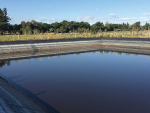
Dairy Effluent Management: Right Amount at the Right Time
Good effluent management on a dairy farm combines a well-designed system with proper processes to ensure the right amount of effluent gets applied to pasture at the right time.




 increase font size
 Se-Tech chlorinator.
With the increasing standards required for water used in farm dairies Singh's Engineering Services of Hamilton have developed a solution.
Their Se-Tech Chlorinator which reduces e-coli and other bacteria in farm and dairy shed water will soon be released onto the New Zealand market.
It is believed that Fonterra is the prime mover and other dairy companies are also requiring more stringent standards. Some companies are randomly testing suppliers' farm water so they are aware of their present status and what steps can be taken if there is a problem. These higher standards will be mandatory within three years.
Singh's Engineering Services have been in business since 1979, manufacturing their Se-Tech in-line dispensers since 1988. These are used to put graduated doses of chemicals, minerals and nutrients into farm water lines for stock health and to minimise or eliminate drenching for bloat and Facial Eczema.
"These dispensers have been proven over nearly thirty years but in designing and building the Chlorinator we had to have a far greater degree of accuracy, moving from dosing percentages to doing micro doses," said assistant manager of Singh's Engineering Services, Darl Singh.
The firm has been getting a lot of enquiries for a chlorine dispenser that lead to the development of the Chlorinator.
The chlorine dispenser can be adjusted between 5 to 50 ppm accurately depending on the level of treatment needed. It is accurate with water flows between five litres per minute up to 6000 litres per hour and works in a pressure range from 10 psi to 210 psi.
The commercially available chlorine solution generally about 15 per cent is purchased by the farmer and is connected directly to the Chlorinator so there is no handling of the material.
A computer controlled pump takes the solution from the bulk supply to a pre-mix chamber. The computer is easily adjusted by the farmer and maintains the correct levels of chlorine. A set amount of water is added in the pre-mix chamber to standardise the solution, and then a modified Se-Tech dispenser injects the solution into the water line.
The combination of low volume, high accuracy computer controlled pump and high volume and high pressure capable Se-Tech dispenser ensures the system maintains the correct amount of chlorine in the water regardless of varying water flows or pressures in the pipe lines.
If there is already a Se-Tech dispenser on the farm delivery line the Chlorinator can be connected separately or in tandem.
Tel: 07 849 3108
Good effluent management on a dairy farm combines a well-designed system with proper processes to ensure the right amount of effluent gets applied to pasture at the right time.
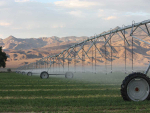
For years, IrrigationNZ has called for a coordinated national approach to water security, backed by enabling regulation, strategic infrastructure investment and sound technical practice. As the 2026 general election approaches, many of these priorities are now reflected in political commitments and legislative reforms. That represents significant progress, but the real measure of success will be turning policy into practical outcomes, says IrrigationNZ principal technical officer Stephen McNally.
Central Otago District Council (CODC) has voted against a plan to spread treated sewage sludge from Cromwell and Alexandra on farmland near Lauder, a decision Federated Farmers says reflects strong opposition from rural residents.
Federated Farmers has called on Central Otago District Council (CODC) to drop or vote down a plan to truck sludge from Alexandra and Cromwell to farmland near Lauder, warning it would compound an "outrageous" situation created by a separate council's decision weeks earlier.
There's been widespread support from the primary sector for the Government's announcement on changes to freshwater farm plans that come under the Natural Environment Bill, which is now set to replace the existing RMA.



During the nesting season, from September to December, industrious starlings can quickly build nests in the darker areas behind tractor and vehicle, usually close to hot engines, typically resulting in localised damage or in some cases complete write-offs.
The meat processing industry is much more collegial than it was in the past and is now more focused on common goals.
With the last couple of months having seen some potential tractor purchases put on hold with the impending election and continued input cost rises, year-to-date figures, ending September, has seen deliveries up around 5% over the same period in 2025, with a total of 2026 units.
Beef+Lamb New Zealand is calling for nominations for director roles in the Northern South Island and Northern North Island electoral districts.
Fonterra chief executive, Richard Allen says being resilient has helped the dairy industry overcome extreme volatility in recent years.
The head of the Ministry for Primary Industries (MPI) trade and international relations group says New Zealand is well-positioned to secure trade access and compete internationally as the world becomes more complicated, demanding and uncertain.

OPINION: It seems Canterbury processor Synlait is still in the doldrums.
OPINION: Get offside with New Zealand First leader Winston Peters at your own peril.