Diet mixer for big herds
Kongskilde has launched heavy duty transmission for its large complete diet mixers, citing larger dairy herds, longer mixing times and its success with its Mix+ concept.




 increase font size
 Clover Cam.
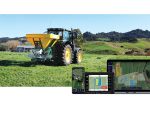
A new sward scanner soon to be launched by Agrointelli (a spin-off from Kongskilde) produces data usable in variable-rate fertiliser plans.
The Clover Cam camera fits any tractor, attaching about 1m above the crop. There it differentiates between clover, grass and weeds during paddock surveys – the key to variable-rate fertiliser plans whereby products are applied selectively rather than ‘blanketed’ over the ground.
The main benefit is increased grass yields.
Control is via a cab-mounted box; the mapping software is supplied by the developer. Ten units are now in final testing, pending commercial launch, the company says.
Meanwhile, Kongskilde’s Robotti multipurpose autonomous tool carrier is available in 1.5m and 3m working widths, fitting most 3m implements on the market without modification.
Capable of drilling, weeding and spraying, the Robotti operates using a RTK signal from any GPS software; this is defined as ‘supervised autonomy’, whereby once a paddock is mapped the navigation planner will work out the most efficient route to do the job.
The user can still control the unit via a tablet and drive it manually for loading on trailers for transport.
Power comes from two 24hp Kubota 3-cylinder engines mounted on either wing, with the option of electric power in the wings for the future.
Kongskilde has launched heavy duty transmission for its large complete diet mixers, citing larger dairy herds, longer mixing times and its success with its Mix+ concept.

Designed to handle, chop, mix and feed all types of baled and loose feedstuffs, the Kongskilde VM series diet mixers come in 6.5m3 to 45m3 sizes made from S500 and S650 steel to last longer.
Anyone who has broken in a new plough will know the frustration of waiting until all the paint has come off.

Halter has launched Mav, an AI farming assistant that lets dairy farmers ask questions about their herd and pasture and get answers drawn from the data the company’s collars already collect.

OPINION: At first glance it appears that Father Christmas has delivered the rural sector good tidings, with most pundits predicting the return of the centre-right coalition.
For 15 years, Glenda Rees has travelled from Gore to Awarua, often several times a week, to keep watch over one of the country’s rarest birds.
With some farmers opposing a government-industry partnership set up to develop methane reducing products, one NZ company claims that it already has a product on the market.
During the nesting season, from September to December, industrious starlings can quickly build nests in the darker areas behind tractor and vehicle, usually close to hot engines, typically resulting in localised damage or in some cases complete write-offs.
The meat processing industry is much more collegial than it was in the past and is now more focused on common goals.

OPINION: It seems Canterbury processor Synlait is still in the doldrums.
OPINION: Get offside with New Zealand First leader Winston Peters at your own peril.