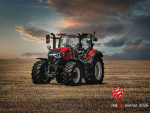
Case IH Unveils Next Generation Puma Series Tractors
Case IH has unveiled its redesigned next generation Puma Series tractors, said to offer improvements in connectivity, operator comfort, fuel efficiency and drivability.




 increase font size
 The risk of tractor fires caused by birds is very real and totally preventable.
The risk of tractor fires caused by birds is very real and totally preventable, yet it continues to plague farmers and contractors on an annual basis.
As we enter a period of tight finances it will be prudent to ensure that plant and machinery is kept in good order to make sure it doesn't happen to you.
A key culprit is the starling, known to build nests in the dark recesses under a tractor hood or in the nooks behind the work-lights up on the cab roof, providing a ready fuel source easily ignited by hot exhaust pipes or shorting electrical cables.
Addressing this problem, Shoof International, Cambridge, markets Wingo, for applying to areas of tractors or machinery that are favoured by birds as roosting points. The formula contains a vegetable based gel oil with pepper and cinnamon; the birds don't like the feel of the gel on their claws, the astringency of the pepper triggers an alert reaction, and the scent of the cinnamon serves as a reminder, deterring the birds for up to two years.
The gel is supplied in a standard caulking gun cartridge for applying to favourite spots such as mirror stalks, work lights, hydraulic hoses and along the crest of the tractor's hood.
The product maker, farmer Tony Overbeek, applies it as necessary, taking extra care to replenish areas that have been cleaned off, for maximum efficacy.
The product has the added advantage of reducing bird droppings that pose a health risk to people and animals and that have a fierce paint stripping action on a vehicles' tin-work.
The scale of the problem caused by nesting birds is cited by rural insurance specialist FMG, which has had at least 170 claims relating to tractor fires in four years. The firm's current 'Stop and Pop' campaign encourages customers to look under tractor hoods.
Case IH has unveiled its redesigned next generation Puma Series tractors, said to offer improvements in connectivity, operator comfort, fuel efficiency and drivability.
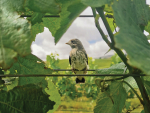
A new research project is studying the influence of vineyard biodiversity on bird populations, and the impact of those birds on surrounding vineyards in different seasons.
A total of 108,800 tractors were registered across Europe in the first six months of 2022, with 31,900 tractors of 37kW (50 hp) and under and 76,900 of 38kW and above.
An evolution of ATV and quad rollover protection, the AR quad safety bar uses compressed gas and an electronic control system to offer fully automated, pneumatic roll-over protection – with full deployment in less than 250 milliseconds.
A petition to get seat belts on school buses has been presented to Parliament.


Federated Farmers has welcomed new rural policies released by ACT, saying they align closely with its own election priorities.

Rural Contractors NZ says proposed changes to land transport rules for agricultural vehicles are a welcome response by the Government to out of date regulations which have seen members hit with huge fines.
Alliance is calling for final applications for its 2027 Graduate Programme, with applications closing on Sunday 25 October.
Decades piloting planes has ensured vet and farmer David Hayes is focused on safety. So, after a serious accident while welding on farm, he is sharing his experience so others can learn from it.
Canterbury milk processor, Synlait Milk has confirmed Leon Fung as its chief executive officer.
OPINION: Making it easier to collect rainwater and use it to grow crops and livestock is a no brainer.


OPINION: It seems Canterbury processor Synlait is still in the doldrums.
OPINION: Get offside with New Zealand First leader Winston Peters at your own peril.




