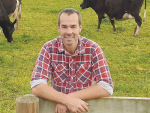
Cameron Henderson Reappointed Unopposed as DairyNZ Deputy Chair
DairyNZ deputy chair Cameron Henderson has been re-appointed unopposed for another term.




 increase font size

The New Zealand dairy industry is urging Trans Pacific Partnership (TPP) partners not to compromise on the quality of the deal to get it done quickly.
The Dairy Companies Association of New Zealand (DCANZ) is concerned at reports that the US and Japan may seek to conclude a deal which leaves dairy trade liberalisation out in the cold.
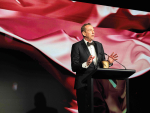
“We urge leaders to stand by their 2011 commitment to a comprehensive deal,” says DCANZ chairman Malcolm Bailey (pictured). “This cannot be achieved without addressing access for dairy, which remains one of the most protected sectors amongst the TPP partner countries.”
The Japanese World Trade Organisation (WTO) bound tariffs for skim milk powder and butter are equal to 217% and 360% respectively. Canada’s dairy market access regime is characterised by small quotas and large out of quota tariffs in the order of 200 to 300%. These conditions often mean trade is prevented.
“A successful conclusion of the TPP agreement would be the biggest step forward in trade liberalisation since the Uruguay Round of WTO negotiations was concluded in 1994,” says Bailey. “As long as it meets its stated objectives of comprehensivity and tariff elimination, the increased trade and investment it creates will have far reaching economic growth benefits for all 12 countries party to the negotiation.
“Japanese Prime Minister Shinzo Abe said at an OECD Ministers meeting earlier this year that he ‘would never be afraid of reforms’ and that ‘now was the time for bold reforms’. DCANZ agrees now is the time for bold reforms. Pacific Rim nations must not look back on this agreement and regret they did not push harder and achieve more.
“Any deal that does not achieve good outcomes for dairy is an unacceptable deal,” says Bailey.
New Zealand is the world’s largest exporter of dairy products, with dairy delivering 35% of New Zealand export returns. “We do this without subsidies, through efficient farming and dairy manufacturing. But the tariffs incurred on New Zealand dairy product exports are equivalent to $68,000 per farmer and with some markets we cannot trade at all due to barriers. These barriers do not benefit consumers and they ignore the role trade needs to play in ensuring nutritional security for the world’s growing population,” he says.
“DCANZ does not accept the argument that maintaining tariffs is necessary to protect Japanese agriculture. It notes that even with one of the world’s most protected dairy sectors, Japan is struggling with succession for retiring dairy farmers and its milk supply is declining. We suggest the answer does not come from maintaining the status quo, but from doing something different.”
Allowing imports to complement Japanese supply will create the ability for Japanese farmers to specialise where they are most competitive without the current restrictions aimed at trying to balance a market which cannot be balanced by domestic supply alone.
“It would be disappointing to DCANZ if the US agreed to a deal with Japan that did not meet the standard that all TPP members agreed to. Partnership is a central element of the intent for this agreement, and partnership must include adhering to the principles that all leaders agreed for TPP,” says Bailey.
DairyNZ deputy chair Cameron Henderson has been re-appointed unopposed for another term.
Tatua Co-operative Dairy Company has confirmed that chair and director Stephen Allen will retire at the co-operative's annual general meeting (AGM) on 3 December 2026, ending 30 years of service, including more than 20 years as Chair.
A new company set up to cultivate and supply seaweed for animal methane mitigation studies believes it could be a game changer for the dairy industry.
Wayne and Ange Moxham of Horowhenua have just been named as Fonterra's top organic performer for milksolids. As well as providing organic milk to Fonterra, the couple also sell Udderly Organic milk to more than 100 outlets in the region and are embarking on another exciting venture producing organic gelato. Reporter Peter Burke went along to see their farming operation.


Alliance is calling for final applications for its 2027 Graduate Programme, with applications closing on Sunday 25 October.
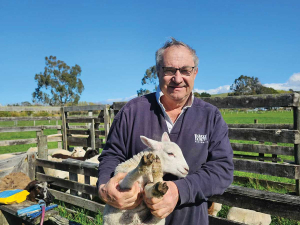
Decades piloting planes has ensured vet and farmer David Hayes is focused on safety. So, after a serious accident while welding on farm, he is sharing his experience so others can learn from it.
Canterbury milk processor, Synlait Milk has confirmed Leon Fung as its chief executive officer.
OPINION: Making it easier to collect rainwater and use it to grow crops and livestock is a no brainer.
As part of its Election 2026 coverage, Rural News asked political parties how they would help pull the arable sector out of the doldrums. Here's what they said:
Farmers are being encouraged to rethink how they manage waste on farm with the launch of ruralwastesorted.co.nz, a new website bringing together practical tips, real farmer experiences and resources.

OPINION: It seems Canterbury processor Synlait is still in the doldrums.
OPINION: Get offside with New Zealand First leader Winston Peters at your own peril.