
Resilient Global Dairy Industry Overcoming Volatility
Fonterra chief executive, Richard Allen says being resilient has helped the dairy industry overcome extreme volatility in recent years.




 increase font size
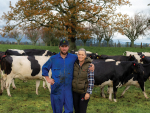
 Colin Armer (left) and Malcolm Bailey.
The proposal to reduce the size of the Fonterra board is one the co-op can no longer ignore say its proponents, Greg Gent and Colin Armer.
The proposal failed to meet the 75% support required to change the constitution but the level of support is a massive message to the board they say. Over 54% of shareholders backed the proposal.
"The Trading Among Farmers proposal got 66% support with millions spent so we are thrilled with the support we have received," says Armer.
"Something has to happen now. The whole thing disappeared three years ago but there is nowhere for the board to hide now."
Gent says the vote was a huge success.
"We had little resources and the company worked hard against us."
Armer said the big loser in this debate was the Shareholders Council.
"The shareholders council has been found wanting and totally misread farmers' views on the subject," he says. "Their criticism of our proposal was absurd.
"The resurrection of the governance review after three years was a last minute jack-up between the Council and the board which had only one purpose – to defeat our proposal," says Armer.
He says that the governance review is still inadequate.
"This upcoming review needs independence, experience, and farmer input into its Terms of Reference," he said. "Right now shareholders don't know the terms of reference and the review is being conducted by a group that lacks the experience or independence needed to make sure we get the right structures into the future."
Gent said that he and Armer had achieved what they wanted to.
"While we'd love to have got our proposal over the 75% line line we always knew that it was a huge mountain to climb," he said. "The company has far better resources than us to communicate with its 10,000 shareholders."
In spite of the result the pair is confident that the governance review will not be shelved for another three years. However they are not so sure that the review will result in a smaller board of directors.
"We will need to wait and see about that," says Armer.
Fonterra chief executive, Richard Allen says being resilient has helped the dairy industry overcome extreme volatility in recent years.

Northland farmer Greg Collins has taken over as chair of the Fonterra Co-operative Council.
Fonterra’s 2026 financial year was a year of delivery, with record volumes of milk collected, processed and shipped by the co-op.
Dairy farmers, still holding onto their Fonterra shares despite switching milk supply elsewhere or exiting the industry, now face a stricter share sell-down requirement.
Milk powder prices are continuing their merry run, firming up a potential $10/kgMS farmgate price this season.

During the nesting season, from September to December, industrious starlings can quickly build nests in the darker areas behind tractor and vehicle, usually close to hot engines, typically resulting in localised damage or in some cases complete write-offs.
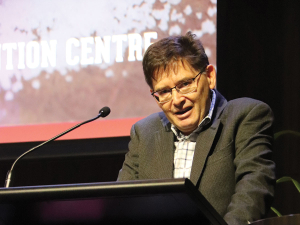
The meat processing industry is much more collegial than it was in the past and is now more focused on common goals.
With the last couple of months having seen some potential tractor purchases put on hold with the impending election and continued input cost rises, year-to-date figures, ending September, has seen deliveries up around 5% over the same period in 2025, with a total of 2026 units.
Beef+Lamb New Zealand is calling for nominations for director roles in the Northern South Island and Northern North Island electoral districts.
Fonterra chief executive, Richard Allen says being resilient has helped the dairy industry overcome extreme volatility in recent years.
The head of the Ministry for Primary Industries (MPI) trade and international relations group says New Zealand is well-positioned to secure trade access and compete internationally as the world becomes more complicated, demanding and uncertain.
OPINION: It seems Canterbury processor Synlait is still in the doldrums.
OPINION: Get offside with New Zealand First leader Winston Peters at your own peril.




