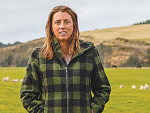
Red Meat Farmers Welcome Labour's Emissions Pricing Pledge
Red meat farmers are welcoming Labour’s plan to review the Emissions Trading Scheme and not to campaign on pricing agricultural emissions.




 increase font size
 Agriculture Minister Damien O'Connor.
Agriculture Minister Damien O'Connor along with Prime Minister Chris Hipkins launched the SOPI report at Fieldays.
O'Connor, forever the optimist, described the SOPI report as impressive given the tough times the primary sector has endured in the past 12 months. He says it's shown resilience and resourcefulness to get where it has. He says there will be headwinds, but NZ will handle these based on the solid foundations that already exist.
"We have always undershot with our forecasts, and I believe because farmers are innovative and adapt I think we will continue to grow our exports," he says.
A feature of the report says O'Connor is a focus on what is described as 'hyper traceability': identifying more precisely what's happening in the marketplace. He says this shows that there are expectations both from the supermarkets and the consumers who are now using a QR code to find out exactly where their products are coming from. He says all those in the primary sector need to be aware of the implications of this.
At the launch, PM Hipkins acknowledged the difficult couple of years the primary sector has been through, saying the objective of his government is to get rural communities back on their feet. He says there is reason for optimism and he spent much time talking up the benefits of the FTA with the UK.
"For the first time since the early 1970s our meat and dairy sectors have meaningful access to the UK market. The FTA also opens the door for increased collaboration in the agritech space in which NZ is a world leader. In a changing world, agritech has never been so important because it offers possibilities to improve farm efficiency, increase sustainability and reduce the carbon footprint of agriculture."
Red meat farmers are welcoming Labour’s plan to review the Emissions Trading Scheme and not to campaign on pricing agricultural emissions.
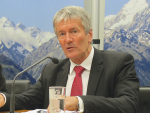
A miserable budget that didn’t deliver much for anyone.
National's decision to ‘dribble’ information about the NZ/India to Labour contributed to the delay in it deciding to supported the FTA.
The Labour Party has announced it will support New Zealand's free trade agreement (FTA) with India.
Labour Party Leader Chris Hipkins has announced a reshuffle of the party's caucus portfolios.


During the nesting season, from September to December, industrious starlings can quickly build nests in the darker areas behind tractor and vehicle, usually close to hot engines, typically resulting in localised damage or in some cases complete write-offs.
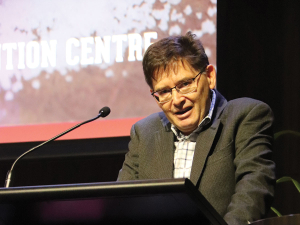
The meat processing industry is much more collegial than it was in the past and is now more focused on common goals.
With the last couple of months having seen some potential tractor purchases put on hold with the impending election and continued input cost rises, year-to-date figures, ending September, has seen deliveries up around 5% over the same period in 2025, with a total of 2026 units.
Beef+Lamb New Zealand is calling for nominations for director roles in the Northern South Island and Northern North Island electoral districts.
Fonterra chief executive, Richard Allen says being resilient has helped the dairy industry overcome extreme volatility in recent years.
The head of the Ministry for Primary Industries (MPI) trade and international relations group says New Zealand is well-positioned to secure trade access and compete internationally as the world becomes more complicated, demanding and uncertain.
OPINION: It seems Canterbury processor Synlait is still in the doldrums.
OPINION: Get offside with New Zealand First leader Winston Peters at your own peril.




