Better days ahead for Synlait farmers
Synlait farmer suppliers are relieved to see the troubled milk processor on the road to recovery.




 increase font size
 John Penno, managing director and chief executive at Synlait.
Synlait Milk has dual listed on the Australian Securities Exchange (ASX) and started trading on Friday.
“Interest in Synlait from Australian investors has grown in the past few years – 72% of our institutional shareholding is based in Australia,” says John Penno, managing director and chief executive.
“Being dual listed on the NZX and ASX increases access for institutional investors in Australia, and opens up the company to Australian retail investors too.”
Synlait expects this dual listing will provide increased liquidity, as well as a broader and diversified shareholder base.
“We’ve launched our next growth phase - a three year, $300 million capital expansion programme - and will continue to pursue profitable opportunities to make more from milk. I’m pleased NZX and ASX investors both have the opportunity to be a part of our journey.”
Synlait’s growth was recently underpinned by the successful $98 million pro-rata rights issue, which closed in October 2016.
Synlait has listed on ASX as a foreign exempt issuer under a compliance listing, which will not see any capital raised as a part of the process.
In the financial year ending July 31, 2016 (FY16), Synlait reported a record net profit after tax (NPAT) of $34.4 million ($10.6 million in FY15).
Located in New Zealand’s South Island, Synlait employs more than 430 staff and their Dunsandel site in Canterbury received 658 million litres of milk in FY16.
Synlait farmer suppliers are relieved to see the troubled milk processor on the road to recovery.

A complaint by Synlait founder John Penno over the listed milk processor’s recapitalisation plan has been dismissed by regulators.
A complaint filed by a founder and minority shareholder threatens to derail Synlait’s special shareholders meeting scheduled for September 18.
Troubled milk processor Synlait’s co-founder John Penno has stepped down from the board.
Canterbury milk processor Synlait Milk will get a new chairman next month.


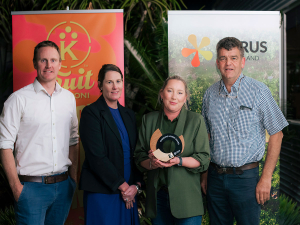
New Zealand's citrus growers were challenged to build their future on the value embedded in their fruit rather than the volume they produce, at Citrus New Zealand's annual gathering in Gisborne on 17 September.
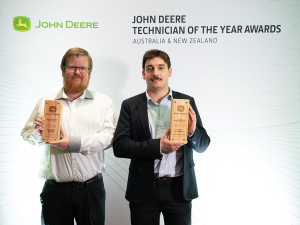
Leading John Deere technicians and apprentices from New Zealand and Australians were recognised at the recent sixth annual JD Technician of the Year Awards, held in Brisbane.
In Dacre, near Invercargill in New Zealand’s South Island, Bruce Dinnington is running a dairy operation unlike any other.
A free online platform aggregating governance vacancies across rural and regional New Zealand has been launched.
Environment Minister Nicola Grigg has announced details of a new rural plastics recycling scheme.
Agricultural drone operators say that a government decision to allow lower-risk drone work without certification won’t lower standards but drive innovation and efficiency.


OPINION: It seems Canterbury processor Synlait is still in the doldrums.
OPINION: Get offside with New Zealand First leader Winston Peters at your own peril.