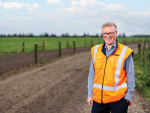
Synlait’s Longest-Serving Employee Joins Executive Team
Synlait's longest serving employee – a man who joined the Canterbury-based milk processor even before it began processing milk – is now its newest executive.




 increase font size
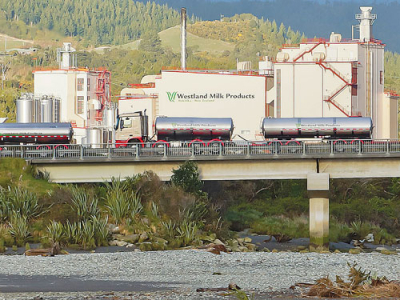 Westland Milk’s expansion into Canterbury hasn’t been easy.
Open Country Dairy (OCD) is the benchmark commodity processor and Tatua the benchmark value-added processor, says TDB Advisory.
“Both are focussed on their core businesses and delivering higher-than-expected risk-weighted returns to their shareholders and farmers,” says the report on Fonterra’s main New Zealand competitors.
Synlait is successfully shifting more of its milk into higher-margin returns and has the access to capital and confidence from recent returns on assets of above 10% to invest in higher-value manufacturing assets, the report says.
Westland has acknowledged its underperformance and the report says little milk volume growth can be expected until it reduces its costs.
Tatua invests two and a half times more than OCD for every unit of milk processed, showing that higher value-add strategy is not as simple as it sounds.
Open Country Dairy
OCD is the only new processing company to have grown its milk collection and processing presence in a number of regions – Waikato, Taranaki and Southland. It is now NZ’s second-largest milk processor and global supplier of whole milk powder, the report says.
OCD’s average milk volume growth rate has been 10% over the last five years.
It pays farmers a premium above the farmgate milk price.
Synlait Milk
Synlait’s milk volumes have grown at 7% pa on average over the last five years.
“Synlait is now well established and has a high level of credibility with its Canterbury farmer-suppliers. It has paid farmers a similar base commodity milk price to Fonterra but has moved to paying higher prices for A2 and grass-fed milk and for milk supplied by farmers with Synlait-accredited ‘superior-farming’ practices.
“It has also established close partnerships with trade customers.”
Since its 2013 IPO, Synlait has successfully positioned itself as a business-to-business (B2B) manufacturer of high-value milk products.
It has progressively shifted more volume into specialty ingredients, infant formula base powders, canned infant formulas and cream.
Tatua
Tatua’s market share of NZ milk collections is small at 1%.
It has successfully grown its high value ingredient products business. The company’s focus is on export markets, with sales in at least 60 countries.
Tatua has increased its value to its farmer-supplier shareholders by making the highest milk payments in the industry. It has invested in modern manufacturing capability to produce specialised ingredient products and small volumes of consumer products. The products include caseinate, whey protein concentrate and anhydrous milk fat.
Westland
Westland processes 3% of NZ’s milk volumes and within its Westland catchment has a monopoly protected by the cost of transporting milk across the Southern Alps, the report says.
It has expanded into Canterbury and competes with Fonterra and Synlait in that region. The expansion has not been easy and Westland has markedly varied its payout to its farmer-suppliers relative to the farmgate milk price in recent years. In the last five years milk volumes have grown by 6% pa on average.
Westland has invested significantly since 2012 in improving its product mix.
It has established its own export sales channels, opened an office in China and recently partnered with its largest nutritional powders customer Ausnutria, in Hong Kong. This company is expected to provide the capital and a sales channel for Westland to grow its business.
Synlait's longest serving employee – a man who joined the Canterbury-based milk processor even before it began processing milk – is now its newest executive.

Canterbury milk processor, Synlait Milk has confirmed Leon Fung as its chief executive officer.
Fonterra shareholders can begin voting on Tuesday 20 October in the 2026 Board of Directors’ election, a Co-operative Council election in one Ward, and seven Annual Meeting resolutions.
Fonterra Co-operative Group chief financial officer Andrew Murray has resigned to take up a role outside the dairy giant.
Four candidates have been confirmed for two director positions on Fonterra’s board.


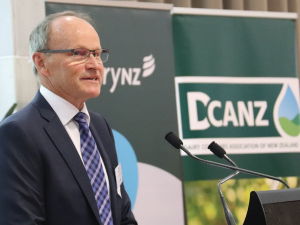
Dairy processors are ready to further boost New Zealand’s export earnings but want the incoming government to match their ambition with good policy.
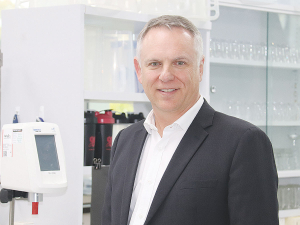
Massey University is best placed to solve the “problems” facing the dairy industry, says vice chancellor, Pierre Venter.
Synlait's longest serving employee – a man who joined the Canterbury-based milk processor even before it began processing milk – is now its newest executive.
A dairy industry leader believes eradicating the common and costly disease, Bovine Viral Diarrhoea (BVD) is within reach.
A farmgate milk price of $10/kgMS this season is firming up as milk powder prices soar and the New Zealand dollar weakens.
Federated Farmers has welcomed new rural policies released by ACT, saying they align closely with its own election priorities.

OPINION: It seems Canterbury processor Synlait is still in the doldrums.
OPINION: Get offside with New Zealand First leader Winston Peters at your own peril.




