NZ Food Safety Boss on Balancing Speed and Risk in Approvals
Striking a balance between meeting the needs of industry to speed up approval time for products but on the other hand ensuring that risks are properly assessed.




 increase font size
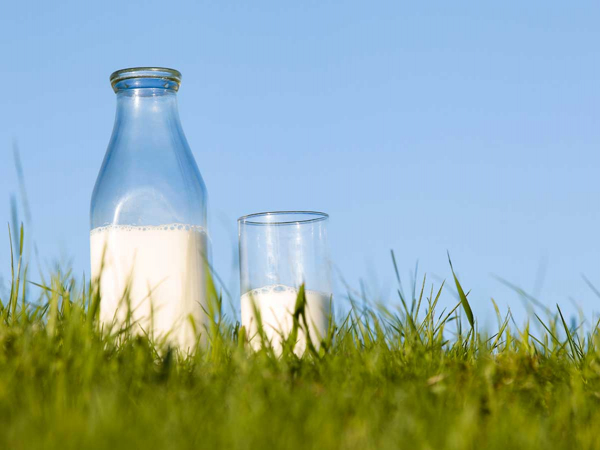 A Central Hawke's Bay farm's raw milk has been recalled.
Raw unpasteurised drinking milk from Central Hawke’s Bay producers Lindsay Farm is being recalled following detection of Campylobacter as part of their routine testing programme.
Lindsay Farm is a registered provider of raw milk.
The recall affects Lindsay Farm brand organic raw drinking milk with a use by date between 6 March 2021 and up to and including 21 March 2021.
The affected product is sold in the Hawke’s Bay region at seven registered depots and home deliveries. The product is sold in 2-litre plastic bottles.
Campylobacter bacteria can cause severe gastrointestinal illness in people, and can be particularly serious in young people, the elderly, pregnant women and people with weakened immune systems.
New Zealand Food Safety’s national services compliance manager, Melinda Sando, says people with Lindsey Farm organic raw drinking milk at home should visit MPI’s recall website to check if it is among the batches of recalled product.
“If you have any of the recalled product, throw it out or return it to your supplier, or heat to 70°C and hold at this temperature for one minute. If you don’t have a thermometer, heat the milk until it nearly reaches a boil (or scald the milk) before drinking it.”
Sando says that raw milk is more risky than pasteurised milk because the process of pasteurisation kills harmful bacteria.
“You can get sick from consuming raw milk. If you have health concerns after drinking the product, seek medical advice.”
In people with weakened immune systems, such as those with a blood disorder, Campylobacter occasionally spreads to the bloodstream and causes a life-threatening infection.
Human campylobacteriorsis (Campylobacter) is a notifiable disease in New Zealand, meaning any cases must be reported to public health authorities.
Striking a balance between meeting the needs of industry to speed up approval time for products but on the other hand ensuring that risks are properly assessed.
A partnership between state-owned enterprise Pāmu (Landcorp Farming Limited) and charity Meet the Need is putting more than quality New Zealand beef into food bank parcels this year.
Testing confirms H5 bird flu in a single northern giant petrel, found dead on a remote Cape Palliser beach in the Wairarapa, says Dr Mary van Andel, the Ministry for Primary Industries' (MPI) Chief Veterinary Officer.
The apple sector is working with the Government to unlock access to two key markets that could bring millions in revenue for apple growers.
A Palmerston North shearer has been sentenced to six months' community detention and 12 months' supervision after being found to have physically abused three lambs while shearing them.


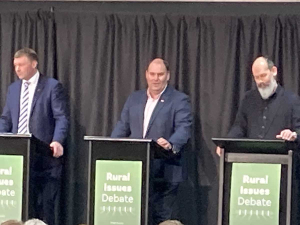
National’s much-touted free trade deal with India featured in the Rural Issues Debate at Mystery Creek, Hamilton on Wednesday night.
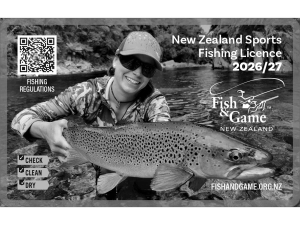
New Zealand's 2026-27 freshwater fishing season has opened, with anglers encouraged to head to rivers and lakes over the coming days as conditions look favourable across much of the country.
Central Otago District Council (CODC) has voted against a plan to spread treated sewage sludge from Cromwell and Alexandra on farmland near Lauder, a decision Federated Farmers says reflects strong opposition from rural residents.
Pāmu has released its FY26 Integrated Annual Report, reporting a Net Operating Profit of $113 million, more than double the $49 million recorded in FY25.
Meat Industry Association data, released alongside the Red Meat Sector conference in Wellington, shows export value climbing across the US, China, UK and Canada.
Applications are set to open for the 2027 Zanda McDonald Award, a trans-Tasman award recognised for identifying and fast-tracking talented young leaders in agriculture and agribusiness.
OPINION: It seems Canterbury processor Synlait is still in the doldrums.
OPINION: Get offside with New Zealand First leader Winston Peters at your own peril.