
Leon Fung confirmed as Synlait CEO
Canterbury milk processor, Synlait Milk has confirmed Leon Fung as its chief executive officer.




 increase font size
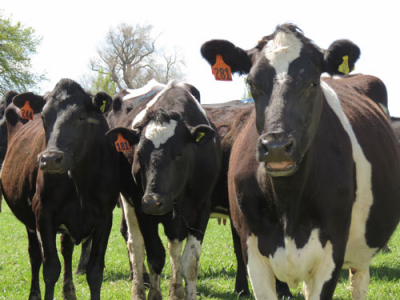 Big dairy processors lifting payout forecasts for 2015-16 is a further sign of a rebound.
The big dairy processors in New Zealand are lifting payout forecasts for 2015-16 in a further sign of a rebound in global milk prices.
Canterbury processor Synlait has followed Fonterra and lifted its forecast to $6/kgMS – up $1 on its previous forecast. The company had planned to update its forecast in early February 2017 but says now is better for its 200 suppliers.
Chairman Graeme Milne says it has kept a close eye on the global dairy market and cannot ignore the trending increase in dairy prices.
Lower European production in the last three months shows dairy farmers there are responding to lower milk prices, Milne says.
“Production is also reducing here in NZ, but Europe has a much greater impact on overall dairy prices and we’ve seen this in action with dairy prices over the past three months.
“China’s demand for dairy products is another key driver for global dairy prices. While their demand has risen recently, it’s unclear if and for how long it might continue.”
Fonterra last month raised its forecast price by 75c to $6/kgMS; combined with the forecast earnings per share range for the 2017 financial year of 50-60 cents, the total payout available to farmers in the current season is forecast to be $6.50-$6.60 before retentions.
Chairman John Wilson says the increase reflects improvements in pricing since September, following the gradual rebalancing of global supply and demand.
“We’ve seen falling production in the major exporting regions, particularly Europe and Australia, and an unprecedented decline in NZ milk supply due to wetter-than-normal spring conditions in most regions. On balance, demand continues to be firm, so there has been a steady improvement in global dairy commodity prices and this is reflected in the improved forecast.”
NZ’s second-biggest dairy co-op Westland Milk Products has also raised its forecast and will pay its suppliers $5.50-$5.90/kgMS; net return to shareholders (after retained earnings) will be $5.30-$5.70/kgMS.
Westland chief executive Toni Brendish says the lift in forecast payout is made possible by two factors.
“Firstly, global dairy market prices have increased and Westland has taken advantage of that.
“Secondly, we have improved production efficiency and quality assurance, resulting in savings that can be passed to shareholders.”
Brendish says the global dairy market remains volatile and industry commentators are not agreed on where final payout figures are likely to settle.
“The improvements in the market give us sufficient confidence to be cautiously optimistic and raise our payout prediction.”
Westland is also raising its advance payout to shareholders to $4/kgMS, a lift of 20c.
Canterbury milk processor, Synlait Milk has confirmed Leon Fung as its chief executive officer.
Fonterra shareholders can begin voting on Tuesday 20 October in the 2026 Board of Directors’ election, a Co-operative Council election in one Ward, and seven Annual Meeting resolutions.
Fonterra Co-operative Group chief financial officer Andrew Murray has resigned to take up a role outside the dairy giant.
Four candidates have been confirmed for two director positions on Fonterra’s board.
A record farmgate milk price and strong global demand is laying the foundation for continued growth of organic dairy farming in New Zealand.



Federated Farmers has welcomed new rural policies released by ACT, saying they align closely with its own election priorities.

Rural Contractors NZ says proposed changes to land transport rules for agricultural vehicles are a welcome response by the Government to out of date regulations which have seen members hit with huge fines.
Alliance is calling for final applications for its 2027 Graduate Programme, with applications closing on Sunday 25 October.
Decades piloting planes has ensured vet and farmer David Hayes is focused on safety. So, after a serious accident while welding on farm, he is sharing his experience so others can learn from it.
Canterbury milk processor, Synlait Milk has confirmed Leon Fung as its chief executive officer.
OPINION: Making it easier to collect rainwater and use it to grow crops and livestock is a no brainer.

OPINION: It seems Canterbury processor Synlait is still in the doldrums.
OPINION: Get offside with New Zealand First leader Winston Peters at your own peril.




