
Feds Back National’s 19 Farming National Standards
National’s pledge to introduce 19 new national standards shows the party is serious about getting Wellington out of farming, Federated Farmers says.




 increase font size
 Opportunity deputy leader Daniel Eb
Opportunity says its land value tax (LVT) is unlikely to force farmers into a position where asset sales or increased debt are required.
Speaking to Dairy News, deputy leader Daniel Eb says his party recognises that farming is a boom-and-bust industry, so the policy includes a deferral scheme should it come into effect.
“Prices are really good right now, but they weren’t two years ago, so that mechanism exists in the system,” Eb says.
The general election is set for Saturday, November 7. Several opinion polls suggest Opportunity may be in a front row seat to determine the next government. Some polls even suggest that neither the left nor right political blocs would be able to command a majority without them.
Opportunity’s proposed LVT has drawn the ire of farming groups.
But Eb says that it is important that New Zealand has some form of tax reform.
“The fact is our tax system was designed primarily in the mid-80s, before the fall of the Berlin Wall and before the first text message was sent,” he says. “You cannot continue operating an economy on 40-year-old tax settings. You need to set
tax settings as the world changes around you.”
Opportunity’s proposed LVT would see rural land taxed at 0.5% of its value annually.
The policy aims to discourage land-banking and large property portfolios and redirect money into businesses instead.
“I think it’s important to note that the land value tax sits alongside a citizen’s income,” Eb says. “And we are only proposing that these two are implemented together because you can’t have one without the other.”
He says that, on Opportunity’s projections, a farmer or farming family sitting at or close to the national average sale price of $6-7 million would not see significant changes to the taxes they pay.
“So that’s after you factor in that lower rate for rural land, which is 0.5% as opposed to 1.75% on urban land. That’s after you factor in the citizen’s income, which is effectively a negative income tax rate and significantly reduces your overall tax burden. That’s after you include a carve-out for any privately held conservation land on the farm.”
Eb says that some smaller farms or farms with a lower land value will likely see a tax cut under the policy.
He adds that there is also a plan in place to mitigate the possibility that the cost of the tax would be passed on to tenant farmers through higher lease rates.
“Primarily… we’ve proposed a 10-year transition for this tax,” he says.
Eb says this assumes the party is able to enact the policy within the next Parliamentary term, something he says seems unlikely.
“We’re going to be a minor party with limited influence. So, realistically, once you sort of bake in two election cycles, and then a 10-year transition plan, we’re talking about 2040-something for this to actually come into effect in full. And within the transition plan, we’ve built in a number of checkpoints to see how the market is baking in something like a land value tax.”
He says New Zealand’s land prices – both urban and rural – are overinflated and that is locking young farmers out of farm ownership.
National’s pledge to introduce 19 new national standards shows the party is serious about getting Wellington out of farming, Federated Farmers says.

Farmer-owned fertiliser company, Ballance Agri Nutrients is welcoming National’s plan to negotiate security agreements with key supplier countries to protect New Zealand-bound products from export restrictions and greater supply chain certainty.
With a general election under five weeks away, Rural News is asking major political parties about their policies and positions on key issues facing the primary sector. We will run their responses to each question over the next four weeks. The ACT Party and the Greens didn't respond in time.
The Minister for Rural Communities, Mark Patterson, says there's a massive infrastructure deficit in rural areas.
A Labour-led Government won’t be bringing back the controversial freshwater rules of 2020.



National’s pledge to introduce 19 new national standards shows the party is serious about getting Wellington out of farming, Federated Farmers says.
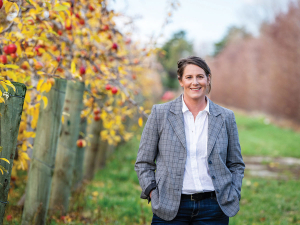
The National Party’s policies to make it easier to grow fresh vegetables, secure reliable water and energy and simplify farm planning are practical changes that will give growers the confidence to invest, according to Horticulture New Zealand (HortNZ).
Fonterra Co-operative Group chief financial officer Andrew Murray has resigned to take up a role outside the dairy giant.
A major move is about to get underway to improve the quality and viability of dairy beef and cattle in NZ.
Veterinarians say changes to the code of welfare for dairy cattle provides a positive foundation for improved cattle welfare across the country.
Today, 15 October, is the International Day of Rural Women, which recognises rural women’s contribution to farming, communities and the environment.




OPINION: It seems Canterbury processor Synlait is still in the doldrums.
OPINION: Get offside with New Zealand First leader Winston Peters at your own peril.




