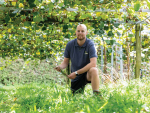
Rabobank Launches HortPathways for Emerging Hort Leaders
Twenty-eight emerging leaders from across the horticulture sector spent two days last month learning valuable skills and connecting with industry experts.




 increase font size
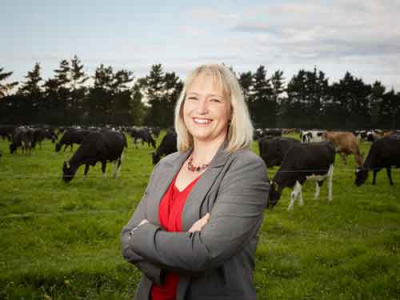 Hayley Moynihan.
The change of government is rattling farmer confidence, according to the latest Rabobank Rural Confidence Survey.
The survey last month found the number of farmers expecting the rural economy to improve in the next 12 months has fallen to 29% (down from 46% last quarter), 49% were expecting similar conditions (up from 42%) and the number expecting the rural economy to worsen rose to 16% (up from 8%).
Dairy farmers’ confidence fell to +18% -- from +50%.
Rabobank New Zealand general manager for Country Banking, Hayley Moynihan, says the survey found farmers in all sectors more pessimistic about the expectations for the rural economy than in the previous quarter, largely because of worries about the recent change in government.
“Of the farmers who thought the rural economy will worsen over the next 12 months, government policies were cited by 80% as a key reason,” says Moynihan. “With a change of government comes uncertainty about the impact of policies on NZ’s agricultural sector.
“During the election campaign, each of the three parties that now make up the government indicated they wanted to make changes to how NZ’s rural economy was operating.
“These results indicate that farmers have some concerns about what these potential interventions could mean for the performance of the rural economy.”
Twenty-eight emerging leaders from across the horticulture sector spent two days last month learning valuable skills and connecting with industry experts.

A 'tsunami' of milk from key exporting countries is winding down and this may be good news for New Zealand dairy farmers.
Chinese beef trade quotas and a looming suspension of Brazilian beef imports into the European Union are expected to reshape global beef trade flows over the remainder of 2026, with implications for New Zealand exporters, according to Rabobank's Q3 Global Beef Quarterly report.
New Zealand consumers are paying more for beef mince than ever before, with the average retail price now sitting above $24 per kilogram, according to Rabobank.
West Otago dairy farmer Luke Kane has been awarded the 2026 Rabobank Dr John Morris Business Development Prize.


Federated Farmers has welcomed new rural policies released by ACT, saying they align closely with its own election priorities.

Rural Contractors NZ says proposed changes to land transport rules for agricultural vehicles are a welcome response by the Government to out of date regulations which have seen members hit with huge fines.
Alliance is calling for final applications for its 2027 Graduate Programme, with applications closing on Sunday 25 October.
Decades piloting planes has ensured vet and farmer David Hayes is focused on safety. So, after a serious accident while welding on farm, he is sharing his experience so others can learn from it.
Canterbury milk processor, Synlait Milk has confirmed Leon Fung as its chief executive officer.
OPINION: Making it easier to collect rainwater and use it to grow crops and livestock is a no brainer.



OPINION: It seems Canterbury processor Synlait is still in the doldrums.
OPINION: Get offside with New Zealand First leader Winston Peters at your own peril.




