Fonterra Elections 2026: Voting Opens Tuesday 20 October
Fonterra shareholders can begin voting on Tuesday 20 October in the 2026 Board of Directors’ election, a Co-operative Council election in one Ward, and seven Annual Meeting resolutions.




 increase font size
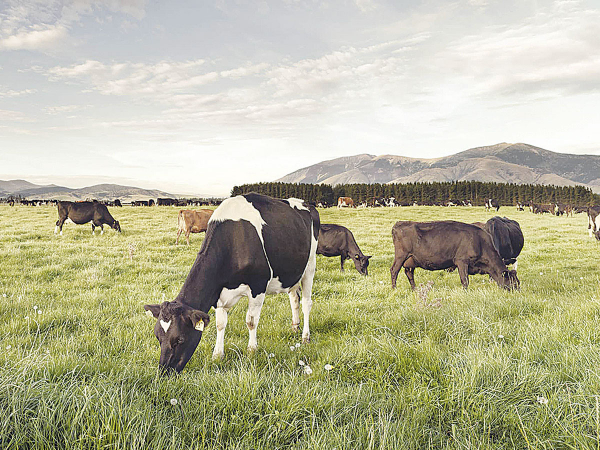 Farm owners and farm workers face a myriad of challenges this season.
While the grass is green on the country's dairy farms, the owners and workers are facing a myriad of challenges.
The 20 cent drop in Fonterra's milk price forecast is one issue and there is also a much higher than normal empty rate in cows.
DairyNZ general manager farm performance Sarah Speight says the present disruptions and challenges are the new norm and most of the issues are beyond the control of farmers.
"Things like the fact that we have had ongoing issues attracting staff, the pace of government regulation and the rhetoric around that and impacts of inflation.
"Interest rate hikes have been a big concern for a number of farmers, especially those carrying a reasonable amount of debt, and add to that volatile weather in the last year. Some farmers are working harder than ever and feel they can't catch a break as it's been one thing after another," she says.
Sarah Speight says in the current climate, some farmers are thinking seriously about how long they want to remain in the industry - especially those who are in or nearing their sixties. She says conversely others are focused on seeing what new opportunities may open for them.
She points out there are many pathways whereby dairy farmers can move 'out of the shed' by employing a sharemilker, contract milker or variable other sharemilker.
For those that see opportunities in the new environment, Speight says they should be looking at their cash position and their budgets for next season and make sure they are farming within their means. She says to capitalise on new ventures, they need to make sure they have good support around them.
For the likes of share or contract milkers looking at taking on a new venture, they should get good advice because they too will be under inflationary pressure.
"At DairyNZ we have a very strong economics team and on our website we have got some updated budget forecasts for next year for a range of different farms. As well, two of our staff have put together a contract milking calculator so that if people are looking at contract milking rates, they can actually calculate what is the right rate to pay a contract milker.
"This information has been very well received and we have also been doing some workshops to talk people through this information," she says.
As the year progresses, farmers face the uncertainty of the global economic crisis and economic pressures at home, one senses there is a feeling of helplessness about what to do.
Sarah Speight says in the circumstances, DairyNZ is doing everything it can to support farmers and ensure that whatever policy changes government make are workable at a farm level. She says it's impossible to say if political change will see any major policy shifts. She says if farmers feel unhappy with the direction of travel then it is up to them to exercise their democratic rights.
"The biggest problem we have in society is apathy when it comes to voting," she says.
Fonterra shareholders can begin voting on Tuesday 20 October in the 2026 Board of Directors’ election, a Co-operative Council election in one Ward, and seven Annual Meeting resolutions.

Fonterra Co-operative Group chief financial officer Andrew Murray has resigned to take up a role outside the dairy giant.
Today, 15 October, is the International Day of Rural Women, which recognises rural women’s contribution to farming, communities and the environment.
Four candidates have been confirmed for two director positions on Fonterra’s board.
A record farmgate milk price and strong global demand is laying the foundation for continued growth of organic dairy farming in New Zealand.


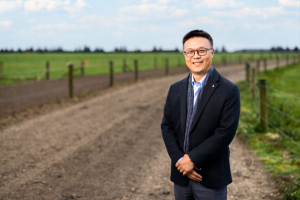
Canterbury milk processor, Synlait Milk has confirmed Leon Fung as its chief executive officer.
OPINION: Making it easier to collect rainwater and use it to grow crops and livestock is a no brainer.
As part of its Election 2026 coverage, Rural News asked political parties how they would help pull the arable sector out of the doldrums. Here's what they said:
Farmers are being encouraged to rethink how they manage waste on farm with the launch of ruralwastesorted.co.nz, a new website bringing together practical tips, real farmer experiences and resources.
New Zealand Winegrowers (NZW) is celebrating the India-New Zealand Free Trade Agreement (FTA) coming into force today, bringing New Zealand wine improved access to one of the world’s fastest-growing economies.
New Zealand’s red meat sector has welcomed the India-New Zealand Free Trade Agreement taking effect, which removes India’s 33% tariff on New Zealand sheepmeat.


OPINION: It seems Canterbury processor Synlait is still in the doldrums.
OPINION: Get offside with New Zealand First leader Winston Peters at your own peril.




