
Mid-Canterbury dairy farmer boosts milksolids by 50% with millennial mindset
A Mid-Canterbury dairy farmer is bringing a millennial mindset to his family farm and is reaping the rewards, with a 50% uplift in milksolids production since he took over.




 increase font size
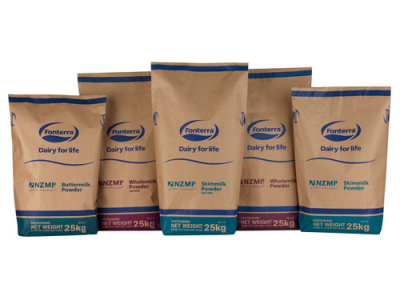 Milk powder rose $48 million in value in January 2017, despite the quantity exported falling by around 19,000 tonnes or 9.4%.
Milk powder rose $48 million in value in January 2017, despite the quantity exported falling by around 19,000 tonnes or 9.4%, Statistics New Zealand says.
Milk powder, which made up 56% of the milk powder, butter, and cheese commodity group in January 2017, more than offset lower sales for other goods, leaving overall exports up 0.3% or $13 million.
When compared to the same period of the previous year, milk powder exports have risen in the last four months, after generally falling since September 2009.
“The recent rises in the value of dairy shows exporters are getting a better price for their milk powder exports than they were at this time last year,” international statistics senior manager Daria Kwon said.
“The fall in milk powder quantity this month reflects this, with exporters getting more value for less product.”
China continues to be our top destination for milk powder exports, accounting for 32% of milk powder exports in January 2017, followed by the United Arab Emirates, which accounted for 7.6%.
Crude oil, meat, and fruit all rose in January 2017. These rises were partly offset by falls in other commodities, such as casein, wool, and logs.
The trade balance for January 2017 was a deficit of $285 million. Excluding crude oil exports and imports, the deficit was $36 million.
A Mid-Canterbury dairy farmer is bringing a millennial mindset to his family farm and is reaping the rewards, with a 50% uplift in milksolids production since he took over.

Farmers, foresters and orchardists have just a few days left to complete the official agricultural production census, run by Statistics NZ in partnership with MPI.
New data from Statistics NZ shows that Canterbury had the biggest fall in agricultural emissions, down 2.7%, mainly due to a decline in livestock numbers.
Agriculture has kept losses to a minimum as New Zealand reported its largest ever GDP drop on record.
Statistics released today offer some insight into how COVID-19 is affecting New Zealand’s primary exports.



Farmers are being encouraged to rethink how they manage waste on farm with the launch of ruralwastesorted.co.nz, a new website bringing together practical tips, real farmer experiences and resources.

New Zealand Winegrowers (NZW) is celebrating the India-New Zealand Free Trade Agreement (FTA) coming into force today, bringing New Zealand wine improved access to one of the world’s fastest-growing economies.
New Zealand’s red meat sector has welcomed the India-New Zealand Free Trade Agreement taking effect, which removes India’s 33% tariff on New Zealand sheepmeat.
More than 95 per cent of New Zealand’s forestry and wood exports to India can now enter tariff free as the New Zealand-India Free Trade Agreement comes into force today.
Federated Farmers is backing Feilding High School’s call to keep Agriculture and Horticultural Science as a standalone subject in Year 11.
Food and fibre exports have returned a billion- dollar bonus to the country.



OPINION: It seems Canterbury processor Synlait is still in the doldrums.
OPINION: Get offside with New Zealand First leader Winston Peters at your own peril.




