
Four Candidates Confirmed for Fonterra Board Election
Four candidates have been confirmed for two director positions on Fonterra’s board.




 increase font size
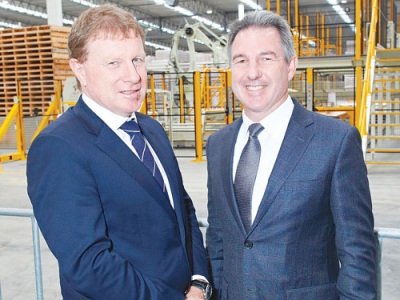 Fonterra chairman John Wilson and chief operations officer Robert Spurway in the new warehouse.
Fonterra's new Lichfield, South Waikato, dryer is the largest in the world, co-equal with the Darfield D2 dryer in the South Island, says the co-op’s chief operations officer, Robert Spurway.
It will allow the processing of an additional 4.4 million litres of milk each day, taking total daily processing capacity to 7.6m L.
Processing such large volumes is a resource-intensive business that needs careful handling, he says. “We focus on making sure impacts are minimised wherever possible.
“A new biological wastewater treatment plant ensures we can treat any waste [entering] potable water before it is irrigated to land near the site – the most environmentally sustainable solution.
“We’re making good use of rail to move product to port, eliminating up to 40 truck movements from the site every day, which free up local roads and reduce our carbon emissions.
“A by-product from the treatment plant is a high quality fertiliser used by local farmers.”
Larger scale dryers such as Lichfield are part of balancing Fonterra’s assets to give the best value for farmers.
“As we’ve seen in recent GDT auctions, premium milk powder is a valuable product for Fonterra in its own right. But people often underestimate the strategic importance of powder production to Fonterra’s overall asset mix.”
The new plant will help the co-op balance its processing, allowing it to switch between products quickly to meet demand changes in global markets, increase production when milk volumes dictate, and achieve the best product mix for returns.
Four candidates have been confirmed for two director positions on Fonterra’s board.
A record farmgate milk price and strong global demand is laying the foundation for continued growth of organic dairy farming in New Zealand.
Waikato milk processor Tatua has again declared a record milk payout to farmer shareholders, leaving other processors in the dust.
Fonterra has unveiled its annual results for the 2026 financial year, posting $27 billion in revenue and close to $20 billion returned to New Zealand farmer owners and unit holders.
Fonterra Co-operative Group has confirmed the independently assessed candidates standing for election to its board in 2026.


A major move is about to get underway to improve the quality and viability of dairy beef and cattle in NZ.
Veterinarians say changes to the code of welfare for dairy cattle provides a positive foundation for improved cattle welfare across the country.
Today, 15 October, is the International Day of Rural Women, which recognises rural women’s contribution to farming, communities and the environment.
Global dairy giant Lactalis has integrated its Australian operations with the Mainland Dairy consumer business it acquired from Fonterra earlier this year.
After almost two decades of sharemilking, saving and building equity, Aaron and Marcia Flay this year realised their long-held dream of settling on their first dairy farm.
Good medium to long term prospects for NZ beef, especially in the US, has heighted the focus on various initiatives to capitalise on this situation.
OPINION: It seems Canterbury processor Synlait is still in the doldrums.
OPINION: Get offside with New Zealand First leader Winston Peters at your own peril.




