
Fines For Velveting Without Pain Relief, Illegal Slaughter and NAIT Breaches
Three men have been sentenced in District Courts after Ministry for Primary Industries prosecutions over animal welfare, food safety and cattle tracing offences.




 increase font size

A review is underway of the NZ dairy herd improvement regulatory regime.
The regulatory regime contributes to the breeding of more productive dairy animals through herd testing, herd recording, animal evaluation and artificial breeding. It also has the potential to support better environmental and animal health outcomes.
Farmers have been testing samples of milk from their dairy cattle and recording data to inform their herd management decisions for over a century. For industry to achieve optimal rates of genetic gain, it needs a comprehensive, accurate and continuous supply of data to inform decisions on herd management and breeding.
The Ministry for Primary Industries (MPI) wants to hear from industry stakeholders about how the regulatory regime can help to ensure that New Zealand’s dairy industry remains world leading.
The dairy herd improvement regulatory regime has not been comprehensively reviewed since it was established in 2001, says Emma Taylor, MPI’s Director of Agriculture, Marine & Plant Policy.
“It’s important the dairy herd improvement regulatory regime reflects the changing needs of the dairy industry. It’s timely to look at how the regulatory settings can better support industry both now and into the future.
“Dairy herd improvement adds substantial value to New Zealand’s dairy industry, estimated at around $300 million each year.
“We want to hear from people about how the regulatory regime can more effectively support the performance of the dairy industry. We also want to hear from industry on the effects of changing technology and the future implications on the dairy herd improvement sector.”
The six week consultation will run from Monday 1 October 2018 to 5pm Monday 12 November 2018.
This review is separate to the review of subpart 5 of the Dairy Industry Restructuring Act 2001 (DIRA) which will look at the contestability settings and requirements on Fonterra.
Three men have been sentenced in District Courts after Ministry for Primary Industries prosecutions over animal welfare, food safety and cattle tracing offences.

Testing confirms H5 bird flu in a single northern giant petrel, found dead on a remote Cape Palliser beach in the Wairarapa, says Dr Mary van Andel, the Ministry for Primary Industries' (MPI) Chief Veterinary Officer.
The apple sector is working with the Government to unlock access to two key markets that could bring millions in revenue for apple growers.
A Palmerston North shearer has been sentenced to six months' community detention and 12 months' supervision after being found to have physically abused three lambs while shearing them.
OPINION: A simpler, clearer, more effective Recognised Seasonal Employer (RSE) scheme.



Three men have been sentenced in District Courts after Ministry for Primary Industries prosecutions over animal welfare, food safety and cattle tracing offences.
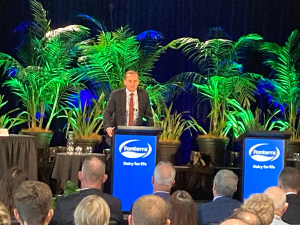
Fonterra’s 2026 financial year was a year of delivery, with record volumes of milk collected, processed and shipped by the co-op.
OPINION: The Government's decision to reinstate agriculture and horticultural science as a standalone subject from Year 11 is the right one.
Dairy farmers, still holding onto their Fonterra shares despite switching milk supply elsewhere or exiting the industry, now face a stricter share sell-down requirement.
Hamilton-based agritech company Aimer Farming has completed a $3 million capital raise to support its next stage of growth, including a beef farming product due to launch in 2027.
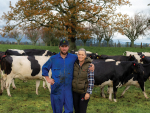
When dairy manager Miriam Lauridsen learned the farm, she was joining held weekly health and safety meetings, she initially thought that was “a bit over the top”. Experiencing that culture changed her mind.


OPINION: It seems Canterbury processor Synlait is still in the doldrums.
OPINION: Get offside with New Zealand First leader Winston Peters at your own peril.




