Fonterra FY26 Results: $9.69 Milk Price, $3.4bn Profit
Fonterra has unveiled its annual results for the 2026 financial year, posting $27 billion in revenue and close to $20 billion returned to New Zealand farmer owners and unit holders.




 increase font size

GROWTH IN dairy exports from some major exporting countries has slowed, says Fonterra.
In its monthly global dairy update, the co-op notes that the US, Argentina and Uruguay are experiencing a decrease in volumes. However, European exports continue to soar.
New Zealand exports also continued to grow, increasing 29% on a year-on-year basis for the month of August. The most significant change came from whole milk powder (WMP) exports, up 28% in August 2014 compared to the same month last year.
Australian exports increased 13% on a year-on-year basis for the month of August. This increase in exports was a result of skim milk powder (SMP) increasing 58% and fluid milk up 43%. By contrast, WMP decreased 29% and butter 19%.
Fonterra says production growth from the EU continues to impact export growth with exports increasing 12% on a year-on-year basis for the month of July. Exports are now up 14% year-to-date to July 2014 compared to the same period last year.
The export products driving this increase are butter up 52%, SMP up 47% and fluid and fresh milk up 25%.
US exports decreased for the second consecutive month, down 10.2% on a year-on-year basis for the month of August. This is the second year-on-year decrease since 2012. Contributing factors to this decline are high domestic market prices and low global commodity prices.
The production decrease in Argentina and Uruguay continues to impact exports which decreased by 22% on a year-on-year basis for the month of August. Factors that may be influencing reduced exports include low production levels, reduced demand from Brazil and export restrictions in Argentina.
Last season's record dairy prices spurred milk production in most key exporting countries. Milk prices have halved this year.
Fonterra has unveiled its annual results for the 2026 financial year, posting $27 billion in revenue and close to $20 billion returned to New Zealand farmer owners and unit holders.
Fonterra Co-operative Group has confirmed the independently assessed candidates standing for election to its board in 2026.
Fonterra has revised its Farmgate Milk Price forecast for the 2026/27 season, lifting the midpoint and narrowing the range on the back of improving global dairy commodity prices.
A 'tsunami' of milk from key exporting countries is winding down and this may be good news for New Zealand dairy farmers.
Outgoing Fonterra Co-operative Council chair John Stevenson says that it has been a privilege to represent the co-op's farmer shareholders.



LIC shareholders have elected a new North Island representative to the co-operative's Board, along with five representatives to its Shareholder Reference Group (SRG), following the company's Annual Meeting held in Invercargill.
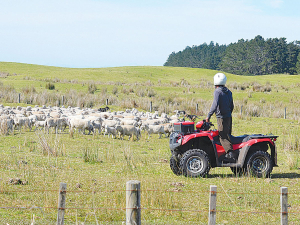
Farmers across parts of Southland and South Otago are continuing to deal with difficult conditions after a prolonged run of wet weather, with pressure building around feed supply, stock management, pasture damage, farm infrastructure and everyday workloads.
Federated Farmers says it welcomes Labour's commitment to reviewing the Sharemilking Agreements Act, calling on other major parties to do the same.
For Canterbury dairy farmers Sian Meijer and Rick Wobben, wearable technology has become one of their most valuable on-farm tools - helping manage 1850 cows across an expansive, high-performing dairy operation while improving efficiency, mating outcomes and day-to-day decision making.
Fonterra has unveiled its annual results for the 2026 financial year, posting $27 billion in revenue and close to $20 billion returned to New Zealand farmer owners and unit holders.
The first major update to the Dairy Cattle Code of Welfare in more than a decade has been released, marking what DairyNZ describes as an important step in ensuring animal welfare standards continue to evolve alongside scientific evidence and on-farm realities.

OPINION: It seems Canterbury processor Synlait is still in the doldrums.
OPINION: Get offside with New Zealand First leader Winston Peters at your own peril.