
Patterson: Rural NZ Faces a "Massive" Infrastructure Deficit
The Minister for Rural Communities, Mark Patterson, says there's a massive infrastructure deficit in rural areas.




 increase font size
 One of WNL's LoRaWAN sites on the coast in Clevedon, South Auckland.
The Government is spending $150,000 to help upgrade rural internet.
The Ministry for Primary Industries' (MPI) Sustainable Food and Fibre Futures fund is 'co-investing' to help WISPA Network Limited (WNL) tackle the commercial roll-out of a collaborative delivery model for a nationwide, rural-focused LoRaWAN (Long Range Wide Area Network).
"Patchy network connection remains a significant barrier to many farmers looking to adopt agricultural technology solutions," says Steve Penno, MPI's director of investment programmes.
"Improving connectivity in remote rural areas of New Zealand would help lift productivity and equip farmers and growers with tools to improve sustainability.
"The ultimate aim is to develop a sustainable commercial business model that offers a low-cost solution for our rural farmers."
Tim Cutfield, WNL's general manager, says the main Telcos have focused their LoRaWAN activities closer to urban areas where there are larger populations, and WNL's focus is bringing connectivity to rural areas.
"LoRaWAN technology is significantly cheaper than an equivalent cellular network. Delivering it via an existing network of around 3,000 sites, which currently provide rural internet services, will lower establishment and running costs," says Cutfield.
"We're ensuring the network is an open to all Internet of Things (IoT) solution providers for a reasonable price.
"Farmers' connectivity needs differ from case to case - they don't need 5G coverage on the back of the block of the farm just to monitor an inaccessible water tank, for instance."
IoT describes physical objects with sensors, processing ability, software, and other technologies that connect and exchange data with other devices and systems over the internet or other communication networks.
LoRaWAN is used extensively internationally so there are numerous low-cost sensors available off the shelf which can be adapted for the needs of New Zealand farmers.
WNL has already deployed a pilot-scale version of a rural wireless IoT network, which is now in the testing phase.
"This partnership with government is enabling us to achieve our goals much faster than we would have on our own," says Cutfield.
"We're helping farmers access invaluable data that will help them save time and improve their decision-making on-farm.
"We're already working with a range of partners, including helping Predator Free 2050 monitor 7,500 traps in remote regions, putting sensors on grain silos so dairy farmers know when their grain supplies are low, and digitally monitoring water systems.
"Farmers are able to use sensors to ensure they meet environmental targets such as reducing their use of water or nitrogen inputs."
Penno says having a more efficient rural network will be of huge benefit to farmers as they develop their Integrated Farm Plans, Farm Environment Plans and Fresh Water Management Plans.
"This project will contribute to realising the goals of the Goverment and sector's Fit for a Better World roadmap. It aims to lift productivity and add value within our food and fibre sector, while protecting our natural environment," says Penno.
"Enabling farmers and growers to capitalise on this information held in existing digital farm management systems, tools, applications, and emerging technologies will be crucial.
"To achieve this we need to realise data interoperability within our food and fibre sector. However, we can't achieve this without improving the connectivity of remote places in New Zealand."
The Minister for Rural Communities, Mark Patterson, says there's a massive infrastructure deficit in rural areas.

Testing confirms H5 bird flu in a single northern giant petrel, found dead on a remote Cape Palliser beach in the Wairarapa, says Dr Mary van Andel, the Ministry for Primary Industries' (MPI) Chief Veterinary Officer.
The apple sector is working with the Government to unlock access to two key markets that could bring millions in revenue for apple growers.
OPINION: A simpler, clearer, more effective Recognised Seasonal Employer (RSE) scheme.
The country's second largest milk processor is warning against 'complacency' during a review of competition regulations in the dairy sector.


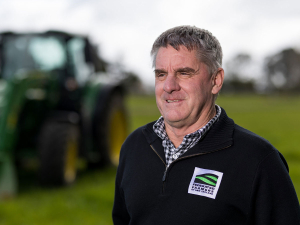
National’s pledge to introduce 19 new national standards shows the party is serious about getting Wellington out of farming, Federated Farmers says.
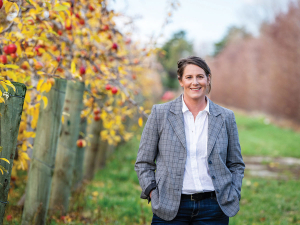
The National Party’s policies to make it easier to grow fresh vegetables, secure reliable water and energy and simplify farm planning are practical changes that will give growers the confidence to invest, according to Horticulture New Zealand (HortNZ).
Fonterra Co-operative Group chief financial officer Andrew Murray has resigned to take up a role outside the dairy giant.
A major move is about to get underway to improve the quality and viability of dairy beef and cattle in NZ.
Veterinarians say changes to the code of welfare for dairy cattle provides a positive foundation for improved cattle welfare across the country.
Today, 15 October, is the International Day of Rural Women, which recognises rural women’s contribution to farming, communities and the environment.


OPINION: It seems Canterbury processor Synlait is still in the doldrums.
OPINION: Get offside with New Zealand First leader Winston Peters at your own peril.




