
Fonterra CFO Andrew Murray Resigns
Fonterra Co-operative Group chief financial officer Andrew Murray has resigned to take up a role outside the dairy giant.




 increase font size

The Fonterra Shareholders' Council and DairyNZ have welcomed the 50c increase in forecast Farmgate Milk Price.
A 50c increase and advance for the 2013-14 season is reflection of the cooperative's strength said Fonterra Shareholders Council chairman, Ian Brown.
Fonterra has announced a revised Farmgate Milk Price forecast of $7.50/kgMS for the 2013-14 season, including a $5.50 advance, and an estimated dividend of 32c per share.
Brown says this is evidence of a strong organisation that has moved appropriately for the benefit of its supplier Shareholders.
"It will allow Fonterra Farmers to improve their financial position, provide them with some added flexibility and enable them to move into the new season with confidence.
"As always, given the volatility of the market, I urge Farmers to continue to show prudence in their financial planning."
DairyNZ says the forecast bodes well for dairy farmers being able to boost the contribution they make to the prosperity of the country this season.
"The increase in Fonterra's forecast payout translates into another $845 million circulating in the national economy from farmers," says DairyNZ chief executive Tim Mackle.
He says that farmers have had a great start to the new season with good grass growth throughout the winter and mild calving weather so far. "But it's early days, there's a lot of the season to go yet," he says. For the end of July, less 2% of milk production has been collected so far.
Mackle says that the latest payout forecast also puts the level of farm debt in a better perspective. "This latest payout forecast gives farmers cashflow confidence, because it helps them manage their overdrafts and debt easier. Many will use it to pay off debt," he says.
"The level of farm debt servicing is about twice today what it was a decade ago. But what people need to understand is that the distribution of that dairy farm debt is not uniform. About 20% of farms have virtually no debt. Another 20% carry 45% of the debt. So the level of payout forecast is more significant for those carrying a lot of debt obviously," he says.
"Farm working expenses now average around $4.30 to $4.50 per kg/MS and coupled with the extra costs incurred to service the higher average debt levels, many farmers need good milk prices to build resilience and strength into their businesses," he says.
"Essentially growth in farm operating expenses and debt servicing has roughly matched growth in income despite improved milk prices. The high Advance Rate also helps farmers with cash early in the season when they need it most."
Mackle says growing dairying's contribution to New Zealand's prosperity is one of the 10 key objectives in the industry's new dairy farming strategy, Making Dairy Farming Work for Everyone, and an increasing milk price will help achieve that.Font
"At the same time, it is still just a forecast, it's also very early in the season and things can turn on a dime, and quickly change. Farmers have learnt to live with that kind of volatility and while many will be smiling about the forecast, the excitement may also be a little tempered at this stage. Remember, we started off with a hiss and roar last season in terms of milk production, and ended up with the worst drought in 70 years. It highlights the need to keep planning and monitoring to make the best decisions."
Fonterra Co-operative Group chief financial officer Andrew Murray has resigned to take up a role outside the dairy giant.

Four candidates have been confirmed for two director positions on Fonterra’s board.
A record farmgate milk price and strong global demand is laying the foundation for continued growth of organic dairy farming in New Zealand.
Waikato milk processor Tatua has again declared a record milk payout to farmer shareholders, leaving other processors in the dust.
Synlait has swung to second-half profit as operations stabilise, but the dairy processor still posted a $75.4m annual loss.



National’s pledge to introduce 19 new national standards shows the party is serious about getting Wellington out of farming, Federated Farmers says.
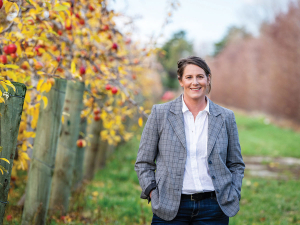
The National Party’s policies to make it easier to grow fresh vegetables, secure reliable water and energy and simplify farm planning are practical changes that will give growers the confidence to invest, according to Horticulture New Zealand (HortNZ).
Fonterra Co-operative Group chief financial officer Andrew Murray has resigned to take up a role outside the dairy giant.
A major move is about to get underway to improve the quality and viability of dairy beef and cattle in NZ.
Veterinarians say changes to the code of welfare for dairy cattle provides a positive foundation for improved cattle welfare across the country.
Today, 15 October, is the International Day of Rural Women, which recognises rural women’s contribution to farming, communities and the environment.




OPINION: It seems Canterbury processor Synlait is still in the doldrums.
OPINION: Get offside with New Zealand First leader Winston Peters at your own peril.




