Fonterra Elections 2026: Voting Opens Tuesday 20 October
Fonterra shareholders can begin voting on Tuesday 20 October in the 2026 Board of Directors’ election, a Co-operative Council election in one Ward, and seven Annual Meeting resolutions.




 increase font size
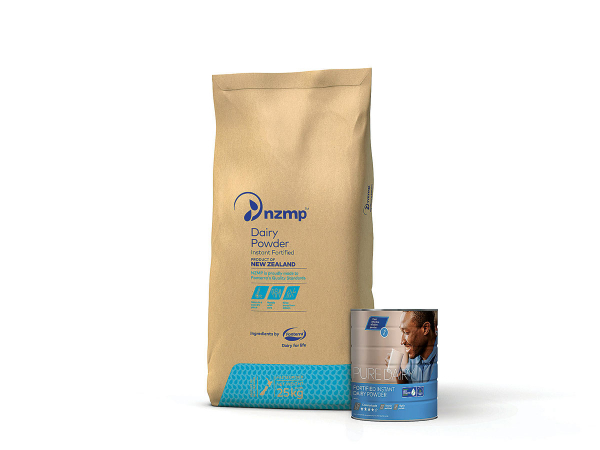 Fonterra’s ingredients business was the star performer in the first half of this financial year.
Manufacturing options and scale are allowing Fonterra to maximise returns for farmers' milk, says chief financial officer Marc Rivers.
Announcing the co-operative's half-year results last week, Rivers highlighted change in the fortunes of key business units.
This time last year, Fonterra's foodservice business in China was the star performer.
However, with high milk price eroding margins in food service and consumer businesses, ingredients was the biggest money earner in the first half of the financial year.
For six months ending January 31 2022, earnings soared across all three ingredients business units - Asia Pacific, Americas and the Middle East (AMENA) and Greater China.
Rivers says this highlights a co-op with scale and opportunity.
"Our scale allows us to move our farmers' milk between markets, categories and products where it delivers the most value.
"If we cast our minds back to this time last year, it was foodservice led by strong demand story from China.
"Now fast forward a year later, it's our performance in ingredients that's driving by our earnings."
Rivers says there was strong demand for dairy across multiple markets in a time of constrained supply, led by high value ingredients like caseinates and whey protein concentrates used in high protein snack bars and ready-to-drink medical beverages.
"Our sales book is well contracted and revenue up despite impact of lower milk collections."
Revenue for the six months rose 9% to $10.7 billion however, gross margins dropped to 14.9% from 17.4% due to higher milk price.
Fonterra's normalised profit dropped 13% to $364m with earnings per share down 3c to 22c.
"Gross margin decreased due to significant increase in cost of goods sold, reflecting higher cost of milk," says River.
Fonterra also improved its net debt position through Rivers noted that net debt was dwn 8% on the same period to $5.6 billion; gearing ratio is now 44.1% versu 47.3% last year.
"As is usual at this time of the year, these figures reflect the seasonal peak and we expect further reductions in debt and gearing by the end of the financial year," he says.
Fonterra is sticking a forecast farm gate milk price range of $9.30 - $9.90/kgMS an normalised earnings guidance of 25 - 35c/share for this season.
Fonterra chief executive Miles Hurrell says that while the milk price is at a record high, pricing in the ingredients business, for both reference products, has been supportive of both milk price and earnings.
"We expect this to continue in the second half.
"In the medium term, we expect the supply and demand outlook to go some way towards underpinning a strong milk price next season."
But there are a number of risks Fonterra is watching closely.
"The conflict in Ukraine has added to an already complex Covid-19 operating environment, impacting global supply chains, oil prices and the global supply of grain," says Hurrell.
"However, our lower debt levels mean we are in a stronger position to weather the heightened levels of uncertainty and market volatility the world faces right now.
"We will also continue to use our co-op's scale to ensure we are putting our co-op's milk into the products and places where we can deliver the most value under the circumstances."
Fonterra shareholders can begin voting on Tuesday 20 October in the 2026 Board of Directors’ election, a Co-operative Council election in one Ward, and seven Annual Meeting resolutions.

Fonterra Co-operative Group chief financial officer Andrew Murray has resigned to take up a role outside the dairy giant.
Four candidates have been confirmed for two director positions on Fonterra’s board.
A record farmgate milk price and strong global demand is laying the foundation for continued growth of organic dairy farming in New Zealand.
Waikato milk processor Tatua has again declared a record milk payout to farmer shareholders, leaving other processors in the dust.


Alliance is calling for final applications for its 2027 Graduate Programme, with applications closing on Sunday 25 October.
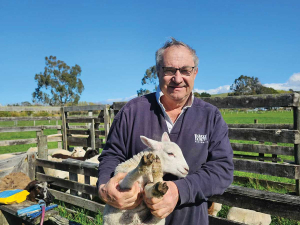
Decades piloting planes has ensured vet and farmer David Hayes is focused on safety. So, after a serious accident while welding on farm, he is sharing his experience so others can learn from it.
Canterbury milk processor, Synlait Milk has confirmed Leon Fung as its chief executive officer.
OPINION: Making it easier to collect rainwater and use it to grow crops and livestock is a no brainer.
As part of its Election 2026 coverage, Rural News asked political parties how they would help pull the arable sector out of the doldrums. Here's what they said:
Farmers are being encouraged to rethink how they manage waste on farm with the launch of ruralwastesorted.co.nz, a new website bringing together practical tips, real farmer experiences and resources.

OPINION: It seems Canterbury processor Synlait is still in the doldrums.
OPINION: Get offside with New Zealand First leader Winston Peters at your own peril.




