Resilient Global Dairy Industry Overcoming Volatility
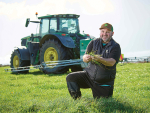
Fonterra chief executive, Richard Allen says being resilient has helped the dairy industry overcome extreme volatility in recent years.




 increase font size
 Fonterra chief executive Miles Hurrell says the rise in Farmgate Milk Price has lifted is due to strong demand from China.
Fonterra has lifted its forecast farmgate milk price, hot on the heels of a huge leap in global dairy prices.
The co-op has lifted its milk price by 40c to $7.30 - $7.90/kgMS. The midpoint of the range, which farmers are paid off, increases to $7.60/kgMS.
Fonterra chief executive Miles Hurrell says the lift is a result of consistent strong demand for New Zealand dairy.
“We’ve seen Global Dairy Trade (GDT) prices continuing to increase since February when we last updated on our forecast Farmgate Milk Price and then this week there was the 15% increase in GDT prices,” Hurrell noted.
The GDT price rise is very much a China demand led story but there is also good demand for New Zealand dairy across South East Asia and the Middle East.
Hurrell says China’s strong economic recovery, following the initial impact of COVID-19, is flowing through to strong demand for dairy, as seen through sales during the Chinese New Year.
“China’s local milk supply is being used in fresh dairy products and they are looking to us to provide longer-life dairy products – in particular, whole milk powder which has a big influence on the forecast Farmgate Milk Price.
“Customers know we are continuing to get products to market, despite the challenges in the global supply chain and they are looking to us for this reliability. We’re also seeing customers want to buy more of our products than usual to help mitigate the risk of global supply chain delays.”
Hurrell says today’s milk price lift is good news for New Zealand farmers and the wellbeing of rural communities. It would see the Co-op contribute more than $11.5 billion to the New Zealand economy through milk price payments this year.
Fonterra has decided to maintain its plus or minus 30 cent range on its forecast Farmgate Milk Price, reflecting the continued uncertainties in the global dairy market.
Hurrell says it is important that farmers recognise there are a number of downside risks to the mid-point of the range. For example, the EU and US are heading into their season and their milk supply will start increasing, the impacts of COVID-19 on key markets and market volatility.
“A $7.60/kgMS forecast Farmgate Milk Price also increases our input costs putting further pressure on our earnings in the second half of the 2020/21 financial year. More details on our earnings will provided at our half year results on 17 March.”
Fonterra chief executive, Richard Allen says being resilient has helped the dairy industry overcome extreme volatility in recent years.

Northland farmer Greg Collins has taken over as chair of the Fonterra Co-operative Council.
Fonterra’s 2026 financial year was a year of delivery, with record volumes of milk collected, processed and shipped by the co-op.
Dairy farmers, still holding onto their Fonterra shares despite switching milk supply elsewhere or exiting the industry, now face a stricter share sell-down requirement.
Milk powder prices are continuing their merry run, firming up a potential $10/kgMS farmgate price this season.


During the nesting season, from September to December, industrious starlings can quickly build nests in the darker areas behind tractor and vehicle, usually close to hot engines, typically resulting in localised damage or in some cases complete write-offs.
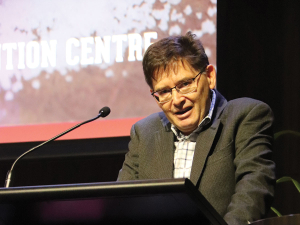
The meat processing industry is much more collegial than it was in the past and is now more focused on common goals.
With the last couple of months having seen some potential tractor purchases put on hold with the impending election and continued input cost rises, year-to-date figures, ending September, has seen deliveries up around 5% over the same period in 2025, with a total of 2026 units.
Beef+Lamb New Zealand is calling for nominations for director roles in the Northern South Island and Northern North Island electoral districts.
Fonterra chief executive, Richard Allen says being resilient has helped the dairy industry overcome extreme volatility in recent years.
The head of the Ministry for Primary Industries (MPI) trade and international relations group says New Zealand is well-positioned to secure trade access and compete internationally as the world becomes more complicated, demanding and uncertain.

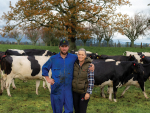

OPINION: It seems Canterbury processor Synlait is still in the doldrums.
OPINION: Get offside with New Zealand First leader Winston Peters at your own peril.