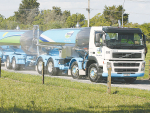
Fonterra Elections 2026: Voting Opens Tuesday 20 October
Fonterra shareholders can begin voting on Tuesday 20 October in the 2026 Board of Directors’ election, a Co-operative Council election in one Ward, and seven Annual Meeting resolutions.




 increase font size

FONTERRA IS the fourth-largest dairy company globally in Rabobank’s rankings released last week but the bank expects vigorous competition in the coming year as companies ‘jostle’ to position themselves for changing markets.
Although the Global Dairy Top 20 chart was still dominated by OECD companies, the ‘biggest strides’ were made by Chinese giants, says the bank. Yili, which joined the top 20 only last year, moved up four places into 15th, and Mengniu, moved up two places into 16th.
They were ‘riding the wave of domestic market sales growth’, the bank says.
Mergers and acquisitions have prompted some OECD companies to strengthen their position, and Rabobank expects the trend to continue in the next 12 months.
But as Rabobank reports “increasing urgency” in the fight for market position, Westpac’s latest report says the biggest news in commodity markets is the worsening US drought and skyrocketing grain prices.
“For grain reliant dairy [and meat] producers in the US this will feed through to higher costs, further squeezing margins for dairy producers,” says Westpac senior economist Anne Boniface.
The Black Sea region important for wheat markets, and India, have reported adverse conditions, says Boniface. A possible El Nino weather pattern in New Zealand would also make it difficult to repeat last season’s double digit growth in milk production.
Boniface says there could be further short-term falls in price but lower growth in supply and improved economic growth in China should see prices improve towards the end of the year.
Last week’s GDT auction recorded a 0.9% drop in dairy prices.
But meanwhile Rabobank is warning that while most top global dairy companies are in the OECD, most growth lies beyond OECD boundaries. “The ability of these companies to respond to changing global market dynamics will determine their prospects for survival and success.”
Although companies have been responding for some time to these trends, “an increased sense of urgency has entered the game of late”. Market trends have accelerated and each new acquisition or merger narrows the remaining field of targets, it says.
There has been a wave of merger and acquisitions over the last 18 months, much of it cross border, with most of the companies in the top 20 having bought other companies or entered joint ventures.
“Rabobank expects to see companies continue to vigorously pursue merger and acquisition targets in the next 12 months as they jostle to position themselves for growth and profit in a changing market environment.”
Significant moves have included: Nestle’s takeover of Pfizer’s nutrition business; Lactalis’s takeover of Parmalat; FrieslandCampina’s takeover of Alaska Milk in the Philippines; Arla’s planned merger with Milk Link (UK) and Milch-Union Hocheifel (Germany); Saputo’s (Canada) takeover of US cheese maker DCI.
Top placing: Fonterra is the fourth largest dairy company in the world.
Fonterra shareholders can begin voting on Tuesday 20 October in the 2026 Board of Directors’ election, a Co-operative Council election in one Ward, and seven Annual Meeting resolutions.

Fonterra Co-operative Group chief financial officer Andrew Murray has resigned to take up a role outside the dairy giant.
Four candidates have been confirmed for two director positions on Fonterra’s board.
A record farmgate milk price and strong global demand is laying the foundation for continued growth of organic dairy farming in New Zealand.
Waikato milk processor Tatua has again declared a record milk payout to farmer shareholders, leaving other processors in the dust.


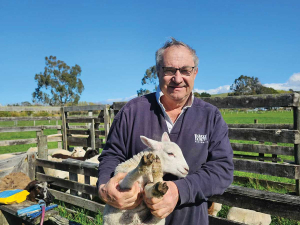
Decades piloting planes has ensured vet and farmer David Hayes is focused on safety. So, after a serious accident while welding on farm, he is sharing his experience so others can learn from it.
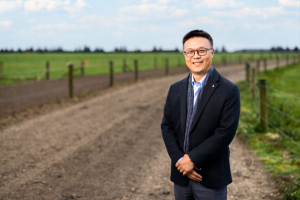
Canterbury milk processor, Synlait Milk has confirmed Leon Fung as its chief executive officer.
OPINION: Making it easier to collect rainwater and use it to grow crops and livestock is a no brainer.
As part of its Election 2026 coverage, Rural News asked political parties how they would help pull the arable sector out of the doldrums. Here's what they said:
Farmers are being encouraged to rethink how they manage waste on farm with the launch of ruralwastesorted.co.nz, a new website bringing together practical tips, real farmer experiences and resources.
New Zealand Winegrowers (NZW) is celebrating the India-New Zealand Free Trade Agreement (FTA) coming into force today, bringing New Zealand wine improved access to one of the world’s fastest-growing economies.


OPINION: It seems Canterbury processor Synlait is still in the doldrums.
OPINION: Get offside with New Zealand First leader Winston Peters at your own peril.




