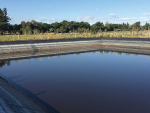
Dairy Effluent Management: Right Amount at the Right Time
Good effluent management on a dairy farm combines a well-designed system with proper processes to ensure the right amount of effluent gets applied to pasture at the right time.




 increase font size
 ECan chief executive Bill Bayfield.
Environment Canterbury is promising stricter action against irrigators flouting their water consent conditions.
The decision comes in the face of a complaint from Forest & Bird that ECan has been failing to take "any credible action".
Conceding that the Forest & Bird figures were a wake-up call, ECan chief executive Bill Bayfield is warning "water stealers" of a new enforcement stance.
However, he said the vast majority of water takers were complying with their consents.
"4900 of them have now put in meters and are now supplying data to use on a regular basis, and that's great. What we're doing now is mopping up the final 10% -- and what we'll do now is step up enforcement for non-compliance."
Bayfield said most irrigators would have stopped using water in May, and most would start again about September or October, "so they've got a couple of months to sort their acts out."
He said ECan had discovered how difficult prosecution would be, based on meter data.
"We had about four planned prosecutions in the past year but ended up deciding not to take any of them. I guess, after this, next year's going to be different."
Forest & Bird had said that Ecan's own records, obtained through an Official Information Act request, revealed "vast quantities of water" being taken illegally, and hundreds of instances where irrigators were caught without functioning water meters.
Calling it an "environmental crime wave," Forest & Bird said ECan had not fined or prosecuted in any of the 376 instances of irrigators being found in serious breach of their water consent conditions, during the 2013-2014 irrigation season.
Forest & Bird cited examples such as a repeat offender continuously overusing water "throughout the season and for the last three seasons," and another who illegally uplifted 31 million litres of water from the Manuka Creek over 42 separate days, 40 of them being days of low flow restrictions.
In another case, as a result of a public complaint about Wairepo Creek running dry, an irrigator was found to have multiple serious non-compliances issues including exceeding water flow, and using water for the wrong purposes. In another, an irrigator was found to be taking water over a sustained period at 45% greater than the consented limit.
In all four of those instances, ECan had merely issued abatement notices.
"Let's be clear, these are serious environmental crimes that are punishable by fines and prison sentences under the Resource Management Act, yet ECan seems unwilling to do much more than issue abatement notices, which it then fails to enforce," said Forest & Bird's Christchurch senior legal counsel, Peter Anderson.
"Several of these instances deal with repeat offenders; one has been noted as having illegally taken water for at least the last three seasons, and ECan still had not prosecuted them.
"Elsewhere in New Zealand abatement notices are taken very seriously. However, in Canterbury irrigators seem to be able to be ignore them with impunity."
Anderson said dozens of irrigators were caught without functioning water meters, meaning they were free to take as much water as they chose to get away with.
"It is a standard condition of consents that the irrigator must, before taking any water, install a water meter, and have a tamper proof electronic recording device. There is simply no excuse for taking the water for months or even years before installing a water meter," he said.
In a statement issued in response to Forest & Bird, ECan said it took compliance issues very seriously but with 5900 water takes to be measured and reported – three times more than any other region in New Zealand - it was a huge job to implement national water metering rules which only took effect in 2012.
ECan had begun "a very active programme" in May to ensure compliance, warning those who had yet to install meters to take urgent action.
"By July we want all water-take consents to have an appropriate water meter, and for all water consent holders to provide information to show they comply with their consent conditions.
"We have worked with water consent holders and the irrigation industry to achieve compliance and improve onfarm water efficiency. Our experience is that once consent holders know what is expected of them, they want to comply and take action."
ECan said most consented users would submit their water data for the last (2015-16) irrigation season this month. "We have a comprehensive plan to scrutinise this information for compliance and to take enforcement action against those who continue to flout the metering regulations and their resource consent limits."
Forest & Bird's complaint comes only a few weeks after North Canterbury Fish & Game made near-identical claims about Ecan's feeble response to complaints of stock illegally accessing waterways.
Fish & Game had accused ECan of slow or non-existent responses to complaints, a reluctance to use formal enforcement tools, lack of consistency in rule enforcement, and poor follow-up where breaches were identified. The most common 'enforcement' was simply to accept the farmer's assurance that the breach would not be repeated.
Good effluent management on a dairy farm combines a well-designed system with proper processes to ensure the right amount of effluent gets applied to pasture at the right time.
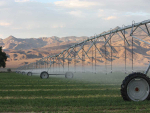
For years, IrrigationNZ has called for a coordinated national approach to water security, backed by enabling regulation, strategic infrastructure investment and sound technical practice. As the 2026 general election approaches, many of these priorities are now reflected in political commitments and legislative reforms. That represents significant progress, but the real measure of success will be turning policy into practical outcomes, says IrrigationNZ principal technical officer Stephen McNally.
Opuha Dam's ability to protect South Canterbury communities from major flooding has taken a significant step forward, with Opuha Water Limited (OWL) successfully commissioning a new outlet valve capable of releasing record volumes of water from the dam ahead of a weather event.
There's been widespread support from the primary sector for the Government's announcement on changes to freshwater farm plans that come under the Natural Environment Bill, which is now set to replace the existing RMA.
Today marks the first day of operations for Waikato Waters, a new council-controlled organisation established by six district councils to deliver water and wastewater services for their communities.



During the nesting season, from September to December, industrious starlings can quickly build nests in the darker areas behind tractor and vehicle, usually close to hot engines, typically resulting in localised damage or in some cases complete write-offs.
The meat processing industry is much more collegial than it was in the past and is now more focused on common goals.
With the last couple of months having seen some potential tractor purchases put on hold with the impending election and continued input cost rises, year-to-date figures, ending September, has seen deliveries up around 5% over the same period in 2025, with a total of 2026 units.
Beef+Lamb New Zealand is calling for nominations for director roles in the Northern South Island and Northern North Island electoral districts.
Fonterra chief executive, Richard Allen says being resilient has helped the dairy industry overcome extreme volatility in recent years.
The head of the Ministry for Primary Industries (MPI) trade and international relations group says New Zealand is well-positioned to secure trade access and compete internationally as the world becomes more complicated, demanding and uncertain.




OPINION: It seems Canterbury processor Synlait is still in the doldrums.
OPINION: Get offside with New Zealand First leader Winston Peters at your own peril.




