Federated Farmers Welcomes ACT’s New Farming Policies
Federated Farmers has welcomed new rural policies released by ACT, saying they align closely with its own election priorities.




 increase font size
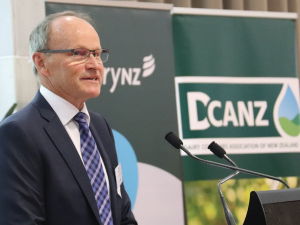
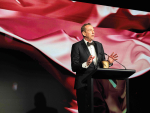
 Ian Proudfoot, KPMG's global head of agribusiness.
KPMG's Ian Proudfoot says significant change is coming to New Zealand's primary sector and "farmers that ignore it do it at their peril".
Proudfoot was speaking this morning at Federated Farmers' National Conference Meat and Fibre AGM.
The world was on the cusp of a fourth industrial revolution and this would mean thinking more globally.
Kiwi farmers who could tell their unique story would prevail as the global consumer became more discerning about what they eat and where it came from.
"There is a fusion happening where digital, physical and biotechnological products will redefine how we live and farm," he says.
Still, the primary sector was up to meeting these challenges as changing market forces and conditions was something it was familiar with.
Being a developed country that relied heavily on agriculture, New Zealand's primary produce had to be better than anywhere else and the meat sector had to be prepared to invest in its future.
Better red meat industry collaboration would present opportunities but also the likelihood of some unavoidable lessons.
"We have to be prepared to share the risks of upsides and downsides. Too often we are quick to punish those that fail."
"Farmers need to get closer to the consumer and understand their lifestyles and aspirations," he says.
ANZ rural economist Con Williams says the technology is available but farmers needed a cultural shift in behaviour. With the global food chain increasingly going online farmers had greater access to understand their consumers and what they were willing to pay for and why.
John Loughlin from the Meat Industry Association (MIA) who opened the panel discussion says New Zealand meat farmers should stick to their principles of acting smart, being innovative and working hard to succeed.
"It's about targeting the affluent consumer and using the modern technological advances to our benefit."
The recent Brexit referendum in the United Kingdom would change market access with new players coming on the scene which would intensify competition.
This was also an example of how international market disruption can at any time influence our markets, he says.
Federated Farmers Meat & Fibre Chair, Rick Powdrell summed up the session: "Farmers need to accept change is inevitable and the speed is rapid. We need to use all the available tools to adapt to the future environment," he says.
Federated Farmers has welcomed new rural policies released by ACT, saying they align closely with its own election priorities.
A farmgate milk price of $10/kgMS this season is firming up as milk powder prices soar and the New Zealand dollar weakens.
New Zealand’s red meat sector has welcomed the India-New Zealand Free Trade Agreement taking effect, which removes India’s 33% tariff on New Zealand sheepmeat.
Federated Farmers is backing Feilding High School’s call to keep Agriculture and Horticultural Science as a standalone subject in Year 11.
National’s pledge to introduce 19 new national standards shows the party is serious about getting Wellington out of farming, Federated Farmers says.


Dairy processors are ready to further boost New Zealand’s export earnings but want the incoming government to match their ambition with good policy.
Massey University is best placed to solve the “problems” facing the dairy industry, says vice chancellor, Pierre Venter.
Synlait's longest serving employee – a man who joined the Canterbury-based milk processor even before it began processing milk – is now its newest executive.
A dairy industry leader believes eradicating the common and costly disease, Bovine Viral Diarrhoea (BVD) is within reach.
A farmgate milk price of $10/kgMS this season is firming up as milk powder prices soar and the New Zealand dollar weakens.
Federated Farmers has welcomed new rural policies released by ACT, saying they align closely with its own election priorities.

OPINION: It seems Canterbury processor Synlait is still in the doldrums.
OPINION: Get offside with New Zealand First leader Winston Peters at your own peril.




